Friday, November 04, 2011

Still Time to Vote for Save Our Schools National Steering Committee
Never doubt that a small group of thoughtful, committed citizens can change the world. Indeed, it is the only thing that ever has. -- Margaret Mead
Save Our Schools Guiding Principles:
The Save Our Schools March and National Call to Action took place this past summer in Washington, DC, on July 28-31, 2011 when more than 5,000 teachers, parents and citizens gathered for a 4-day conference to organize and begin the important work of saving public education from the corporate takeover and privatization of public education and end the abuse and misuse of high-stakes testing. Since then, the SOS Interim Steering Committee has been working to establish a permanent National Steering Committee to lead SOS into the future.
The election is underway and if you haven't already signed up at the Save Our Schools website, there is still time to cast your vote for members of the Steering Committee between now and November 7.
If you are tired of politicians, businessmen and billionaires making harmful decisions about our schools and our children and the damage caused by high stakes testing;
If you are tired of the inequality in school funding and would like to help schools in poor communities meet the needs of our most vulnerable students; restoring the arts, social studies, music and real science programs and a well-rounded curriculum instead of the drill and kill testing mania that has overtaken our public schools;
If you believe that young children need quality play and playful learning in school because childhood is a journey, not a race to the top;
Then join the Save Our Schools movement and get involved. Once the Steering Committee is established, there will be many opportunities for you to make a difference.
For the future of our children, we demand:
Equitable funding for all public school communities
- Equitable funding across all public schools and school systems
- Full public funding of family and community support services
- Full funding for 21st century school and neighborhood libraries
- An end to economically and racially re-segregated schools
An end to high stakes testing used for the purpose of student, teacher, and school evaluation
- The use of multiple and varied assessments to evaluate students, teachers, and schools
- An end to pay per test performance for teachers and administrators
- An end to public school closures based upon test performance
Teacher, family and community leadership in forming public education policies
- Educator and civic community leadership in drafting new ESEA legislation
- Federal support for local school programs free of punitive and competitive funding
- An end to political and corporate control of curriculum, instruction and assessment decisions for teachers and administrators
Curriculum developed for and by local school communities
- Support for teacher and student access to a wide-range of instructional programs and technologies
- Well-rounded education that develops every student’s intellectual, creative, and physical potential
- Opportunities for multicultural/multilingual curriculum for all students
- Small class sizes that foster caring, democratic learning communities
The power of reading and the role of school
Sent to the Taipei Times, November 3, 2011
Lii Ding-tzann (“Reading your way to true wisdom,” Nov. 3) argues that reading in a way that connects to your own life makes a powerful contribution to our intellectual development. Research strongly supports his position: Studies show that wide, self-selected reading is related to our literacy development, our knowledge of the world, and achievement: People who read more read and write better, know more, and accomplish more in life.
Creativity researcher Dean Keith Simonton has concluded that "omnivorous reading in childhood and adolescence correlates positively with ultimate adult success.” Strong evidence comes from cases of highly successful well-read individuals with little formal education: Famous examples include Thomas Edison, who profited from reading books in his father's home library as well as the Detroit public library, and Michael Faraday, who had the good luck to work for a bookbinder, and became an enthusiastic reader.
School can either encourage or discourage the development of a reading habit. The over-emphasis on testing, a disease that seems to spreading world-wide, inhibits intellectual development by not allowing time or opportunity for students to develop their own interests by reading widely. But school could help students by exposing them to many different ideas, allowing them time to explore their interests, and by providing access to a print-rich environment.
Stephen Krashen
Professor Emeritus
University of Southern California
Original article: Reading your way to true wisdom
http://www.taipeitimes.com/News/editorials/archives/2011/11/03/2003517324
Thursday, November 03, 2011
Save Diversity in Wake County Schools: Vote on Tuesday
From NPR:
Not long ago, I posted on the challenge North Carolina represents for President Obama who won the state in 2008 and badly needs it in his column again.
I mentioned a New Yorker piece by Jane Mayer on Art Pope, the conservative North Carolina businessman who has reshaped his state's politics more towards his GOP leanings by bankrolling a number of campaigns and think tanks.
A campaign he's put some emphasis on is a race for a seat on the Wake County school board. The county is home to the city of Raleigh.
The school board's bare GOP majority in 2009 discarded a policy that used family income to try and create greater diversity in its schools.
As Dave Dewitt of NPR-member station WUNC reported for Morning Edition, Democrats hope to turn things around by winning a seat next Tuesday and gaining a board majority.
As Dave reported, some of the Democratic campaign against the Tea Party-affiliated candidate, Heather Losurdo, has been fairly negative:
During the campaign, a group called Progress NC Action has publicized her 20-year old personal bankruptcy, a job she held at a strip club in 1993, and her positive reaction to a racist joke her husband posted about President Obama on Facebook. None of those are likely to play well with voters in her district - suburban north Raleigh.(Losurdo defended herself against those attacks on a local radio show as reported by the newsobserver.com.)
A political scientist Dave quotes, David McLennan at William Peace University in Raleigh, explains that the race, hyperlocal as it is, may become something of a tell-tale to indicate the direction of the political winds in North Carolina for next year's state-wide and presidential races. President Obama has sent numerous signals that he wants to win North Carolina in 2012 badly, just as he won it in 2008.
And here's an indicator of the race's importance, as Dave reports it:
Before 2009, a candidate for Wake County School Board spent roughly $10,000 during a campaign. This year, the combined spending has already surpassed a half-million dollars. It's a dramatic increase and a precursor to how much money is expected to roll into the 2012 elections from the president on down.Again, a useful snapshot of how even the smallest of government offices are seen as big prizes in our highly partisan politics.
In New Hampshire, Live Testing Or Die

There is a zero percent chance that we will ever reach a 100 percent target. --Dr. Robert Linn, former President of the American Education Research AssociationThe quote above is from the Washington Post in 2007, and the chart above that is from a Massachusetts study in 2005 (mass_partnersAYP.p65). But as we now know, the enemies of public education had this information when they stitched together the NCLB monster in 2001, as did friendlier though more delusional Dems like Kennedy, who was still as much in denial in 2007 as his brother, Bobby, was in the 1960s when promoting something new called "school accountability" as a way to achieve equality in schooling. That school of wishful thinking is now continued by the neoliberals at Education Trust, who spend their time poring over test results and bad-mouthing teachers for not solving the achievement deficits that poverty and vast income disparities have created and continue to exacerbate, notwithstanding idiot statements reminiscent of this one by Kennedy in 2007:
"The idea of 100 percent is, in any legislation, not achievable," said Sen. Edward M. Kennedy (D-Mass.), chairman of the Senate education committee. "There isn't a member of Congress or a parent or a student that doesn't understand that."
Kennedy added that the law's universal proficiency standard served to inspire students and teachers. But "it's too early in the process to predict whether we'll consider changes" to the 2014 deadline, he said.Well, we are still 2+ years away from educational armageddon, and the schools where there are large concentrations of poor kids already have been entirely demoralized or demolished, blown up or are in the process of being turned into segregated KIPP-like chain gangs operated by profiteers or tax scofflaws. (Is it a coincidence that the largest charter school operator in the U. S. is the most corrupt as well?)
What Michael Winerip's most recent piece in the NYTimes shows is that manufactured failure is not just for the poor anymore: the same kind of intellectual austerity movement has come to the leafy suburbs of New Hampshire. What Winerip's moving piece points out clearly is that it way past time either to take back our schools and create corporate-free learning zones, or to SHUT THEM DOWN. PERIOD.
DURHAM, N.H. — Every spring, Linda Rief, who is in her 25th year of teaching English at Oyster River Middle School, has eighth graders do a semester-long “genre” project. They pick a subject area like mysteries, read masters like Agatha Christie, study the writer’s craftsmanship (“Explain how the author foreshadows doom”), then draft their own.
The school’s science students spend two weeks building an underwater robotic vessel. Social studies classes re-enact the Boston Massacre.
They have had time for these things at Oyster River. Students here do so well on state standardized tests — about 85 percent of them rate proficient — that there has been little need for test preparation. Ms. Rief said she did 45 minutes — a year.
“The attitude was, if we did good teaching and we were passionate and energetic, kids would learn and that would be enough,” said Ms. Rief, who is 67.
No more. Last year, the No Child Left Behind law, which calls for 100 percent proficiency by 2014, caught up with Oyster River. Under the law’s mandates for adequate yearly progress toward that goal, the school was one of 326 public schools in New Hampshire — 69 percent of the total — deemed to be failing.. . . .
. . . .
The intent of No Child Left Behind was to provide quality education for poor children, mainly in urban areas, but it has taken over everything. By next spring, 90 percent of New Hampshire schools are expected to be labeled as failing.
That may sound 100 percent ludicrous, but it has transformed the academic culture, even in prosperous towns that have long been immune, like Durham, where the University of New Hampshire is located.. . . .
. . . .Even the new focus on test prep here pales compared with what happens in places like New York City and Florida, but the change has been felt in a school system where teachers have long been trusted and given autonomy.
“Suddenly at staff meetings we’re talking about brain games,” Ms. Rief said. “We’re talking about healthy brain food. The week before, we’re not giving homework so everyone gets more sleep and rests their brains.”
There are posters to remind students of the 12 essential test prep words and posters to raise their Score: Strategies, Complete, Organize, Read, Energize. The test is the New England Common Assessment Program, and some fifth-grade boys are now calling themselves the Necap Ninjas.
While Mr. Richard has urged Ms. Rief to do more test preparation, he has not forced her. “I bug her about this,” he said. “But I trust Linda to do what’s best.”
Ms. Rief said she was sticking to the annual 45 minutes.
Mr. Richard says no one in town has asked him why his school is failing. “Of course not,” he said. “People get it.
They do want to know why, if Oyster River is failing, its eighth graders do so well when they get to high school.
This year, Oyster River students averaged 1,670 on the three SAT tests, 111 points above the state average and 170 above the national average.
A failing school must form a committee to develop an improvement plan. Over the summer, Mr. Richard met with 10 of his teachers several times. Among the topics discussed were the little things that add up to a better score. “We realized our students weren’t looking at the titles on the reading passages,” he said. “The title tells you what the story is about; it’s really important.”
They studied past tests. “Several questions were related to the use of textbooks, and we’re a textbook-free school,” he said, explaining that his teachers’ original lessons are superior to the packaged curriculums. “No wonder they had so much trouble.”
While the school improvement committee was meeting, Ms. Rief and two other teachers attended workshops given by Navy engineers from the Portsmouth Naval Shipyard. They learned how to build a robotic underwater vessel and will spend two weeks teaching students to build their own.
Ms. Rief worries that a new generation of teachers has been raised on standardized testing and thinks that is the norm. Ms. Rief fears that public schools where teachers are trusted to make learning fun are on the way out. Ms. Rief understands that packaged curriculums and standardized assessments offer schools an economy of scale that she and her kind cannot compete with.
Heritage Foundation and AEI Issue Report Exposing Dumb, Fatcat Teachers
When I heard that the American Enterprise Institute and the Heritage Foundation were about to release a report by two of their PhD staffers, I thought, here we go again. After all, it was just a few days ago that the Feds released data showing the income of the top 1 percent went up 275% from 1979 to 2007. Were AEI and HF about to pile on just when the 1%ers are coming under such increasing hostility and ridicule? How much can our job creators take, after all! We could lose them to Switzerland or Monaco if we're not careful.
 I was relieved to realize yesterday that AEI and HF have tag-teamed to slam to the mat the real culprits in the scandalous out-of-control salary story: teachers. That's right--under-worked and overpaid fatcat teachers, with health insurance and retirement plans and teacher rooms, and desks. You name it--teachers have it.
In forcing us Americans to face the truth about the undeserved wealth and unearned privileges we have bestowed upon the parasitic and cognitively-deficient teacher bigshots, AEI and Heritage have also exposed, too, our former president, George Bush, for the socialist that he truly was. It was Bush who whined in 2003 that "salaries are too low. We all know that . . . we need to figure out a way to pay teachers more."
Thank you, AEI and Heritage Foundation for your fearless effort to identify those who are wrecking our economy and our democracy. Power to (a few of) the People!
From NPR:
The American Enterprise Institute, a conservative think thank in Washington, D.C., is causing waves with a study (pdf) it released today that found teachers are overcompensated in comparison to "similarly educated and experienced private-sector workers."
The organization said it took a "comprehensive" look at teacher's salaries and tried to take into account what it says are unique areas of compensation for teachers, including generous pension plans and better job security.
The bottom line? Teacher's compensation, the American Enterprise Institute writes, is 52 percent above market rates and costs government "$120 billion annually in excessive labor costs." Here's a bit of the reasoning behind those figures:
• The wage gap between teachers and non-teachers disappears when both groups are matched on an objective measure of cognitive ability rather than on years of education.Of course, teachers' unions took issue with the study. The American Federation of Teachers, one of the largest unions in the country, put out a statement saying the report "uses misleading statistics and questionable research:"
• Public-school teachers earn higher wages than private- school teachers, even when the comparison is limited to secular schools with standard curriculums.
• Workers who switch from non-teaching jobs to teaching jobs receive a wage increase of roughly 9 percent. Teachers who change to non-teaching jobs, on the other hand, see their wages decrease by roughly 3 percent. This is the opposite of what one would expect if teachers were underpaid.
This report contains a number of ridiculous assertions, such as arbitrarily assigning 8.6 percent as a "job security premium" teachers supposedly enjoy. This "job security premium" is pure fiction, given the 278,000 public education jobs that have been lost during this recession. There's no basis for this claim—it's simply a placeholder used to lead to AEI's conclusion. In our business, such reasoning would get a flunking grade.The truth—backed by reputable research—is that few, if any, workers subsidize their professions like teachers. America's teachers spend hundreds of dollars per year on classroom supplies for their students and work longer hours than their peers in other nations, including late afternoons, evenings and weekends grading papers, preparing lesson plans, talking with students and their parents, and other school-related work.Michelle Rhee, the former chancellor of the Washington, D.C. school system, who has been a nemesis of the teachers' unions, sided with them on this issue. She told Politico that "under the status quo in most school districts, good classroom teachers are not only undervalued in pay, but as professionals generally."
Wednesday, November 02, 2011
Hundreds of Oakland Teachers Support General Strike in Oakland Today
Teachers are joining the rest of the 99%ers who are demanding a return to democracy in the U. S. From the AP:
Posted: 11/02/2011 11:31:21 AM PDTUpdated: 11/02/2011 11:31:23 AM PDT
OAKLAND, Calif.—Oakland school officials say about 360 teachers didn't show up for work, as thousands of people joined anti-Wall Street protests throughout the city.
Oakland Unified School District spokesman Troy Flint says roughly 18 percent of the district's 2,000 teachers were absent, as compared to the 1-percent rate on a typical Wednesday.
Several teachers' unions have expressed support for the Occupy Oakland movement, which made international headlines after an Iraq War veteran participating in the demonstrations was injured in last week's clashes between protestors and police.
Flint says the district got substitute teachers for most classrooms, and where that wasn't possible, children were sent to other classrooms.
The district doesn't collect daily student attendance figures, but Flint says nothing suggests there are widespread absences.
Tennessee's Milken Plan for Teacher Evaluation Ready to Collapse
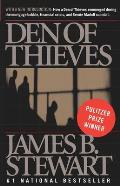
And so goes the story (told by James Stewart) of Lowell Milken, whose more infamous business partner/brother, Michael, took the fall for the family, pleaded guilty to 6 felony counts, and was sentenced to 10 years in federal prison.
With philanthro-dollars spread as thin and wide as a roll of veneer for WalMart coffee tables, the Milkens have easily bought their way back to "respectability" in an era when CEOs who did what the Milken boys did in the 80s and 90s are now routinely shuttled to new Wall Street penthouses and given obscenely-large bonuses for their efforts.
Banned as the Milken boys are, however, from today's fun and games on Wall Street, the Milken Family Foundation has teamed up with the Broad Foundation, Walton Foundation, the U. S. Department of Education, et al, to create the Teacher Advancement Project (TAP) and National Institute for Excellence in Teaching (NIET), a rich hothouse for really bad education ideas that are developed by and for corporations. These bad ideas are then promoted by dangling huge sums of taxpayer dollars bundled as federal grants to states to apply for. These same dollar-hungry states use other federal grants to hire corporate foundations (Milken, Gates, etc.) to help them write the grants, and their applications are moved to the top of the heap for consideration.
States like Tennessee win the grants ($500,000,000 for TN), hire corporate officers like Michelle Rhee's ex, Kevin Huffman, to run the state ed department, and money is then dispersed to the corporate idea factories like TAP to impose teaching models, evaluation models, staffing models, and curriculum models based on the boardroom ruminations of the Billionaire Boys' Club. No risk, no glare of the cameras, no intrusive reporters asking embarrassing questions about where the money went. Education is THE new growth industry!
But what's that? Someone asking questions about Tennessee's off-the-Milken-shelf teacher evaluation plan? Teachers occupying their schools and threatening to boycott the off-the-McGraw-Hill-shelf tests used to evaluate them? Parents in Knoxville protesting the privatization plan for janitorial services by Broadie stooge superintendent, Jim McIntyre (read comments below story)? Memphis school board members calling a time out on the charterization of Memphis public schools? What could have gone wrong!
From WPLN:
Tuesday, November 01st, 2011, by Blake Farmer
Republican state lawmakers are suggesting tweaks to a new teacher evaluation system that has drawn a flood of criticism from educators. Democrats say it could be too flawed to fix.Parents and teachers can call a halt to this 1%er plan. Contact your legislators, and write letters to the editor of your local paper. Occupy the General Assembly in Nashville and your local school board meetings. Create public schools that are corporate-free zones.
Everyone on the House Education Committee says the system needs work. Observations are taking too much time for principals, and teachers are stressing out over the 72 criteria they’re asked to hit during a lesson.
A few Republican members say – at the very least – the system needs to be better explained. House Democratic Leader Craig Fitzhugh says an overhaul is in order.
“We need to put this thing off and get it right. We will not lose anything except teachers if we move forward.”Lawmakers’ email inboxes have been chocked full with teachers who say they’re overwhelmed and considering retirement.
At a hearing Tuesday, Education Commissioner Kevin Huffman said he’s not sure all of those emails are genuine.
“I think there has been a concerted effort in a lot of places to give people talking points to criticize the system.”Huffman stands behind the evaluations but says he’s open to changes, just not big ones.
While the details weren’t fleshed out at the time, tougher evaluations were part of what helped Tennessee win $500 million in the Race to the Top program. Huffman says the federal Department of Education could ask for some of that money back if the system is scrapped.
Tuesday, November 01, 2011
The Nation's Report Card on Corporate Ed Reform Comes Home
The Milton Friedman disciples who came to Washington with the Gipper in 1980 were intent upon smashing the public school system, beginning with the newly-formed U. S. Department of Education. Reagan's boys fell short on both counts, but they set in motion for the next 30 years a system of educational auditing that would assure public education coming up short in measurements designed by greed merchants and tax evaders from the Business Roundtable who wanted then and want now to turn education into a primary corporate revenue stream. A major piece of that strategy for assured public education failure was to renorm the National Assessment of Education Progress so that almost all public schools would fall short of "proficiency."
Analyses over the years have shown, in fact, that the NAEP proficiency scales are so high that the vast majority of our high-flying international competitors, too, would fall short of proficiency if they were to be subjected to the NAEP:
When NCLB became law in 2002, however, NAEP moved to the background as more pressing AYP requirements moved front and center. Even so, NCLB fit the corporate education "reform" agenda for the past thirty years that have been characterized by increasingly-draconian testing and sanctioning measures that serve to 1) undermine public schools and to replace them with private school vouchers and corporate charter schools, 2) return the teaching of the poor to 18th Century methods based on memorization and recitation, 3) find cheap and profitable ways to contain, segregate, culturally neuter, and behaviorally modify the urban poor, 4) promote the total compliance test prep KIPP chain gangs for the poor in order to preserve the pretense that poverty is not a factor in the test score gaps, and, 5) devise technological schemes that offer marginal distant learning alternatives to the poor in both rural and urban America.
Now with new NAEP scores released, attention has returned to what the Nation's Report Card can tell us that is any different from what it has told us since 2005: NCLB/corporate education reform is not working. As with previous NAEP scores, this time it's a hard spin for the corporate education reformers, as they press their central lie that high stakes testing has improved learning while claiming that schools are still doing a pitiful job.
Notice in the charts below how improvements on NAEP have slowed since 2003, when NCLB went into effect. In 4th and 8th grade math, 6-point gains since 2003:


And what about the test score gaps?
Analyses over the years have shown, in fact, that the NAEP proficiency scales are so high that the vast majority of our high-flying international competitors, too, would fall short of proficiency if they were to be subjected to the NAEP:
The definition of "proficient," of course, comes
from the NAEP achievement levels whose only function is that of a political
bludgeon. As Gary Phillips of the American Institutes for Research has shown,
though, if students in other nations sat for the NAEP reading test, no country
would have a majority of its students proficient in reading. The top-scoring
country, Sweden, would only place about one third of its students in the
proficient category (In the 2007 assessment, the U. S. had 33% of 4th graders
and 31% of 8th graders scoring proficient or better). Only six countries would
have a majority of students proficient in math (and not by much) and only two
could claim this august status in science (http://www.air.org/expertise/index/?fa=viewContent&content_id=617).
When NCLB became law in 2002, however, NAEP moved to the background as more pressing AYP requirements moved front and center. Even so, NCLB fit the corporate education "reform" agenda for the past thirty years that have been characterized by increasingly-draconian testing and sanctioning measures that serve to 1) undermine public schools and to replace them with private school vouchers and corporate charter schools, 2) return the teaching of the poor to 18th Century methods based on memorization and recitation, 3) find cheap and profitable ways to contain, segregate, culturally neuter, and behaviorally modify the urban poor, 4) promote the total compliance test prep KIPP chain gangs for the poor in order to preserve the pretense that poverty is not a factor in the test score gaps, and, 5) devise technological schemes that offer marginal distant learning alternatives to the poor in both rural and urban America.
Now with new NAEP scores released, attention has returned to what the Nation's Report Card can tell us that is any different from what it has told us since 2005: NCLB/corporate education reform is not working. As with previous NAEP scores, this time it's a hard spin for the corporate education reformers, as they press their central lie that high stakes testing has improved learning while claiming that schools are still doing a pitiful job.
Notice in the charts below how improvements on NAEP have slowed since 2003, when NCLB went into effect. In 4th and 8th grade math, 6-point gains since 2003:

And in reading the effects of corporate education reform on steroids are even more revealing. In the two years prior to NCLB passage, the 9-point gain in 4th grade is four and a half times greater than the 2-point gain since 2002. For 8th grade, too, the gains from 1994-2002, though small, were greater than the gains from 2002-2011.
And Arne's response? Did he come out and admit that corporate education reform has left another generation of children much less prepared than they could have without the billions spent to ramp up the education-testing complex? Not so much:
“The modest increases in NAEP scores are reason for concern as much as optimism,” said Education Secretary Arne Duncan in a statement. “It’s clear that achievement is not accelerating fast enough for our nation’s children to compete in the knowledge economy of the 21st Century.”So what is the source of Arne's optimism? Could Duncan be referring to the fact that NAEP scores didn't go down!
And what about the test score gaps?
The NAEP scores also highlight achievement gaps for minority and low-income students, which have been slow to narrow.
There was no change in the black-white achievement gap in either reading or math between 2009 and 2011, although there was a small improvement in the Hispanic-white gap for both eighth-grade reading (where the 22-point gap was two points smaller than in 2009) and eighth-grade math (where the gap narrowed three points, to 23).
It is time for parents, students, and teachers to do what Oakland is doing tomorrow: Declare a city-wide general strike and occupy our schools until they become corporate-free zones. It's time for the corporations to be assessed, not the children and the teachers.

Vander Ark getting cranky regarding negative NEPC report
The true path to higher test scores is reading. — Dr. Stephen Krashen
 Look up the word charlatan in any lexicon and it would be of no surprise if it features a photograph of Tom Vander Ark as the accompanying illustration. The former Bill and Melinda Gates Foundation executive has been a major player in the corporate education reform onslaught against the public commons. He has been gorging himself at the tax trough for some time now. His antics and blather have garnered quite a bit of ink here at Schools Matter, partly since few people are as adept at technobabble and doublespeak as Vander Ark.
Earlier this evening Class Size Matters and Parents Across America's Leonie Haimson posted an intriguing tweet from which I shamelessly lifted for the title of this post:
Cranky is an understatement, Vander Ark's childish rant against the National Education Policy Center (NEPC) had all the class and irrational ignorance of a petulant charter school student ignominiously dumped back to public school right before the CAHSEE. He's incredulous that anyone would question the unmitigated greed of these online swindlers (himself included). I left the following comments:
The report that flimflamer Vander Ark is whining about? Online K-12 Schooling in the U.S.: Uncertain Private Ventures in Need of Pubic Regulation by the NEPC's Gene V. Glass and Kevin G. Welner. God forbid that respected academics suggest that an entirely unregulated industry sucking up public tax money faster than a shop vacuum be subject to a modicum of oversight. We're talking about one of Vander Ark's biggest cash cows after all!
UPDATE: It appears Mr. Vander Ark deleted my original comments. Seems he can't stand for anyone speaking truth to his power and privilege.
Look up the word charlatan in any lexicon and it would be of no surprise if it features a photograph of Tom Vander Ark as the accompanying illustration. The former Bill and Melinda Gates Foundation executive has been a major player in the corporate education reform onslaught against the public commons. He has been gorging himself at the tax trough for some time now. His antics and blather have garnered quite a bit of ink here at Schools Matter, partly since few people are as adept at technobabble and doublespeak as Vander Ark.Earlier this evening Class Size Matters and Parents Across America's Leonie Haimson posted an intriguing tweet from which I shamelessly lifted for the title of this post:
@leoniehaimson Vander Ark getting cranky re negative NEPC report on online learning; no research to support K12 virtual instruction http://goo.gl/19nN1
Cranky is an understatement, Vander Ark's childish rant against the National Education Policy Center (NEPC) had all the class and irrational ignorance of a petulant charter school student ignominiously dumped back to public school right before the CAHSEE. He's incredulous that anyone would question the unmitigated greed of these online swindlers (himself included). I left the following comments:
You're embarrassing yourself Mr. Vander Ark. National Education Policy Center at University of Colorado at Boulder School of Education is one of the most respected sources on education around. Its staff, including the celebrated Dr. Welner, are some of the most knowledgeable experts on education policy in the nation. What are your qualifications again? A businessman and former Gates Foundation executive?
If we want information on education, we'll turn to the experts at NEPC. If we want advice on get rich quick schemes, we'll turn to you and one of your profitable enterprises — oh wait, online learning is another get rich quick scheme, so perhaps your above comments make sense in that context.
The report that flimflamer Vander Ark is whining about? Online K-12 Schooling in the U.S.: Uncertain Private Ventures in Need of Pubic Regulation by the NEPC's Gene V. Glass and Kevin G. Welner. God forbid that respected academics suggest that an entirely unregulated industry sucking up public tax money faster than a shop vacuum be subject to a modicum of oversight. We're talking about one of Vander Ark's biggest cash cows after all!
UPDATE: It appears Mr. Vander Ark deleted my original comments. Seems he can't stand for anyone speaking truth to his power and privilege.
 Robert D. Skeels is a social liberation writer, attorney, public education advocate, immigrant rights activist, and law professor. He lives, works, writes, and organizes in Los Angeles with his wife and cats. Robert holds a BA in Classical Civilization from the University of California at Los Angeles (UCLA), a JD from Peoples College of Law (PCL), and passed the California Bar Exam on his first attempt. A US Navy Veteran, he is a proud member of Veterans for Peace. A student of Liberation Theology and Paulo Freire's work, Robert volunteers for community and 12 step groups. Robert's articles and essays appear in publications including Jacobin, Truthout, CounterPunch, Dissident Voice, Schools Matter, Daily Censored, Regeneración, K12NN, LA Progressive, and The Los Angeles Daily News. In 2013 Robert ran for the LAUSD School Board against a billionaire funded corporate reform candidate, finishing second in a field of five, with over 5,200 votes.
Subscribe to:
Posts (Atom)