"A child's learning is the function more of the characteristics of his classmates than those of the teacher." James Coleman, 1972
Showing posts with label socioeconomic integration. Show all posts

Sunday, June 25, 2017

Economic Integration in Dallas

Even as the white supremacists who now occupy Washington try to turn back the clock to the Jim Crow Era, new efforts to integrate schools are underway in Dallas:

Rather than admit students by grades, test scores or auditions, which tends to turn schools into enclaves of affluence, these schools admit them by lottery, with no admissions standards. They are organized around popular themes like single-sex education, science, the arts, bilingual classes and professional internships.
Most strikingly for a district where 90 percent of students are low-income, the district is setting aside seats in several of the new schools for students who do not qualify for free or reduced-price lunches, even if they live in suburbs outside the district. Those coming from other districts do not have to pay tuition, and though Dallas will not receive school property taxes from their families, it will get funding from the state for each traveling student.
By relying on income instead of race, Dallas is following guidelines from the Supreme Court, which in 2007 declared it unconstitutional to consider race as a factor when assigning students to schools.

Tuesday, February 18, 2014

Magnet Schools as a Tool to End Socioeconomic Segregation

The NYTimes has a piece on the modest resurgence of magnet schools, which are public schools of choice that highlight a portion of the curriculum that is attractive to certain children and parents.  They are great alternatives to the corporate charter chains staffed with non-teachers and managed by non-educators.

Unless a conscious effort to reduce segregation is included in their magnet planning, however, the same kinds of cognitive and socioeconomic apartheid can result.  That is why school systems should view magnet schools as a way to offer parents choice, of course, but to primarily function to reduce socioeconomic segregation by instituting parameters that cap schools poverty maximums within a district, regardless of the kind of school.

A clip from the NYTimes:

MIAMI — Nearly five decades ago, as racial tension raged in cities, magnet schools were introduced here and elsewhere as an alternative to court-ordered busing in the hope that specialized theme schools would slow white flight and offer options to racial minorities zoned for low-performing schools.
Magnet schools never quite delivered on that desegregation promise, and in the past couple of decades they have largely fallen off the radar. But in this multiracial city — and, increasingly, in other urban districts including Chicago, Dallas, Denver, Los Angeles, Newark and Washington — public school leaders are refocusing on the idea as traditional public schools come under increasing pressure from charter schools and vouchers for private schools.
The number of children in Miami-Dade County attending magnet programs — which admit students from anywhere in the district and focus on themes like art, law or technology — has grown by 35 percent in the past four years. These children now account for about one in six students in the district. . . . .


Monday, February 10, 2014

Want to Raise Achievement? End Socioeconomic Segregation.

Richard Kahlenberg in the NYTimes:

Parental involvement in education is both critical for students and unequally distributed, with upper-middle class parents much more likely to be engaged. There are, however, important steps that policy makers can take to ensure that students in all schools have champions for higher standards and strong teaching.
Lower-income parents can't get involved as easily. An economic mix gets active parents lobbying for excellence in every school.

Parents are the key to improving education in two senses. First, parents are the primary educators of students; the family is the first and most important school house. This explains why 50 years of research has consistently found that the socioeconomic status of a child's parents -- not the elementary or secondary school he attends -- is the number one predictor of his academic success.
Second, parents can agitate for stronger K-12 schooling, but once again, low-income students are disadvantaged. Middle-class parents are twice as likely to volunteer in class and four times as likely to be members of the PTA as low-income parents. These more affluent parents push for higher expectations among teachers and a challenging curriculum. This helps explain why the grade of "A" in a high poverty school is the equivalent of the grade of "C" in a middle-class school when students are compared on standardized tests.
Efforts to boost parental involvement among low-income parents have often proven disappointing not because they are apathetic but because they are constrained by time and money. If low-income parents are working three jobs, have little flexibility in the hours they work, and do not have a car, it is little wonder that they can't attend back-to-school night. Besides, no child picks his parents, so we don't want to punish kids for having parents who may be unable or unwilling to be actively involved in school affairs.
So what is to be done? The best solution is to make sure there are pushy middle-class parents in every public school. These parents have the time and resources to be involved in school affairs, and they know how to pull the levers of power to raise standards, and to push out mediocre teachers. They can fight for all kids in a school, whether rich or poor. More than 80 school districts across the country have sought to ensure an economic mix in their schools, in part because it's good to have active parents lobbying for excellence in every school. 
In La Crosse, Wisc., for example, middle-class families were redistricted into a mostly blue collar high school and the new parents immediately began demanding high standards and AP classes. Nationally, low-income students who get to attend more affluent schools where parents advocate for excellence are two years ahead of low-income students stuck in high poverty schools. We will never get every parent to read to his or her child at night, but we can take steps to reduce economic segregation in our public schools so every school has strong parental advocates for high standards.


Monday, September 23, 2013

Evidence for My School Priorities

Someone asked, and please include your name if you want your comment printed, to provide evidence that my "fixes" could work better than another generation of the corporate status quo based on more testing accountability, segregation, and blaming teachers.

I will start with the first one:

1) socioeconomically integrate the schools (biggest bang for the achievement buck ever);

Find blog posts here and here and here, with citations to some of the research.  Other evidence here and here, and here is my essay review of Gerald Grant's must read book, Caught Between Hope and Despair. .  .

For the latest on the best evidence, still, even after 45 years, see index entries for "Coleman, James" in The Mismeasure of Education, and you will find new insights into why James Coleman was right--who you go to school with matters even more than differences in resources between poor and rich schools.


Monday, February 11, 2013

Tuesday, July 17, 2012

Wake County Votes to Restore School Diversity Plan


CARY - In a partisan battle that raged into the early hours of Wednesday morning, members of the Wake County school board’s Democratic majority passed a motion calling for a return to a diversity-based student assignment plan for the 2013-14 school year.The vote, which came shortly before 1 a.m., directs staff to come up with a revised student assignment plan that goes back to tying each address to a specific school. The motion says that the new plan should promote student achievement, proximity and stability, including saying targets should be set for academics and socioeconomics at schools.

“We’re going to have a plan going forward that’s good for Wake County,” said school board member Jim Martin, one of three new Democratic members who was elected last fall to flip the majority on the board

The 5-4 party line vote came after Republicans threw up repeated objections to dropping the new choice-based plan after just one year.

“The problem with this is that it’s putting us in a lot of political turmoil,” said Republican member Chris Malone. “You are going to have parents that are absolutely furious. They are positive that we are going back to 2008.”

Board Vice Chairman Keith Sutton, who introduced the measure, made revisions to meet school board attorney Ann Majestic’s specifications about the degree of change it could direct.
“No plan has been designed at this time,” Sutton said. “We have much work to do. We are Wake County. We can do this.”

The directive tells staff to reestablish the connection of student addresses to specific schools.
The long, contentious meeting saw Republican members voicing strenuous, lengthy objections to asking the school administration to discard the new choice-based plan after only one year.
The directive called for Superintendent Tony Tata and staff to modify the choice plan to an address-based plan beginning in 2013. In addition, the directive calls for a three-year plan that will take diversity into consideration by setting achievement and socioeconomic targets. The plan should also take proximity and stability into consideration, as does the plan currently in effect, the directive says.
Republican board members unsuccessfully asked for a 60-day delay in the Democratic motion.

Republican board member Debra Goldman argued that the Democrats should first change the student assignment policy before returning to a base school plan.

"This is directly flying in the face of an existing policy," Goldman said. "This is a slap in the face of every parent in wake county planning on a school."

It took a series of votes and disagreements even to keep the directive on the board agenda, as Republican members complained they had little information about it and that it should have gone through the board’s policy committee first. Discussion of the item didn’t begin until just before 11 p.m.
The earlier vote on placing the item on the agenda showed that the lines have been clearly drawn: Democrats want an assignment plan that includes diversity and schools that go along with addresses. And the GOP stands firmly against abandoning the choice plan after its first year.

“We haven’t even implemented the new plan yet,” said Republican board member Chris Malone.
Board member John Tedesco suggested that many other actions should be taken before the development of a revised assignment plan.

“It means we’re going to draw circles around some high-poverty neighborhoods,” Tedesco said. “We need to table this ... before we automatically scrap the choice model.”

‘We have to do it now’
Hill, who was re-elected chairman on Tuesday, said they needed to act now to be able to have it in place for the 2013-14 school year.

“The directive is to get the discussion on the table,” Hill said. “We’ve been told that if we’re going to have to have changes, we have to do it now.”

But some speakers told the board, which has had a Democratic majority since November, that changing assignment plans again would bring turmoil to the community.

“I want to say that this would be a huge mistake to change this plan or call for the development of a new plan,” North Raleigh resident and former school board candidate Jennifer Mansfield said. “If you really wanted to pull the plug on this thing, you should have done it the first thing in December. To do this now is just playing with people.”

Raleigh resident Louis Wooten said he applauded the board’s decision to re-examine the assignment plan. Making changes will not be politically popular, Wooten said, but could prevent some unwanted consequences.

“I think (the student assignment plan) will over time create high concentrations of children for whom education is their only ticket out,” he said.

Until the election of a Republican-based board in 2009, Wake had pursued a policy of keeping schools balanced on the basis of students’ economic background. The GOP-led board developed a choice-based system that put a premium on proximity and stability. When the board majority switched to Democratic in 2011, members continued along the choice-based plan established by the GOP, saying there was too little time to make significant changes for the 2012-13 school year.

For and against choice plan
Under the choice plan, families rank their preferences from a list of available schools, instead of being assigned to a specific school based on where they live. Supporters of the choice plan said it would end the fears of reassignments, where thousands of students were moved between schools each year in the past, by letting families know ahead of time which schools their children will attend through high school.

Critics of the choice plan included some familiar constituencies at board meetings: real estate interests who say the lack of an address-based system hurts sales; inside the Raleigh Beltline residents who weren’t able to get a nearby school assignment; and newcomers to the Wake public schools, who are put at the bottom of the choice process.

“If I take a new ship to sea, I am going to go to sea a number of times. It’s called a shakedown cruise,” said Peter Rumsey, a downtown real-estate agent. “You have an opportunity, working with both sides of the room, to set an example for the rest of the country.”

Those who favored keeping the brand-new choice plan said it has its faults, but should be given a chance. Some of the more than two dozen speakers grew emotional as they talked of the effects of a series of changed policies on families and children.

“Making a major change now dishonors and disrespects every citizen in Wake County who has invested themselves in this plan,” North Raleigh parent Rhonda Curtright said in support of the choice plan.

Republican board member John Tedesco joined a party-line vote early in the meeting against taking up the directive, while objecting to what he said was its hasty introduction.

However, he conceded implicitly that the action resembled the GOP-led board’s wholesale changes in the assignment policy when they took office in 2009.

“I would caution you as my fellow colleagues not to follow the same path,” Tedesco said.
“I’ll put it out there – learn from my own mistakes.”

Goldsmith: 919-829-8929

Thursday, March 24, 2011

The Most Effective, Efficient, and Fair Way to Raise Achievement For Which Duncan Has No Interest

All the international test score comparisons show that it is our poorest quintile of children that keeping the US from claiming a top seat among other Western nations in the test score derby.  Socioeconomic integration has been demonstrated to raise achievement among these poorest children while having no negative testing effect on the high performers.  And it is affordable and offers a moral bonus and the pragmatic benefits that accrue from diverse social environments.  The only downside for the Oligarchs: it is democratic and it does not treat social advantage as a zero-sum game that can be exploited by a fetid form of consumer capitalism.

From Bob Herbert at the NYTimes:

One of the most powerful tools for improving the educational achievement of poor black and Hispanic public school students is, regrettably, seldom even considered. It has become a political no-no.


Educators know that it is very difficult to get consistently good results in schools characterized by high concentrations of poverty. The best teachers tend to avoid such schools. Expectations regarding student achievement are frequently much lower, and there are lower levels of parental involvement. These, of course, are the very schools in which so many black and Hispanic children are enrolled.

Breaking up these toxic concentrations of poverty would seem to be a logical and worthy goal. Long years of evidence show that poor kids of all ethnic backgrounds do better academically when they go to school with their more affluent — that is, middle class — peers. But when the poor kids are black or Hispanic, that means racial and ethnic integration in the schools. Despite all the babble about a postracial America, that has been off the table for a long time.
More than a half-century after the landmark Brown v. Board of Education school desegregation ruling, we are still trying as a country to validate and justify the discredited concept of separate but equal schools — the very idea supposedly overturned by Brown v. Board when it declared, “Separate educational facilities are inherently unequal.”

Schools are no longer legally segregated, but because of residential patterns, housing discrimination, economic disparities and long-held custom, they most emphatically are in reality.

“Ninety-five percent of education reform is about trying to make separate schools for rich and poor work, but there is very little evidence that you can have success when you pack all the low-income students into one particular school,” said Richard Kahlenberg, a senior fellow at the Century Foundation who specializes in education issues.

The current obsession with firing teachers, attacking unions and creating ever more charter schools has done very little to improve the academic outcomes of poor black and Latino students. Nothing has brought about gains on the scale that is needed.

If you really want to improve the education of poor children, you have to get them away from learning environments that are smothered by poverty. This is being done in some places, with impressive results. An important study conducted by the Century Foundation in Montgomery County, Md., showed that low-income students who happened to be enrolled in affluent elementary schools did much better than similarly low-income students in higher-poverty schools in the county.

The study, released last October, found that “over a period of five to seven years, children in public housing who attended the school district’s most advantaged schools (as measured by either subsidized lunch status or the district’s own criteria) far outperformed in math and reading those children in public housing who attended the district’s least-advantaged public schools.”

Studies have shown that it is not the race of the students that is significant, but rather the improved all-around environment of schools with better teachers, fewer classroom disruptions, pupils who are more engaged academically, parents who are more involved, and so on. The poorer students benefit from the more affluent environment. “It’s a much more effective way of closing the achievement gap,” said Mr. Kahlenberg.

About 80 school districts across the country are taking steps to reduce the concentrations of poverty in their schools. But there is no getting away from the fact that if you try to bring about economic integration, you’re also talking about racial and ethnic integration, and that provokes bitter resistance. The election of Barack Obama has not made true integration any more palatable to millions of Americans.

I favor integration for integration’s sake. This society should be far more integrated in almost every way than it is now. But to get around the political obstacles to school integration, districts have tried a number of strategies. Some have established specialized, high-achieving magnet schools in high-poverty neighborhoods, which have had some success in attracting middle class students. Some middle-class schools have been willing to accept transfers of low-income students when those transfers are accompanied by additional resources that benefit all of the students in the schools.

It’s difficult, but there are ways to sidestep the politics. What I think is a shame is that we have to do all of this humiliating dancing around the perennially uncomfortable issue of race. We pretend that no one’s a racist anymore, but it’s easier to talk about pornography in polite company than racial integration. Everybody’s in favor of helping poor black kids do better in school, but the consensus is that those efforts are best confined to the kids’ own poor black neighborhoods.

Separate but equal. The Supreme Court understood in 1954 that it would never work. But our perpetual bad faith on matters of race keeps us trying. 

Thursday, March 17, 2011

Wake County School Board's Koch Heads Called Out in Scathing Accreditation Report

Advance Ed issued its long-awaited report yesterday that focused on wholesale policy changes aimed at re-segregating Wake County Schools.  The Tea Party's Gang of Five school board majority did not fare well in a report.  From WRAL, Rev. Barber:
"All voters, parents, teachers, students and anyone interested in improving Wake County schools should study this thorough, thoughtful and professional report," NAACP President Rev. William Barber said.

"It is a sad confirmation of our position, but what is sadder is the majority of the board continuing to fight against policies designed to provide every child a high-quality, constitutional, well-funded, diverse public education," he continued.
And from the News-Observer, these details:
Planning without data
The review team criticized the board majority for changing Wake's school assignment plan, which used socioeconomic diversity to balance school populations, without support from what reviewers called relevant information on student achievement, graduation rates, length of bus routes and a positive parent satisfaction survey.

"There is no compelling data to support the rationale and reasoning stated by members of the Board for the change in policy," according to the report. "In fact, throughout the interview process, it became very evident that board members were shaping policy based on personal experiences rather than relying on objective data and evidence reflecting the system as a whole."

The report said that of the high school principals interviewed by the AdvancED, most said they believe "in the benefits of the prior Student Assignment Policy."

Amy Womble, a Wake parent and activist who has opposed the board majority's changes, said the findings about board members lacking a sound basis for ending the diversity policy were "huge."

"They have said they have their own data, and they have refused to acknowledge Wake County data showing the improvement in the achievement gap," Womble said.

The auditors pulled few punches in criticizing the board majority that took control on Dec. 1, 2009, following fall elections that swept four new Republican members into office.

"At the beginning of this meeting four new Board members (John Tedesco, Chris Malone, Debra Goldman and Deborah Prickett) were installed," the report said. "Once installed the four new Board members joined forces with current Board member, Ron Margiotta, to launch a premeditated act that resulted in destabilizing the school system and community."

Harsh action
Mark Elgart, president of AdvancED, gave Wake the second-harshest possible action. It's one step short of putting the district on probation.

"Accreditation warned" status means AdvancED, located in Georgia, found at least one serious issue that needs to be corrected within the next year to keep the accreditation.

Elgart said 10 percent of their 6,000 member school districts across the country share that status.

Monday, January 17, 2011

NC Governor and Raleigh Mayor Stand Up for Socioeconomic Diversity


Raleigh Mayor Charles Meeker received a standing ovation Monday morning after criticizing members of the Wake County Board of Education for not upholding the dream and legacy of the Rev. Dr. Martin Luther King Jr.

Speaking to community leaders at the 31st Annual Triangle Martin Luther King Jr. Interfaith Prayer Breakfast, the mayor called four school board members “way off track” for moving ahead with student assignment policy that places children in schools closer to their homes instead of busing them to help achieve socio-economic diversity in schools.

“This is a civil rights issue. We all have roles to play in this,” Meeker said. “Our community simply needs to stand up and get the board back on track.”

Meeker, like his wife, school board member Dr. Anne McLaurin, has long opposed the controversial and divisive measure that was narrowly adopted last year by the Republican-backed board majority.

He urged students Monday to write letters and for business leaders to “stand up for what’s right.”

“We all need to be involved,” he said. “This is an issue where the spirit of Martin Luther King needs to shine through. This is an issue on which we need to prevail.”

Meeker was one of a number of local and state officials speaking at Monday’s breakfast in honor of the slain civil rights leader, who would have turned 82 on Saturday.

In speaking about King’s legacy and fight for racial equality, Gov. Bev Perdue alluded to the school assignment controversy, saying King’s work is not finished in Wake County and that “we need to keep on pushing.”

“I believe that everything that we have and hope to be is defined by education,” she said. “I believe that the only way to give a young girl or young boy a chance to be somebody is through a free public education that works for all of the people.” . . .

Monday, January 10, 2011

Little John Tedesco Is A Big Liar

The Koch Brothers, the John Birchers, and the segregationists of the John Locke Society will not be satisfied until American society returns to apartheid schooling and segregated living.  Toward that end, they have dispatched Little John Tedesco, mouthpiece for Wake County's Gang of Five, to other states to spread poisonous lies about Wake County, specifically, and socioeconomic integration, generally.

Below is a proper smackdown by Patty Williams:

Patty Williams is the coordinator for Great Schools in Wake, a coalition of WakeUp Wake County.
John Adams famously wrote, "Facts are stubborn things," and indeed they are for Wake County School Board member John Tedesco, who is now spreading his false conclusions about Wake County schools on a national scale.

In an OpEd column by conservative Minnesota Star Tribune columnist Katherine Kersten, Tedesco claims that “busing for diversity” failed in our county, and Kersten gave him free reign to misinform her readers.

Kersten was writing in opposition to a plan by the Eden Prairie Board of Education to use socio-economic status as a factor in student assignment—the not-so-radical idea that education leaders should work to avoid the creation of high poverty schools.

A mountain of data shows that where there is concentrated poverty in a school, (1) recruiting and retaining high quality teachers and administrators is difficult, (2) student achievement suffers, and; (3) it costs more to educate each student.  And contrary to Tedesco’s statement that “racial segregation has increased” in Wake County schools, a recent report published by Harvard University (“Segregation and Exposure to High‐Poverty Schools in Large Metropolitan Areas”) ranks Wake County among the least segregated metro areas for Black and Hispanic students.

Tedesco speaks against Wake’s past policies, but, in fact, fewer than five percent of students in Wake County are bused to avoid creating high-poverty schools.  Years ago, school board members had the foresight to use socio-economic diversity as one of several criteria for student assignment.

As a result of this focus on maintaining healthy and balanced schools, only 15 of Wake’s 163 schools have a population of students who qualify for free and reduced lunch in excess of 60 percent.

Counter to the claim that the “affluent are fleeing to private schools,” North Carolina Department of Public Instruction data demonstrates that the percentage of students attending public school has remained remarkably stable over the past decade.  In fact, from 2005-2010, Wake County netted an additional 3,110 students coming from charter, private, and home schools.

According to historical data, Tedesco’s assertion that test scores have dropped every year is also without merit.  Achievement gaps among subgroups, including economically disadvantaged, Black, and Hispanic students have narrowed, as measured by the results of end of year testing.  And our dropout rate is among the lowest in North Carolina (3.47% for the 2008-09). Graduation rates have dropped—but by a mere 1.1 percent overall over the past four years, during a period of rapid growth and overcrowding in the district.  During the same period, graduation rates for economically disadvantaged students have increased.

Clearly, there is a great deal of room for improvement in student achievement in Wake County—show me a school district anywhere in the nation for which this isn’t true. We know we can and must do more for our Black and limited English proficiency students.  Yet, rather than focus on student achievement, Tedesco and his like-minded board members have used an imaginary busing issue to demonize and politicize our school district at the expense of the children they were elected to serve.

Wake County schools have not been torn apart by “income-based busing,” as Tedesco claims.  In fact 94.5% of the nearly 40,000 parents surveyed at his request earlier this year indicated that they were satisfied with their students’ assignment.  Tedesco even called our schools an “academic mess.” This from a man elected to govern our schools!  We have excellent schools, and a strong community whose passion for education is at an all time high.  Many parents who voted for Tedesco and his majority cohort were looking for stability in assignments—not a complete and systematic destruction of the core values that drove the assignment policy.  The only academic mess created is entirely due to the Board majority’s lack of focus on the classroom.

Finally, to counter the claim of Tedesco’s alleged “efficiency mess,” one need look no further than to the conservative Civitas Institute, whose recent study found Wake County to rank in the top quartile of cost-effective schools: “Wake County’s per-graduate cost was found to be nearly $20,000 below the average per-graduate cost” among North Carolina schools.

Sadly, student bullying has been a topic that we’ve heard all too frequently about of late.  In Wake County, we are witnessing a new form of bullying in the relentlessly negative, highly charged rhetoric that Tedesco uses to taunt the public into thinking that our public schools are failing.  I know many school districts that would envy a 78.4% graduation rate, a nationally acclaimed magnet program, and an average bus ride of 17 minutes in a county that spans 831 square miles.

Research shows conclusively that, in fact, using socio-economic diversity as a means of improving academic achievement boosts the achievement of all students. Just remember—diversity is the complexion of a 21st-century world.

But rest easy, those who care for children in Minnesota. Tedesco’s views did not prevail with a majority in the Eden Prairie schools system. In the end, their leaders were braver than Wake County’s current education regime:  Eden Prairie’s Board of Education voted 5-4 to use socioeconomic status as one deciding factor in assigning students.  They are headed in the moral direction—against creating high poverty schools or segregated schools.  Why can’t we say the same in Raleigh and Wake County?

Monday, October 25, 2010

Hope Rising to Challenge Despair in Wake County

Wake County School Board's Gang of 5 has been working overtime since last year's local election to undo one of the most successful socioeconomic integration plans in the nation.  John Tedesco has been the diminuitive driver of the anti-diversity Koch-funded forces who, until last week, seemed about to succeed in putting in place a policy assuring the return to segregated schooling.  Now it seems as if the coalition of resegregationists has cracked, and the entire house is cards is about to come tumbling down. 

Meanwhile, there are new levels of interest nationwide in socioeconomic integration (except in the U. S. Department of Education) as a way to boost achievement without turning schools into the brainwashing penal pedagogy camps of the KIPPs and their knock-offs. A new study by the Century Foundation, "Housing Policy is School Policy," reminds us once again that education reform is something that does not happen JUST INSIDE the schoolhouse.  Until we begin to take seriously this fact, we will continue to treat educational symptoms without addressing the underlying disease, thus allowing the advocates of America, Inc. to continue to savage the public schools.

Valerie Strauss has a discussion going at WaPo, and here is Richard Kahlenberg's piece that addresses some of the concerns that have been expressed regarding socioeconomic integration.

Wednesday, September 01, 2010

Wake County's Teabagger Five Working to Revive Socioeconomic Apartheid

The enemies of diversity have come up with their initial implementation plan to return Wake County schools to the era of Jim Crow. 

Instead of following the advice of the consultant they hired to present a plan for "controlled choice," the Tea Partiers on the panel have chosen the most divisive and unfair of the four options on the table.  Is anyone surprised? 

After all, the ideological playbook that these teabagger mouthpieces are working from demands the debasement and destruction of public education.  Re-creating a whole bunch of poor, failing schools feeds that effort, while satisfying the racists within Wake County who "want their country back."  It's a real opportunity for the John Birchers and the Koch Brothers to advance their anti-democratic agenda.  A clip from the News & Observer:
. . . .Last month, the student assignment committee told staff to work on four different maps, based on high school attendance lines; transportation zones; regions run by each area superintendent; and, planning regions used for developing school construction bond issues.

Committee members agreed Tuesday to go with a plan with the largest number of zones of those considered by the committee and schools staff.

"From the things that people have said, the high school model seems to have the most positives," said board majority member Chris Malone. "What I would like us to do is begin with that shell."

But the choice of more neighborhood zones goes against the recommendations of Michael Alves, a Massachusetts educational consultant who was invited to explain his "controlled choice" concept to Wake officials this summer. Alves said that such plans, used by dozens of systems nationwide, work best with a smaller number of large zones that each reflect the entire community.

Demographic data shows that the 16 neighborhood school zones have wide disparities in race and in the percentage of children receiving federally subsidized lunches. Committee members stressed that the boundary lines for the 16 zones are still being worked on and could be redrawn in an attempt to minimize these disparities. . . .

Friday, July 16, 2010

Students and Teachers Everywhere Coming to Raleigh July 20 to March Against Resegregation


From IndyWeek:

. . .the NAACP, the Great Schools in Wake coalition and a slew of other groups have come fiercely to the defense of diversity as a critical element in school excellence overall, but especially in any effort to help ED students and close the achievement gap between more- and less-affluent kids.
To Tedesco's stance that diversity didn't work because graduation rates for ED kids slipped over the past decade, diversity's supporters answered that he's got it exactly backwards: Rather, they say, as adherence to the county's diversity policy slipped over the past decade — the victim of Wake's unbridled growth — so too did the performance of ED kids. To put it another way, as the number of schools with high concentrations of ED kids grew from fewer than 10 to more than 50, the number of ED kids not graduating increased apace. High-poverty schools, usually also characterized by high-minority populations, yield terrible results for the kids forced to attend them, they believe.
Bottom line: Eight months in, the effort by the new board majority to seize the moral high ground by appearing, at least, to advocate for ED kids is fading. . . .

Thursday, July 15, 2010

Achievement Gap in Wake County Narrows on the Eve of Destroying the Reason Behind It

So the Gang of Five are left with no rationale except their racist desire to "have the country back?"  From Ed Week:

Widespread increases in Wake County's student test scores have become the latest issue in the school district's contentious school diversity fight.
Preliminary results released on Wednesday showed higher performance by Wake students in elementary, middle and high school on state exams this past school year, with the racial achievement gap narrowing. Backers of efforts to mandate diversity in the state's largest school district say the academic gains show that the Wake school board majority that swept into office last fall didn't need to discard the decades-long policy of maintaining socioeconomic balance in schools.
"Teaching and learning is evident when we look at the scores," said Calla Wright, president of the Coalition of Concerned Citizens for African American Children, which backs the diversity policy. "How can these people dispute that fact? . . . .

Wednesday, July 07, 2010

Massive Rally Planned for Wake County on July 20

Supporters from all faiths and political persuasions are joining the campaign to reinstate the successful socioeconomic diversity plan in Wake County, NC.  From the News Observer:
RALEIGH Civil rights leaders are working with some of the state's largest and most influential church groups to bring thousands of people to Raleigh on July 20 to protest the end of Wake County's socioeconomic school diversity policy.

The Rev. William Barber, president of the state NAACP, has organized a wide range of church groups that have historically been involved in civil rights and social justice issues to oppose the move to neighborhood schools in Wake County. Using language heavy with religious overtones and accompanied by a comparison between ending the diversity policy and the old Jim Crow segregation laws, speakers at a news conference Tuesday at the state Capitol argued that they had the moral high ground in the fight.

"We're here today to fight against something that is extremely evil," said the Rev. John Mendez on behalf of the General Baptist State Convention of North Carolina, whose 400,000 members represent the largest black denomination in the state. "We would not be here today if evil was not pervasive. But there is something evil because it is divisive."

In addition to the General Baptist State Convention, the NAACP also announced Tuesday that the group had the backing of the Episcopal Diocese of North Carolina and the N.C. Council of Churches, a coalition of 16 Christian denominations and a handful of independent churches. The Eastern North Carolina district of the African Methodist Episcopal Zion Church had previously announced it was backing the protest.

The various religious groups, along with secular organizations, hope to generate a crowd for a mass march in downtown Raleigh that will culminate in a protest at the July 20 school board meeting.

Thursday, May 20, 2010

Tea Party Celebrates Two Big Victories This Week

The Tea Party celebrated another victory last evening for the corporate virtue of selfishness and the good ole era of Jim Crow exclusion.  With the nomination of Rand (can you guess the origin of that name) Paul, self-described libertarian, the Tea Party faithful moved another inch toward their twin goals of unrestrained greed and racial purity.

Some people seem shocked at Mr. Paul's public pronouncements in support of legalized discriminatory behavior, but these backward-embracing views are exactly the values that won him the support of the conservative base and corporations like Fox News that continually feed the hatred and misinformation of the base.  It is no surprise that Paul would mention Kentucky one time in his acceptance speech and the Tea Party nine times.  He owes his victory to the powers of unrestrained greed and racist manipulation, rather than to the good people of Kentucky.

This week had another Tea Party victory of sorts, when the Wake County School Board took the official vote to end the largest and most successful diversity school program in America.  It was, after all, the Tea Party's money and organization (and a pitiful voter turnout) that allowed the social antiquarians to establish the Gang of Five Republicans that brought down socioeconomic integration in Wake County Schools. 

The spokesman of the new majority is the dangerous fool, John Tedesco, who listens to enough talk radio to have his talking points down pat, even if they sometimes get a bit mixed-up.  In a recent comment on the return to segregation based on a neighborhood school policy that will mirror the segregated housing patterns of Wake County, Tedesco said:
"We're letting . . .  families go to the school nearer where they live," said Tedesco, the board member. "What's wrong with that?"
In most of Tedesco's public comments, however, he attempts to mask the racism with a saccharine concern for the "all children:" 
"We need to focus on all, all, all students," member John Tedesco said. The district has told some poor students they cannot go to their neighborhood schools, "and I don't think that's fair." 
Yes, yes, all children.  There are other more outrageous examples, such as this one in this clip from the Progressive Pulse that truly captures the Tedesco logic that was in full view leading up to Tuesday night's vote:
It’s one thing to simply be against public policies that intentionallly promote socioeconomic diversity. It’s quite another to purport to base one’s opposition on, of all things, the U.S. Supreme Court’s decision in Brown v. Board of Education! But that’s just what Wake County School Board member John “Tea Party” Tedesco attempted to do tonight as part of the debate surrounding the Board’s final vote to eliminate diversity as a factor in student assignment.

Tedesco attempted to draw a tortured analogy between the situation of a lower income student in Wake County who is transported to an integrated, lower poverty school further from his or her home . . . to one of the plainitiffs in Brown case who was barred from attending an all-white school near her home becasue of her race.
Here’s Tedesco:
So what we’ve done in this county at some time now, is told many of our children and many of our families even if they live near a school, because their mom and dad doesn’t have enough money in their pocket, they’re not welcome to go to school with their friends and their neighbors. And I just don’t find that fair. I find that inherently unfair. That if a section of children should exceed that fifty per cent or fifty-one per cent or fifty-two percent, that we have to tell that two per cent ‘you got to get on a forced bus ride out of town cause you’re not welcome in your neighborhood.’”
Got that? This is the person drafting THE PLAN to totally remake one of the largest and most successful school systems in the United States: a man who has such a twisted and confused view of American history that he’s willing to cite the most important anti-segregation case ever handed down by the Supreme Court as grounds for intentionally re-segregating the schools!
But the real Tedesco can be seen here in this clip speaking up to the microphones at, yes, a Tea Party rally back in April, just shortly after the initial vote to end socioeconomic integration in the Wake County Schools.  Note the wildly popular return to segregated schools is masked by the phrase of "ending a generation's worth of social engineering." 

Sunday, March 28, 2010

As Go Wake Schools, So Goes Wake's Economic Drawing Card

When the Teabagger majority on the Wake County School Board voted to shut down the nation's premier socioeconomic integration plan, did they consider the repercussions beyond the killing of educational opportunities of the poor? From the News and Observer editorial today:

Is it a mystery? Or is the answer staring us in the face?

Everybody knows that Charlotte is North Carolina's largest city, by a pretty wide margin. Yet the county where Charlotte is located, Mecklenburg, is expected to be overtaken in population by Wake County within the next couple of years. What's going on?

Well, probably several things related to the economy, geography and transportation patterns. But there's also no doubt that a main reason for Wake's turbocharged growth over the past couple of decades has been the fine reputation of its public schools.

People who want or need to relocate find it easy these days to turn up a ton of information about places where they might cast their lot. Computers will be humming with searches as the curious scope out what would await them in Raleigh, Cary, Holly Springs or one of Wake's other towns, large and small.

A family with children will hone in on reports, data, news articles about the school system. There are Web sites that allow exhaustive comparisons to be made. There are rankings of the nation's best high schools. Throw it all in the pot and stir it around, and Wake County has emerged as a surefire winner.

That's not to say there aren't some disappointing stats, especially among students who have to carry the extra baggage of poverty. But for a large school system drawing students from both ends of the economic spectrum, Wake has done pretty darn well. Even where outcomes have fallen short, there's certainly no evidence that kids consigned to schools where most of the students were poor would have done any better.

Further, Wake's reputation has been bolstered by the fact that school quality has been generally strong throughout the county (a few schools struggling to emerge from a rural tradition in which academics tended to take a back seat merely are exceptions that illustrate the rule).

The Wake schools have a track record. Do well at a Wake County high school, and college admissions officers understand that your transcript means something. The economic growth that highly regarded schools have helped generate brings its own set of problems, but by and large they are good problems to have when they come with greater opportunities to work, shop and recreate.

Whether it has all simply been too good to be true turns out to be up to the Wake school board to decide. And the board last week seemingly set out to prove that the model so attractive to those thousands of new families - the same families that are pushing Wake ahead of Mecklenburg in population - actually was a dud.

Ever since the Raleigh and Wake County school systems were merged 34 years ago, the idea has been to operate the schools from a basis of parity. There would not be conspicuous differences in resources or opportunities.

The effect was to minimize neighborhood-by-neighborhood differences in the quality of schools. While the choice of where to live would be influenced by plenty of factors, avoiding the handicaps posed by a school sunk in mediocrity would not be part of the puzzle.

The school board, propelled by a conservative majority that came to power after last fall's elections, now is angling to restructure the system in a way that risks magnifying those quality differences among schools in different parts of the county.

This is to be done in the name of stability and with an eye toward those lagging academic performances by too many students from lower-income families. Stability, however, is a mirage for folks who live in the county's growth zones. And backing away from the policy that has tried to keep urban schools from becoming overwhelmed with poor kids has approximately zero chance of helping them raise their grades and test scores.

The plan is to assign students within attendance zones whose boundaries have yet to be fixed, but which hardly will be able to avoid reflecting local community character. Put simply, that will mean schools in wealthier areas with many built-in advantages and with mirror-image disadvantages in poorer areas. Parity? Kiss it goodbye.

The Charlotte schools have been going down the same road for the past few years - long enough for many schools to sort out by income and race. Maybe it's just coincidence, but there seems to have been a rush to the exits among white families, who on the whole tend to be better off financially. Adjacent Union County has been the state's fastest-growing since 2000 (and the 14th-fastest in the nation among counties with at least 10,000 residents). The Union schools last year were 69 percent white; Charlotte's were 34 percent white.

Where will the Wake rush occur? Will growth pressures become even more intense in the outer-ring suburbs? Will Johnston County become Union's twin? However that plays out, fracturing the school system into zones threatens to sap Wake County's single strongest unifying force, a force that says, "All for one and one for all." Many a child will pay the price, unless people who can't abide the thought of letting that happen make sure that it doesn't.

Editorial page editor Steve Ford can be reached at 919-829-4512 or at steve.ford@newsobserver.com.

Monday, March 22, 2010

Will Resegregationist Republicans Kill Diversity in Wake County Tomorrow?

In September 2007, thousands marched in Jena, Louisiana against nooses hung in trees and the racist treatment of students who had the audacity to react to such threats. Now a much bigger noose looms in Wake County, NC as five Republican members of the nine-member Board of Education cast a final vote on whether they will strangle the integrated school lives of Wake County's children, thus returning the consolidated school system to an era of separate and unequal.

Where will the marchers be tomorrow? How strong will the public voices be heard at this ridiculous indignity sponsored by the racist fringe Party of hate-filled thugs? Will Wake County citizens allow this vote to go forward? Will they vote to recall the Board President and have new elections? Where does the majority of Wake County citizens stand on this issue that threatens the moral and economic future of Raleigh and Wake County?

From the News Observer:

Wake urged to save 'a jewel'

A panel of national and local education researchers and retired Wake County school administrators urged the community Saturday to fight to maintain the school system's socioeconomic diversity policy.

Panelists praised Wake's diversity efforts as a national model and told a crowd of more than 400 people that research shows that high-poverty schools will lead to a drop in academic quality and a negative impact on the economy of the county. The forum took place as the Wake school board is poised to give final approval Tuesday to a resolution that scraps busing for diversity in favor of neighborhood schools.

"My fear ... as I witness from the sidelines is that we'll fall into the abyss with 'have' schools and 'have-not' schools," said retired Wake Schools Superintendent Bill McNeal. "That breaks my heart that could happen and would happen in Wake County schools."

Wake has received national recognition for a decade-long policy that aims to limit the percentage of students receiving subsidized lunches at any school to no more than 40 percent. Complaints about the policy helped fuel the election of new board members last fall who intend to send students to schools closer to their home communities.

To help mobilize supporters of the diversity policy, the Great Schools in Wake Coalition organized the forum at N.C. State University's McKimmon Center.

Panelists presented research based on national and state data on the benefits of diverse schools and the challenges of high-poverty schools.

Richard Kahlenberg, a researcher at the "progressive" Century Foundation who has extensively cited Wake's diversity policy, said studies have shown that high-poverty schools are more likely to struggle academically, have higher teacher turnover and less involved parents.

"This is a highly successful system," Kahlenberg said. "It is a jewel. I'm very pleased we have a huge crowd fighting back to preserve it."

Charlotte cited

Amy Hawn Nelson, a doctoral candidate at UNC-Charlotte, pointed to research in North Carolina schools showing that the highest achievement was in schools that were racially and socioeconomically balanced.

She also said the number of extremely high-poverty schools in the Charlotte-Mecklenburg school system has increased since the district abandoned busing for diversity in favor of neighborhood schools in 2002.

"You don't have to guess what Wake County will look like in four years," said Nelson, who is also a principal intern at Lincoln Heights Elementary, a high-poverty school in Charlotte. "You have a case study three hours down the road. It's not pretty."

Emotion shows

The frustration that forum participants feel toward the new school board majority was evident. Yevonne Brannon, chairwoman of the Great Schools in Wake Coalition, called for the formation of "truth squads," while former school board member Beverley Clark drew applause when she borrowed a quote from former President Lyndon B. Johnson.

"Any jackass can kick down a barn, but it takes a good carpenter to build one," Clark said. . . .


Sunday, March 14, 2010

Come to Raleigh March 20-23

Will young people of North Carolina organize and march to save diversity in North Carolina public schools and the rest of the country? One important event is already planned for Saturday, March 20 at NC State:

. . . .Great Schools in Wake is hosting a forum at N.C. State University's McKimmon Center focused on a quality education for every child. The event Saturday, March 20 will run from 9 a.m. into the afternoon.

Registration opens at 8 a.m.

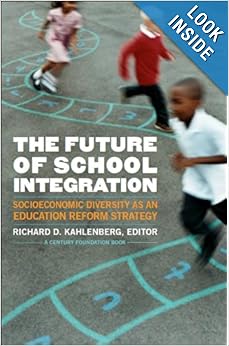
Just a few of the speakers include Dr. Gerald Grant the author of "Hope & Despair in the American City: Why There Are No Bad Schools in Raleigh," Richard Kahlenberg, Century Foundation Senior Fellow, and Caroline Massengill the past president of Magnet Schools of America.. . .