"A child's learning is the function more of the characteristics of his classmates than those of the teacher." James Coleman, 1972

Sunday, November 08, 2015

Spellings Leader in NC Taliban War on Public Ed

In August Valerie Strauss posted a report by James Hogan on the effects of the Tea Party Taliban that seized control of North Carolina politics and its public education system in 2012.

Besides draconian cuts to everything from teacher positions to drivers' ed, the Bircher wing of corporate education reform has legalized vouchers and has uncapped the growth of both non-profit and for-profit charters.  Here a a clip from Hogan's report:
N.C. teachers are prohibited by law from unionizing, but they did have a common advocacy group in the North Carolina Association of Educators. In 2011, the legislature passed a law targeting how the group collects dues from member teachers.
Then-Governor Beverly Purdue vetoed it. In 2012, the law made its way back to Purdue, who vetoed it again–but the House overrode it during a sneaky, late-night vote. (The law was later found to be discriminatory, retaliatory, and a violation of free speech and thrown out by state courts.)

But with teacher’s main advocacy group effectively muzzled, the legislature was free to run rampant, and teachers quickly came under fire.

Teacher salaries fell to near the bottom among all states in the nation and worst in the South after five years with zero pay increases. And when Republicans finally acted to increase teacher pay, they claimed to make the biggest pay hike in state history–but in reality only bumped up paychecks by an average of $270 per year. When you factored inflation into the mix, teachers were losing money.

Meanwhile, Texas and Virginia started actively recruiting North Carolina teachers to go work in their states. It didn’t take much to convince Tarheel teachers to flee–especially after some teachers discovered they earned substantially less money than when they started thanks to inflation.

In case pitiful paychecks weren’t enough to deter teachers from returning to work, the legislature next took aim at teacher tenure. The Republican-led proposal initially was to eliminate tenure altogether, but eventually they came up with a plan that would grant teachers pay raises for giving up their career status. It was, as I wrote then, a clever way of getting rid of veteran teachers.
To add the greatest insult to injury, the anti-knowledge ideologues of the NC Taliban have put Margaret Spellings in charge of UNC and the 27 other state campuses in the NC public university system.
 
If nothing else, Spellings is consistent, and it didn't take long for Maggie to let her true colors show as the new prez of UNC.  Read it and weep.

Saturday, November 07, 2015

Waltons Pump Another $50 Million into TFA Mission

Over the past three years, over a thousand teachers in Memphis have lost their jobs as public schools have been closed, charters opened, and TFA know-nothing temps hired to replace experienced faculty.

The Walton Foundation has been an ongoing financial supporter of the Walmartization of teaching in Memphis, and this week they announced that Memphis would get another $4.5 million of the $50 million spent nationally to continue the endless teacher churn, as temps come and go in the nation's poorest school districts.

As these non-teachers learn to control poor people's children, they receive heavy doses of corporate brainwashing that will keep these Corps members working far beyond their two year stints to advance the paternalistic fascism and "broken windows" pedagogy that is at the heart of the TFA movement.

The TFA missionary phenomenon represents the 21st Century version of the educational ideology advanced by white philanthropists and used in the black normal schools of Hampton and Tuskegee in the late 19th Century, when former slaves and offspring were brainwashed to go out across the South to teach children the "dignity of labor" and the acceptance of second class citizenship.

The fact that now TFA boasts that half of its missionaries are from minority groups only underscores the insidiousness of this exploitative teaching model.  As was the case over a hundred years ago, the black TFA recruits become actively complicit in the continued subjugation of disadvantaged children.


Friday, November 06, 2015

Parent Corroborates Abusive and Illegal Conditions at "No Excuses" Charters

Thanks to Norm Scott, some amazing video has been posted that details the zero tolerance penal regimen used at the "no excuses" Achievement First charter schools in New York.  

This clip below, which runs 28 minutes, features a parent who served for four years on Achievement First school board before she finally got fed up and pulled her child before he entered high school.  

The testimony in this video corroborates the conditions documented by former "no excuses" teachers, whose stories form a central part of Work Hard, Be Hard: Journeys through "No Excuses" Teaching.

Achievement First Charter School Parents Speak Out: Why they removed their children Part 1 from MORE-UFT/GEM on Vimeo.

No doubt this video will become crucial in a lawsuit that has just been filed against Achievement First in Crown Heights.  Apparently, the "lawsuit waiting to happen" has just happened.

Special education students at a Brooklyn charter school did not get mandated services and were punished for behavior that arose from their disabilities, according to a lawsuit filed in federal court on Thursday.
In addition to the charter network and the school, the suit also named the New York City Department of Education and the New York State Education Department, asserting they failed to make Achievement First, a network with schools in Connecticut and Rhode Island as well as in New York City, live up to its responsibilities.
“Kids with special needs not only should be granted accommodations for their needs, but they must be under federal and state law,” said Michelle Movahed, a senior staff attorney at New York Legal Assistance Group, a nonprofit group that is representing the students and their families. “This is not just a question of doing the right thing.”
Charter schools are publicly financed, but privately run, and they are required, like regular public schools, to provide individual learning plans for children with special needs.
The suit comes at a time when charter schools, especially those in the Success Academy network, have come under scrutiny for their enforcement of strict behavior codes, suspending even the youngest students. But advocates and families say that in both charters and traditional public schools, it can often be a struggle to ensure children with disabilities receive the services to which they are entitled.
A spokeswoman for Achievement First said on Thursday that the organization was reviewing the lawsuit. In a statement, she strongly defended the Crown Heights school’s record with special needs students.
“We serve a substantial number of students with both modest and significant special education needs, and our school leaders, teachers and other professionals work tirelessly each day to serve all our students well,” Leonore Waldrip, a spokeswoman for the charter network, said in the statement. “Most of our students who receive special education services are experiencing real growth, and we have high levels of overall parent satisfaction.
“That said, we constantly strive to improve our program and, in particular, have made significant improvements in our special education supports in recent years,” she said.
Dottie Morris, who has two children at Achievement First Crown Heights, said she had been battling with the school for years on behalf of her son, a third grader identified in the suit by his initials, D.W., to protect his privacy.
Ms. Morris said that despite her repeated requests, it took Achievement First more than two years to provide a paraprofessional to help her son. This school year, the suit asserts that Achievement First and the city’s Education Department did not provide D.W. with occupational therapy for about five weeks and physical therapy for two months, and that no makeup sessions have been arranged.
Achievement First Crown Heights has also punished D.W., who is autistic, for “behaviors that are caused by, or have a direct and substantial relationship to, his disability,” according to the complaint.
D.W. was punished by the school for not looking where he was instructed to, or for “perceived misbehavior in the noisy, crowded cafeteria, an environment that can be overstimulating to children with D.W.’s diagnosis,” the suit said. His punishments have included being sent, as a third grader, to a second-grade classroom.
The complaint describes this approach as part of Achievement First’s strict approach to discipline. It quotes the network’s website, which describes a policy of “sweating the small stuff.”
“In many urban schools, teachers and leaders ‘pick their battles,’ only addressing egregious instances of poor behavior,” the website goes on, according to the complaint. “Achievement First, on the other hand, has adopted sociologist James Q. Wilson’s ‘broken windows’ theory that even small details can have a significant effect on overall culture, and we believe that students will rise to the level of expectations placed on them.”
That approach does not work for her son, Ms. Morris said. “They treat all the kids the same,” she said. “There’s no differentiation if you have special needs.”
A spokesman for the state’s Education Department said it did not comment on pending litigation. A spokesman for the city’s Law Department said lawyers had not yet seen the suit on Thursday afternoon.


Detailing Eli Broad's Efforts to Take Over Los Angles Times

Anyone who has read the LA Times on education knows that they are just as cozy with CorpEd as WaPo, the NYTimes, or even the Nashville Tennessean.  For Eli Broad, however, coziness is not enough. He wants total control.  

The Columbia Journalism Review looks inside the ongoing efforts by Eli Broad to buy the print media in Los Angeles, where he has boasted of his plans to have half of LA's public school children attending charter chain gangs by 2023.  

The clip below indicates what Southern California readers will contend with if Broad succeeds.  It pinpoints what occurred in the recent past with Broad's hand-picked editor's effort to provide a special corporate ed news section.  This clown, Austin Beutner, was fired when Broad's first takeover failed:
For those in the newsroom, more concerns had surfaced. While current and former Times staffers spoke in support of Beutner’s local-first sales pitch, several expressed consternation that the former publisher’s influence was also seeping into the news pages. But they declined to go on the record with specific examples. 
“He didn’t want a newspaper that was edited from Chicago,” Newton says. “All of that was good on paper. In practice, it’s difficult to have a publisher who’s so immersed in the politics of the place. It’s difficult to say whether some of these initiatives were made for the good of the region or a manifestation of the publisher’s politics. Inevitably, with pluses come complications.” 
Take Beutner’s August launch of a single-subject education verticle, an effort backed by pro-charter nonprofits including the Broad Foundation. “We didn’t have a revenue model to support education coverage,” Beutner says. “I said [to the foundations], You guys spend a ton of money on advocacy to help inform people, but if you give us money, we can help you reach those people who aren’t informed.” 
Broad’s money, in addition to other foundation funding, allowed the Times to hire two full-time K-12-focused education reporters for at least two years. 
There have been inconsistencies with disclosing the relationship in subsequent Broad- or charter-related education coverage. What’s more, multiple staffers said the newsroom was not informed of the vertical’s financial backing until Beutner’s note to readers publicizing its launch. A Times spokeswoman pegged the lack of an internal announcement to a miscommunication, not a coverup. 
Still, one staffer says, “this might have crossed the line because Broad is such a player. There’s the perception issue, which is just as important as whether he’s involved in dictating storylines.”

Thursday, November 05, 2015

SHAME ON ED WEEK'S TAKE ON DIFFERENTIATED INSTRUCTION


We shouldn’t be framing instruction around a pair of words. We frame instruction based on both the population of our classes and the subject matter we teach. Creativity not uniformity of instruction packets is the key.

Those of us who have taught in urban districts, where diversity in the classroom is the norm have known this from “back in the day” when we were students.

Differentiation is not an instructional model. It is instruction. Period. Kids aren’t test tubes with whom researchers experiment.

All learning is personal. All students, even those without special needs of various sorts, have individualized learning styles. My second grade teacher back in 1956-7 knew that.  In fact, the 36 of us from a poor/working class neighborhood in the South Bronx felt it. 

She, along with her husband went on to research and train teachers in that for years, before anyone mandated it.


Frankly I am tired of researchers and journalists telling us what differentiation is via a “primer” like this article.

From the article:

“Differentiation” tailors instruction by presentation. A teacher may vary the method and assignments covering the material to adjust to students’ strengths, needs, and interests. For example, a teacher may allow an introverted student to write an essay on a historical topic while a more outgoing student gives an oral presentation on the same subject. That distinction is accepted by some, though far from all, in the field.

The ambiguity has led to widespread confusion and debate over what differentiated instruction looks like in practice, and how its effectiveness can be evaluated.”

Presentation? Who uses that word while teaching?  Right there one knows the author never taught.

Ambiguity? Of course it is ambiguous. It is individualized differentiation. There is no timed solution. Kids don't fit into little prescribed boxes so effectiveness can be evaluated.


Shame on Ed Week.

Wednesday, November 04, 2015

Koch Ca$h Not Enough to Save Privatizers

If you are a Nashville school board member with ideological or financial ties to the corporate reform school crowd, you should look out.  A wave is building that is not for you to ride.

from Valerie Strauss:
It was a bad night for conservative school reformers in two Colorado elections being watched nationally in the education world — and public education advocates did well in key Philadelphia races as well.

Voters in the Denver suburb of Jefferson County on Tuesday tossed out three conservative members in a recall vote that was marked by some $1 million in spending, including support for the incumbents from a Koch-backed organization. The school board earned national attention when the members in 2014 said the Advanced Placement U.S. History course was not patriotic enough and needed to be changed.

In Douglas County south of Denver, voters who in 2009 and 2013 supported conservative reformers for the school board voted against three of them who had pushed controversial measures, including a voucher program.

According to the Denver Post,  the votes weren’t close, as predicted. It said that in Jefferson County, the recall won 64 percent to 36 percent. In Douglas County, the incumbents lost 58 percent to 42 percent.

In Jefferson County, Julie Williams, Ken Witt and John Newkirk  have been in office for two years. They won seats in 2013 on the five-member board and moved quickly to institute controversial school reforms, including a merit pay system for teachers and an educator evaluation system that used student test scores.

Public school activists charged that the three were part of a reform movement trying to privatize public education and started a recall effort that attracted national attention, including money from outside the state from partisans on both sides. Americans for Prosperity, the national organization founded by Charles and David Koch, contributed to the reformers, while unions supported their opponents. Some $1 million was believed to have been spent in the race, one of a few local elections around the country in which outside money played a role.


Tuesday, November 03, 2015

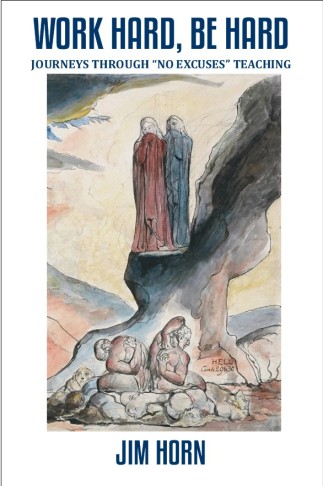
Work Hard, Be Hard: Journeys through "No Excuses" Teaching

Today Dr. Julian Helig posted this advance review of my book, which includes chapters by Drs. Scott Ellison and Barbara Veltri.  The pre-order info below is from Rowman & Littlefield's website.

Work Hard, Be Hard:  Journeys Through "No Excuses" Teaching

This book explores the ideological contexts for the creation and spread of “No Excuses” charter schools. In so doing, Work Hard, Be Hard... focuses closely on the Knowledge Is Power Program (KIPP) charter school chain as the most prominent exemplar for total compliance “No Excuses” schooling. By way of in-depth interviews, former teachers offer accounts of their “No Excuses” teaching experiences that have not been heard before and that are not likely to be forgotten soon.

Work Hard, Be Hard... also examines the KIPP organization as a manifestation of modern education reform exemplified in the convergence of neoliberal politics and the aggressive activities of the business and philanthropic communities. As an important corollary to the total compliance charter phenomenon, the book explores, too, the role of Teach for America in supplying the needed manpower and values components required to deal with very high levels of teacher attrition in these schools.

Work Hard, Be Hard... goes beyond accounts offered in news features, articles, and interviews that focus on “No Excuses” charters’ high test scores and expanded college opportunities for economically disadvantaged children. In short, the book offers a naturalistic antidote to the high profile gloss that mass media provides for “No Excuses” schooling.

Work Hard, Be Hard... examines new developments in “No Excuses” schooling that focus on psychological interventions aimed to alter children’s neurological and behavioral schemas in order to affect socio-cultural values and behaviors. Fraught with potential for abuse and misapplication by minimally trained teachers, these cult-like practices are examined and contrasted with more humane strategies that hope to reawaken the virtues of teaching and learning within the expansive confines of the sciences and arts of a truly humane pedagogy.

Table of Contents
Preface
Introduction: “Negro Problems” and Philanthropic Solutions
Chapter 1: The New Gospel of “Work and Money”
Chapter 2: Broken Windows Theory and the KIPP Teaching Model
Chapter 3: Neoliberalism Goes to School (by Scott Ellison)
Chapter 4: Whence No Excuses?
Chapter 5: KIPP and the Teaching Profession
Chapter 6: The KIPP Teaching Experience
Chapter 7: Teacher Highs and Lows
Chapter 8: What Was it Like to Teach at KIPP?
Chapter 9: Teach for America’s Socialization and Manipulation (by Barbara Veltri)
Chapter 10: “KIPP is the grad school for TFA gluttons for punishment”
Chapter 11: Special Needs Students & the KIPP Model: “A Lawsuit Waiting to Happen”
Chapter 12: The Final KIPP Interview
Chapter 13: The Reach of the KIPP Model
Chapter 14: A Model Whose Time Has Past
Chapter 15: Another Generation of the KIPP Model?
Chapter 16: The KIPP Fresno Story
Chapter 17: The KIPP Model and the Media
Conclusion
References
Index
This book will:
  • Function as a common reader for parent groups or individuals interested in understanding the inner workings and impacts of “no excuses” charter schools;
  • Serve as a text for education students for courses in pedagogy, social and cultural foundations of education, education policy, and politics of education;
  • Provide deeper appreciation of social, political, and economic issues and incentives associated with total compliance charter schools;
  • Help to ameliorate an absence of teacher perspectives on teaching in “No Excuses” charter schools;
  • Assist the general public in understanding the ideological and economic agendas that drive support of total compliance charter schools;
  • Help to educate policy makers and their staffs in cultural and economic facets of corporate education reform that are relevant to political decisions regarding education policy. 
REVIEWS
The desire for order—for kids to shut up and listen—is universal—and I always thought we were in danger of letting it be too important. And these descriptions of KIPP give us picture of what ‘uniform enforcement’ looks like—when people let it…. This is an important book. I’ve never paid much attention to KIPP. Now I see how scary and terribly racist it is.  —Susan Ohanian, educator, activist, and author of "What Happened to Recess" and "Why Are Our Children Struggling in Kindergarten?"
This book is the foundation for changing the disastrous course the U.S. (and soon the rest of the world) is on….The philosophy underlying the KIPP movement is impacting not only KIPP schools and similar schools but education in general, world-wide…. I am convinced that this book will be at least the book of the decade. Up there with The Shock Doctrine. —Stephen Krashen, PhD, professor emeritus, University of Southern California

Rowman & Littlefield Publishers
Pages: 270 • Size: 6 x 9
978-1-4758-2579-4 • Hardback • February 2016 • $85.00 • (£54.95)
978-1-4758-2580-0 • Paperback • February 2016 • $42.00 • (£27.95)
978-1-4758-2581-7 • eBook • February 2016 • $41.99 • (£27.95) (coming soon)
Subjects:  Education / Educational Policy & Reform / Charter Schools, Education / Professional Development, Education / Teaching Methods & Materials / General, Education / Learning Styles

First Grader Handcuffed by School Cop

Monday, November 02, 2015

How Will Ed Reform Screw This Up?

The New York Times has a big story this morning about the soaring popularity of story time at public libraries across the land.   

Is it a reaction to to the all-out retreat by imagination in school, where Common Core puts HP printer installation guides on par with Tom Sawyer and Huck Finn?  

Do parents know that the time before preschool is the only time remaining that children may be encouraged to exercise their unrestrained need to imagine?

How will the paternalistic ed deformers screw up this childhood experience, too?


Sunday, November 01, 2015