"A child's learning is the function more of the characteristics of his classmates than those of the teacher." James Coleman, 1972
Showing posts with label books. Show all posts

Saturday, November 24, 2012

Refocusing LAUSD on reading and learning instead of testing

First published on Robert D. Skeels for School Board on November 24, 2012.


It's difficult to explain exactly what being poor is all about, or why access to books and ideas might be as important as a free breakfast. — Walter Dean Myers

The Power of Reading by Stephen KrashenHope Is an Open Book, an op-ed piece by author Walter Dean Myers, was tweeted this morning by educator Susan Ohanian. While written in 2005, Myers' message about access to books is profound and even more urgent today with canned corporate education solutions that narrow curriculum dominating policy. Sadly, Los Angeles Unified School District (LAUSD) is run by a Superintendent who neither values books, nor libraries. This has to change, and change quickly. We need to shutdown LAUSD's testing-industrial-complex and reopen both our school and classroom libraries. Reopening libraries also means rehiring credentialed librarian-educators. We can pay for that by ditching discredited and expensive attempts to tie teacher evaluations to test scores (VAM/AGT) and use the millions of squandered dollars associated with them. Read with your children, read in front of your children, and let them choose their own reading materials. It's a proven formula for fostering authentic life-long learning.

Free Voluntary Reading (FVR) is a well researched methodology in which students are allowed to choose their own reading materials. Professor Stephen Krashen and his colleagues have found that "[r]ecreational reading or reading for pleasure is the major source of our reading competence, our vocabulary, and our ability to handle complex grammatical constructions." The Power of Reading, Second Edition: Insights from the Research is an excellent text to familiarize oneself with the concepts and research behind FVR.

Saturday, September 29, 2012

Kopp's shameless self-promotion in the guise of a Kozol book review

"Ms. Kopp's husband, Richard Barth, was an Edison executive before taking over as CEO of KIPP's national foundation, where he has sought to decertify its New York City unions." — Jesse James Alred
Separate is never equal: TFA, KIPP, and corporate charter schools are the new Jim Crow.One thing I'll concede to the corporate education reformers is their uncanny ability to use anything as a sales pitch for neoliberalism and profitability. Perhaps the most egregious example of this was Arne "Katrina Schadenfreude" Duncan's racist pro-charter school statement that the abject disaster was "the best thing that happened to the education system in New Orleans." Not to be outdone by a dullard second rate basketball player masquerading as Secretary of Education, education reform mogol Wendy Kopp has taken the dark art of corporate spin to a whole new level.

I can think of only a handful of individuals who would be more inappropriate to review Jonathan Kozol's latest book than Kopp, but unfortunately the Washington Post gave her the space. Kopp's review of "Fire in the Ashes: Twenty-five Years Among the Poorest Children in America" can only be described as shameless self-promotion. Laden with half-truths, outright lies, and contorted pats to her own back, Kopp doesn't miss an opportunity to spread meritocracy myths, plug privatization, and pander calloused right-wing catch phrases like "demographics need not be destiny."

Kopp uses each transition of theme to mildly chastise Kozol, mendaciously suggesting that things are getting better all the time (and in no small part to thanks to her endeavors). The entire piece reads as "Yes, Kozol accurately describes things as they were decades ago, but thanks to the heroic efforts of myself and other hedge fund backed reformers, society is well on its way to solving its deepest systemic problems." It is cringe inducing, but worth reading to understand the full pathology of white savior syndrome.

I posted the following commentary under her so-called review:

Ms. Kopp's "review" is little more than misplaced self-congratulatory drivel. It would have been better if she had just been honest and stated from the get-go that she wished Johnathan Kozol had written a book about her and her fellow corporate education reformers.

To wit she lists some of the most vile organizations on the leading edge of privatization at the end of her piece and insinuates they are somehow changing systemic problems. KIPP, those colonial centers of cultural sterilization that often have between 40-60% attrition rates. Harlem Children’s Zone where charlatan Geoffrey Canada pays himself a half a million a year for doing things like kicking out an entire class of children since they were making him look bad on standardized tests. Union busting Stand for Children whose haughty arrogance resulted in the victorious Chicago teachers' strike. Rest assured her litany of corporate privatizers are part of the problem, not the solution.

No where is the wealthy white Kopp's detachment from reality and obsequiousness to power and privilege more apparent than her disgusting homage to petty dictator Bloomberg. To call the NYC Mayor's tenure anything other than abject disaster is to reach heights of mendaciousness never scaled before.

Kozol is a luminary of the social justice crowd, while Ms. Kopp is a pariah at best. I know her constant company of hedge fund managers, billionaire bankers, and fetid politicians keep her in a reality detached from the subject she thinks she has expertise in, and when she uses repulsive phrases like "social entrepreneurs," she pretty much proves how obtuse she is. When I was coming up veteran activists had a difference phrase for "social entrepreneurs," they called them "poverty pimps." Frankly it's embarrassing to allow Kopp to review any work by Kozol. Let's hope the Post shows better judgement in the future.

The most important response to Kopp's hamfisted plugging of corporate education reform won't be found in any polemics or critiques of her. Rather it will be found in taking actions to implement authentic reforms that are the antithesis of Kopp and her cadre of neoliberal profiteers. Reading Kozol is a great start, and creating neighborhood book circles to read works by him and other social justice authors are an excellent way of educating community members with facts to counter the corporate narrative. Ultimately organizing ourselves to put that theory into action is the only thing that will stop neoliberalism—just like the parents, community members, and activists who stood alongside the striking Chicago Teachers Union.


For a more humorous take on this topic, see EduShyster's Kopp to Kozol: Your New Book Didn’t Mention Me Once!

Sunday, October 24, 2010

Everything Bold Deformers Never Wanted to Know About Education

A hundred years ago the first "scientific" generation of bold reformers set out to right America's education ship.  White, male, Protestant and business class all, they were armed with the new behaviorist psychology, the new principles of scientific management, and the new pseudo-science of eugenics.  They created the perfect sorting machine based on intelligence testing and other standardized measures, where poor children at age 5 or 6 were slotted into industrial training schools or vocational prep if they were lucky.  The high scorers went on to high school and college.

Today's education deformers, weaponized with the same antique armaments, advocate for no such distinctions in their education crusade.  Everyone should go to college.  And besides, there aren't any vocations anymore to require vocational training. 

Old habits are hard to break, however, and the evidence for it can be found in the fact that we still use the same primitive sorting devices we used then to do a similar sort of sorting, except now we pretend that poverty is not an excuse for scoring poorly.  Back then we just assumed the poor deserved to be poor because of defective germ plasm, i. e., genes.  Those who could not be sterilized could be isolated in ghettos, which they were.  Today's poor scores by the poor, however, are blamed on bad teaching rather than bad blood, and it doesn't seem to matter that every standardized testing system, whether the SAT or the state tests such as the MCAS, shows almost direct correlation between family income and test scores.

Still everyone must go to college, rich or poor, or so says today's myth.  Never mind that the well-heeled send their high-SAT scoring Winthrops and Caitlins to BU and Tufts, while Miguel or Chapelle must borrow heavily to hook up online to one of the predatory for-profit diploma mills that eventually will leave them with debts they can never repay with the worthless degrees they have earned.

But, of course, the bold deformers know none of this history that shows the same exploitative social reproduction happening today that occurred so often during the past hundred years of "reform."  But educational history is not the only area of total ignorance on parade by today's billionaire boys' club, all glassy-eyed with positivity and as jittery with entrepreneurial zeal as a bunch of hamsters on new wheels.

Gary Stager picks up the story, with a few good books that could go a long way if today's deformers were not so adamant in remaining totally stupid in every area pertaining to education.  From HuffPo:

Shouldn't people bold enough to call themselves "school reformers" be familiar with some of the literature on the subject?

Most of the school leaders who signed last weekend's completely discredited "manifesto," are unqualified to lead major urban school districts. Michelle Rhee and Joel Klein are not qualified to be a substitute teacher in their respective school districts. U.S. Secretary of Education Arne Duncan could not coach basketball in the Chicago Public Schools with his lack of credentials. Therefore, it comes as no surprise that they advocate schemes like Teach for America sending unprepared teachers into the toughest classrooms armed with a missionary zeal and programmed to believe they are there to rescue children from the incompetent teachers with whom they need to work. In public education today, unqualified is the new qualified.

The celebration of inexperience and lack of preparation is particularly disconcerting when it comes to education policy. When you allow billionaires, ideologues, pop singers and movie viewers to define reform, you get Reform™.
Reform™ narrowly defines school improvement as children chanting, endless standardized testing preparation, teacher bashing and charter-based obedience schools who treat other people's children in ways that the rich folks behind Reform™ would never tolerate for children they love.

If that were not bad enough, Reform™ advances a myth that there is only one way to create productive contexts for learning. It ignores the alternative models, expertise and school improvement literature all around us. Public education is too important to society to allow the ignorant to define the terms of debate. Great educators stand on the shoulders of giants and confront educational challenges with knowledge, passion and intensity when afforded the freedom to do so. There are a great many of us who know how to amplify the enormous potential for children, even if we are ignored by Oprah or NBC News.

Reading is important for children and adults alike. Therefore, I challenged myself to assemble an essential (admittedly subjective) reading list on school reform. The following books are appropriate for parents, teachers, administrators, politicians and plain old citizens committed to the ideal of sustaining a joyful, excellent and democratic public education for every child.

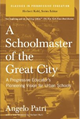
In A Schoolmaster of the Great City: A Progressive Education Pioneer's Vision for Urban Schools, school teacher and principal Angelo Patri identifies and solves every problem confronting public education. This feat is all the more remarkable when you learn that the book was published in 1917!

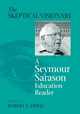
Recently deceased Yale psychologist Dr. Seymour Sarason published forty books on a wide range of education issues well into his eighties. A good place to start is The Skeptical Visionary: A Seymour Sarason Reader. You have to admire a guy who published a book with the title, The Predictable Failure of Educational Reform: Can We Change Course Before It's Too Late, twenty years ago! Books written in the 1990s, And What do YOU Mean by Learning, Political Leadership and Educational Failure and Charter Schools: Another Flawed Educational Reform? remain quite timely and instructive.

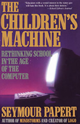
No serious citizen or educator concerned with the future of education can afford to ignore the role of technology in learning. Jean Piaet's protegé, Seymour Papert, began writing about the potential of computers to amplify human potential in the mid-1960s. His view is a great deal more humane and productive than using computers to quiz students in preparation for standardized tests. All of Papert's books and papers are worth reading, but I suggest you start with The Children's Machine: Rethinking School in the Age of the Computer.

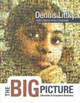
Want to see what sustainable scaleable school reform looks like where children are treated as competent? The Big Picture: Education Is Everyone's Business by Dennis Littky with Samantha Grabelle describes urban high schools with small classes, consistent student teacher relationships and an educational program based on apprenticeship. Students don't go to "school" on Tuesdays and Thursdays. They engage in internship experiences in the community in any field that interests them. The other days of the week, the curriculum is based on whatever the students need to learn to enhance their internships. This is not vocational. It prepares students for university or any other choice they make. The Big Picture model has spread across the United States with impressive results.

The biography of Big Picture Schools co-founder Dennis Littky, Doc: The Story Of Dennis Littky And His Fight For A Better School, by Susan Kammeraad-Campbell may be the first school reform thriller. The book chronicles how Littky transformed a failing school and was wrongfully fired the second political winds changed. Anyone interested in "reforming" public education would be well advised to read this exciting page-turner.

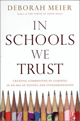
MacArthur Genius Deborah Meier has forgotten more about effective teaching and urban school reform than today's entire generation of "reformers" ever knew. Meier is often considered the mother of the small school movement and her work as the founder of the Central Park East Schools and Mission Hill in Boston remain influential inspiration for parents and educators committed to the preparation of learners with the habits of mind required for a healthy democracy. Her book, In Schools We Trust: Creating Communities of Learning in an Era of Testing and Standardization, is a masterpiece sharing the wisdom developed over more than a half century of teaching and school leadership. You should also read Meier's weekly online discussion with Diane Ravitch, the Bridging Differences blog.

The Schools our Children Deserve: Moving Beyond Traditional Classrooms and "Tougher Standards" is but one of the many terrific books by Alfie Kohn in which he challenges conventional wisdom on sacrosanct topics like homework, grades, standardized testing and rewards with clarity and evidence. His books are fearless and make you think. His articles are collected at Alfiekohn.com. Alfie's small book, The Case Against Standardized Testing: Raising the Scores, Ruining the Schools should be on the kitchen table of every parent and teacher. If you're tired of reading, you may watch two terrific Kohn lectures on the DVD, No Grades + No Homework = Better Learning.

Dr. Theodore Sizer was a school principal, Dean of the Harvard Graduate School of Education and unofficial leader of the high school reform movement over the past twenty-five years. His intellect, calm demeanor and practicality led to the creation of the Coalition of Essential Schools and a template by which any secondary school could improve from within. The first book in his "Horace trilogy," Horace's Compromise, tells the story of American high schools, warts and all, through the eyes of a fictional English teacher, Horace Smith. This book and the two that follow share Horace's epiphanies about the shortcoming of American high schools, their strengths and how he and his colleagues can make their school better. The organization Sizer founded, The Coalition of Essential Schools, continues to inspire such local reform efforts one school at a time.

National Book Award-winning author, educator and civil rights activist has been giving voice to the poorest children in our nation and the injustice they face since the 1960s. All of Kozol's books are equal-parts profound, infuriating and inspirational, but the tender and beautifully written, Ordinary Resurrections: Children in the Years of Hope, reminds us why we should care about public education.

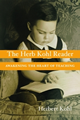
Herbert Kohl has shared his insights as a teacher and teacher educator in dozens of brilliant books. His recent anthology, The Herb Kohl Reader: Awakening the Heart of Teaching, should whet your appetite for reading many more of his books.

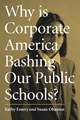
There is no more fierce or tireless critic of the higher tougher meaner standards and accountability movement than Susan Ohanian. The book she co-authored with Kathy Emery, Why is Corporate America Bashing Our Public Schools? engages in the old-fashioned "follow the money" journalism we keep waiting for from news organizations. This book will help you understand how we got to reform being defined and advanced by billionaire bullies.

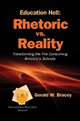
Right before he died last year, respected scholar, Gerald Bracey published, Education Hell: Rhetoric vs. Reality - Transforming the Fire Consuming America's Schools. This book disembowels many of the premises and data used to justify the high-stakes accountability rhetoric and school reform strategies currently being advanced. It's a must read!


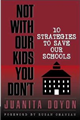
Not With Our Kids You Don't! Ten Strategies to Save Our Schools by Juanita Doyon is a short must-read book for parents tired of their schools being turned into little more than Dickensian test-prep sweatshops. The book was written by a fed-up mom, turned activist from Washington who has upended her state's political establishment in defense of the sort of high quality education Americans came to expect before No Child Left Behind.

Sunday, June 13, 2010

Alert: Books Educate Children!

A novel idea, pun intended:

Can a $50 stack of paperback books do as much for a child's academic fortunes as a $3,000 stint in summer school?

An experimental program in seven states may help answer that question this summer as districts from Nevadato South Carolina give thousands of low-income students an armful of free books.

Research has shown that simply giving children books may be as effective as summer school — and a lot cheaper. The big question is whether the effect can be replicated on a larger scale and help reduce the USA's nagging achievement gap between low-income and middle-class students.. . .