Sunday, July 30, 2023

Friday, September 21, 2018
School Libraries and Books Critical for School Success
Friday, December 11, 2015
Students Take Action to Save Dusable High School Library
DuSable High School students have organized a sit-in to get CPS to bring back their librarian.
BRONZEVILLE — At least 200 students from DuSable High School walked out of class Friday as part of a demonstration to bring back their beloved librarian and stop the library from closing.
Friday, October 03, 2014
LA Times will support John Deasy so long as their customers are corporate advertisers, rather than LAUSD schoolchildren
I was interested in the fact that the scandal over Deasy's PhD hit the headlines at the same time he was hired by Gates. His financial connections with Robert Felner date back to his Santa Monica days — Susan Ohanian
 Reaching dizzying heights of comedic apologetics for beleaguered Broad Superintendent Academy graduate John Deasy, the Los Angeles Times has penned daily editorials and articles pleading the public to pressure our elected school board into laying down and ignoring Deasy's latest batch of failures. Like any first year law student I've been very busy. Too busy to respond to all of their wrongheaded propaganda, but today's editorial forced me to divert my attentions. I responded thusly:
Another breathtakingly mendacious editorial by the stenographers of plutocracy—also known as the Los Angeles Times. Ignoring the vicious attacks on our elected school board members, and the poisonous vitriol towards our working class teachers this ham-fisted screed metes out, let's look at some of the lies of omission regarding the individual who was ignominiously run out of both Prince George's County and Santa Monica-Malibu Unified School Districts.
Putting aside Deasy's relationship to convicted felon Robert Felner, and the concerns regarding the irregularities of Deasy's academic credentials, here is a "greatest hits" list of Deasy's tenure at LAUSD.
- Implemented costly and academically discredited DIBELS®, a product of a company called the Dynamic Measurement Group, which is neither State nor Federally mandated.
- Squandered an additional $18 million on SAP consultants to fix issues that happened under his predecessors, rather than demand contract performance from original deal.
- Spent countless millions implementing his widely discredited VAM/AGT scam, a pseudoscience that recently saw even the American Statistical Association release a scathing report about.
- Deasy's callous and improper handling of the Miramonte scandal.
- The MiSiS disaster, which any competent administrator would have avoided. Even the somewhat conservative AALA severely criticized Deasy's many missteps on this.
- The unethical, improper, and possibly illegal handling of the Pearson plc and Apple Inc. contracts. The details of which could result in indictments.
Any one of these would have ousted a Superintendent, but because Deasy has Eli Broad immunity, He has been able to avoid termination, and perhaps even criminal prosecution. It's time for this reign of incompetence to end.
Dr. Cynthia Liu, of K12NN fame, had some additional Deasy "hits" that I failed to list. They are reproduced here.
Two things from K12NN if you're writing to the LA Times to urge that Deasy resign:
Examples of gross incompetence by Deasy: 4th largest CA school district Fresno USD conducted an external FCMAT tech review of their district's needs before embarking on any new purchases or upgrades. Second largest CA school district, San Diego USD, did its own year-long tech review and spoke to teachers, parents, students, IT support staff, other school staff, and administrators about the technology strategic plan, then used a specific tech bond to fund the rollout.
The Los Angeles Times keeps insisting their obsequious support for Deasy is based on "his sense of urgency". There's a word for urgency without intelligence, reasonableness, or forethought — that word is recklessness. The last thing our school district needs is an individual whose recklessness remains unabated and unchecked. Deasy needs to resign. Now.

 Robert D. Skeels is a social liberation writer, attorney, public education advocate, immigrant rights activist, and law professor. He lives, works, writes, and organizes in Los Angeles with his wife and cats. Robert holds a BA in Classical Civilization from the University of California at Los Angeles (UCLA), a JD from Peoples College of Law (PCL), and passed the California Bar Exam on his first attempt. A US Navy Veteran, he is a proud member of Veterans for Peace. A student of Liberation Theology and Paulo Freire's work, Robert volunteers for community and 12 step groups. Robert's articles and essays appear in publications including Jacobin, Truthout, CounterPunch, Dissident Voice, Schools Matter, Daily Censored, Regeneración, K12NN, LA Progressive, and The Los Angeles Daily News. In 2013 Robert ran for the LAUSD School Board against a billionaire funded corporate reform candidate, finishing second in a field of five, with over 5,200 votes.
Thursday, September 26, 2013
Research proven: School Libraries and Free Voluntary Reading. Unproven and expensive: CCSS and iPads
Research proven: School Libraries & Free Voluntary Reading. Unproven and expensive: #CCSS & iPads. #LAUSD @skrashen pic.twitter.com/Cg2z5Z7uxM
— Robert D. Skeels (@rdsathene) September 26, 2013
The former means engaged critical thinking, but the latter leads to more corporate profits and increased market share for PSO, AAPL, MHGE, NWSA, and others.
Robert D. Skeels is a social liberation writer, attorney, public education advocate, immigrant rights activist, and law professor. He lives, works, writes, and organizes in Los Angeles with his wife and cats. Robert holds a BA in Classical Civilization from the University of California at Los Angeles (UCLA), a JD from Peoples College of Law (PCL), and passed the California Bar Exam on his first attempt. A US Navy Veteran, he is a proud member of Veterans for Peace. A student of Liberation Theology and Paulo Freire's work, Robert volunteers for community and 12 step groups. Robert's articles and essays appear in publications including Jacobin, Truthout, CounterPunch, Dissident Voice, Schools Matter, Daily Censored, Regeneración, K12NN, LA Progressive, and The Los Angeles Daily News. In 2013 Robert ran for the LAUSD School Board against a billionaire funded corporate reform candidate, finishing second in a field of five, with over 5,200 votes.
Saturday, November 24, 2012
Refocusing LAUSD on reading and learning instead of testing
First published on Robert D. Skeels for School Board on November 24, 2012.
It's difficult to explain exactly what being poor is all about, or why access to books and ideas might be as important as a free breakfast. — Walter Dean Myers
 Hope Is an Open Book, an op-ed piece by author Walter Dean Myers, was tweeted this morning by educator Susan Ohanian. While written in 2005, Myers' message about access to books is profound and even more urgent today with canned corporate education solutions that narrow curriculum dominating policy. Sadly, Los Angeles Unified School District (LAUSD) is run by a Superintendent who neither values books, nor libraries. This has to change, and change quickly. We need to shutdown LAUSD's testing-industrial-complex and reopen both our school and classroom libraries. Reopening libraries also means rehiring credentialed librarian-educators. We can pay for that by ditching discredited and expensive attempts to tie teacher evaluations to test scores (VAM/AGT) and use the millions of squandered dollars associated with them. Read with your children, read in front of your children, and let them choose their own reading materials. It's a proven formula for fostering authentic life-long learning.
Free Voluntary Reading (FVR) is a well researched methodology in which students are allowed to choose their own reading materials. Professor Stephen Krashen and his colleagues have found that "[r]ecreational reading or reading for pleasure is the major source of our reading competence, our vocabulary, and our ability to handle complex grammatical constructions." The Power of Reading, Second Edition: Insights from the Research is an excellent text to familiarize oneself with the concepts and research behind FVR.
Robert D. Skeels is a social liberation writer, attorney, public education advocate, immigrant rights activist, and law professor. He lives, works, writes, and organizes in Los Angeles with his wife and cats. Robert holds a BA in Classical Civilization from the University of California at Los Angeles (UCLA), a JD from Peoples College of Law (PCL), and passed the California Bar Exam on his first attempt. A US Navy Veteran, he is a proud member of Veterans for Peace. A student of Liberation Theology and Paulo Freire's work, Robert volunteers for community and 12 step groups. Robert's articles and essays appear in publications including Jacobin, Truthout, CounterPunch, Dissident Voice, Schools Matter, Daily Censored, Regeneración, K12NN, LA Progressive, and The Los Angeles Daily News. In 2013 Robert ran for the LAUSD School Board against a billionaire funded corporate reform candidate, finishing second in a field of five, with over 5,200 votes.
Friday, October 05, 2012
Deasy the Dauphine of LAUSD returns to his "let them eat ebooks" theme
"These "data-driven" investors are not so much interested in students' scores, as in the opportunities to cut costs by using online technology... The central question, says education entrepreneur John Katzman is "How do we use technology so that we require fewer qualified teachers?"" — Jeff Faux
A "RIFed" (laid off) Los Angeles Unified School District (LAUSD) teacher posted a link to an LA Times piece on my facebook page this morning with the following note: "I'm laid off, but let's buy more equipment."
LAUSD's tablet plan doesn't compute was surprisingly critical of the Broadyte Superintendent given they usually treat him with the reverence that sycophant monarchists afforded that Dauphine of France whose flippant attitudes towards the lower classes were much like Deasy's. In fact it might be the first ever Times editorial mildly critical of Deasy and his corporate reforms.
I posted the following comments:
Tablets like iPads are wonderful, but they're a long way from being a reasonable replacement for school libraries and students having access to books.
According to research cited by Dr. Stephen Krashen "ebooks only account for one-half of one percent of school library collections, and this is predicted to increase to only 7.8% in five years."
In other words, the content isn't there, so bringing in technology is an abject waste of funds. Deasy has been on the wrong side of this from the get go. It makes me wonder if he has stock holdings in firms that provide tablets.
For a background on this topic and links to the research see: John Deasy's Queen Antoinette moment: "let them eat ebooks". This isn't about being anti-technology, it's about budget priorities and understanding the limits of both technology and the availability (or dearth thereof) of academic content in digital format. A hipster corporate reformer recently called me a Luddite, I guess he doesn't know what I do at my day job. Let it suffice that I know a little bit about that whole technology thing.
The point is that purchasing technology for technology's sake isn't just wasteful, it's criminal, especially during the budget crisis our district is suffering. LAUSD needs to restore school libraries, classroom libraries, reduce class sizes, hire back librarians, teachers, and other educators first. Then we can talk about introducing more technology when appropriate and when the content is there.
Robert D. Skeels is a social liberation writer, attorney, public education advocate, immigrant rights activist, and law professor. He lives, works, writes, and organizes in Los Angeles with his wife and cats. Robert holds a BA in Classical Civilization from the University of California at Los Angeles (UCLA), a JD from Peoples College of Law (PCL), and passed the California Bar Exam on his first attempt. A US Navy Veteran, he is a proud member of Veterans for Peace. A student of Liberation Theology and Paulo Freire's work, Robert volunteers for community and 12 step groups. Robert's articles and essays appear in publications including Jacobin, Truthout, CounterPunch, Dissident Voice, Schools Matter, Daily Censored, Regeneración, K12NN, LA Progressive, and The Los Angeles Daily News. In 2013 Robert ran for the LAUSD School Board against a billionaire funded corporate reform candidate, finishing second in a field of five, with over 5,200 votes.
Monday, April 09, 2012
Don't Miss This One: Stephen Krashen at Occupy the DOE
Thursday, October 27, 2011
Cutting Libraries in a Recession...

HT/4LAKids
Robert D. Skeels is a social liberation writer, attorney, public education advocate, immigrant rights activist, and law professor. He lives, works, writes, and organizes in Los Angeles with his wife and cats. Robert holds a BA in Classical Civilization from the University of California at Los Angeles (UCLA), a JD from Peoples College of Law (PCL), and passed the California Bar Exam on his first attempt. A US Navy Veteran, he is a proud member of Veterans for Peace. A student of Liberation Theology and Paulo Freire's work, Robert volunteers for community and 12 step groups. Robert's articles and essays appear in publications including Jacobin, Truthout, CounterPunch, Dissident Voice, Schools Matter, Daily Censored, Regeneración, K12NN, LA Progressive, and The Los Angeles Daily News. In 2013 Robert ran for the LAUSD School Board against a billionaire funded corporate reform candidate, finishing second in a field of five, with over 5,200 votes.
Saturday, September 24, 2011
John Deasy's Queen Antoinette moment: "let them eat ebooks"
On September 14, 2011 former Gates Foundation executive and Broad Superintendents Academy graduate John Deasy gave a much ballyhooed speech at Occidental College. While I may have time in the future to critique his mendacious stream of business-speak, which amounted to a clever corporate couching of school privatization in the language of "civil rights," it was his aloof response to an attendee's pertinent question on school libraries that deserves an immediate response. Here's a quote from an attendee who endured Deasy's verbal assault on public education:"[O]ne of Rosemary's questions about his shutting school libraries got through. He said libraries would be irrelevant soon as books will move to electronic format. This was after he lamented about the plight of a homeless student living in a tent. I kid you not. I guess the kid in the tent will have to access books on the $800 I-Pad he can't afford."
A pointed and poignant question indeed to Los Angeles Unified School District's (LAUSD) Superintendent John Deasy, a man who deliberately gutted LAUSD's libraries in defiance of California's Assembly Bill 114, which was supposed to mandate the district spend its copious surplus funds on retaining the very personnel Deasy and company gleefully laid off. Laid off in a most ignominious fashion by the way, as Hector Tobar's The disgraceful interrogation of L.A. school librarians chronicled. Deasy's vapid and vacuous response to the library question sums up everything about corporate education reforms and shows why Deasy was hand selected to implement the neoliberal agenda in Los Angeles.
As disgusting as Deasy's quote about libraries being irrelevant was, it wasn't surprising considering his astonishing wealth and privilege. For wealthy white males like Deasy, poverty is something you see on television and it's easily solved by applying forms of the meritocracy myth via vile "no excuses" rhetoric and corporate privatization policies cloaked as promoting "high expectations." Deasy's own phrasing of the threadbare right-wing no excuses rhetoric reads as follows: "I actually believe that no other issue—circumstances of poverty, one parent, no parent, race, language proficiency, special need—none of that has a greater affect on the achievement gap than our belief about the ability of youth."
More to the point, Deasy's flippant remark that electronic format books would soon replace libraries has no grounding in reality. Such thinking and policies exacerbate the inequality of access to books in a way that is both classist and racist. A brief, but fact packed essay by Schools Matter's own Dr. Stephen Krashen entitled Kindelizaton: Are Books Obsolete? patently disproves everything Superintendent Deasy claims. Let's look at some of the important facts the essay presents.
Data shows that "ebooks appear to be capturing some of the paperback book market, but certainly not all of it, and not the hard cover or tradebook market. Thus far ebooks make up only a tiny percentage of total school library collections." [1] In other words, while ebooks are making inroads in the profitable popular paperbook sector, there hasn't been a great deal of investment in the more costly and lower volume textbook and hardcover sectors. As a consequence "ebooks only account for one-half of one percent of school library collections, and this is predicted to increase to only 7.8% in five years." [2]
It isn't just that ebooks aren't widespread enough to be considered a suitable replacement for school libraries. It's that access to ebooks is strictly class based:
The problem is the expense. Right now, only higher-income readers can afford ebook readers and ebooks. Kindles, for example, cost at least $100 each, and ebooks cost about $10, beyond the budget for those living in poverty. [3]
A table in Krashen's paper shows only four percent of people with household incomes under $30,000 owned ebook-readers, and that percentage remained constant for the nineteen months prior to publication of the paper. Krashen's conclusion is equally revealing:
The cost of ebook readers and ebooks makes them much less available to students from high-poverty families and under-funded school libraries. (Note that it is usually not possible to share ebooks.) Ebooks are allowing the print-rich to get even print-richer. [4]
It isn't surprising that people who get doctoral degrees from Cracker Jack boxes, or worse, purchase them from convicted criminals like Robert Felner in exchange for six figure grants, might be unaware of such research. More cynical readers might be tempted to suspect Deasy's deep ties to monopolistic software moguls like Bill Gates and technobabble charlatans like Tom Vander Ark as possible explanations for his intentional razing of school libraries in favor of profitable, but income exclusive, ebooks. Those things said, one would like to think the head of one of the largest school districts in the country would have a grasp of the basic fundamentals surrounding pedagogical issues and would be immune from pandering to his deep pocketed associates. Given the frightening lack of capacity of California's schools, outlined in UCLA Institute for Democracy, Education, and Access "The Train that is about to Hit," Deasy's notion of "let them eat ebooks" borders on criminal.
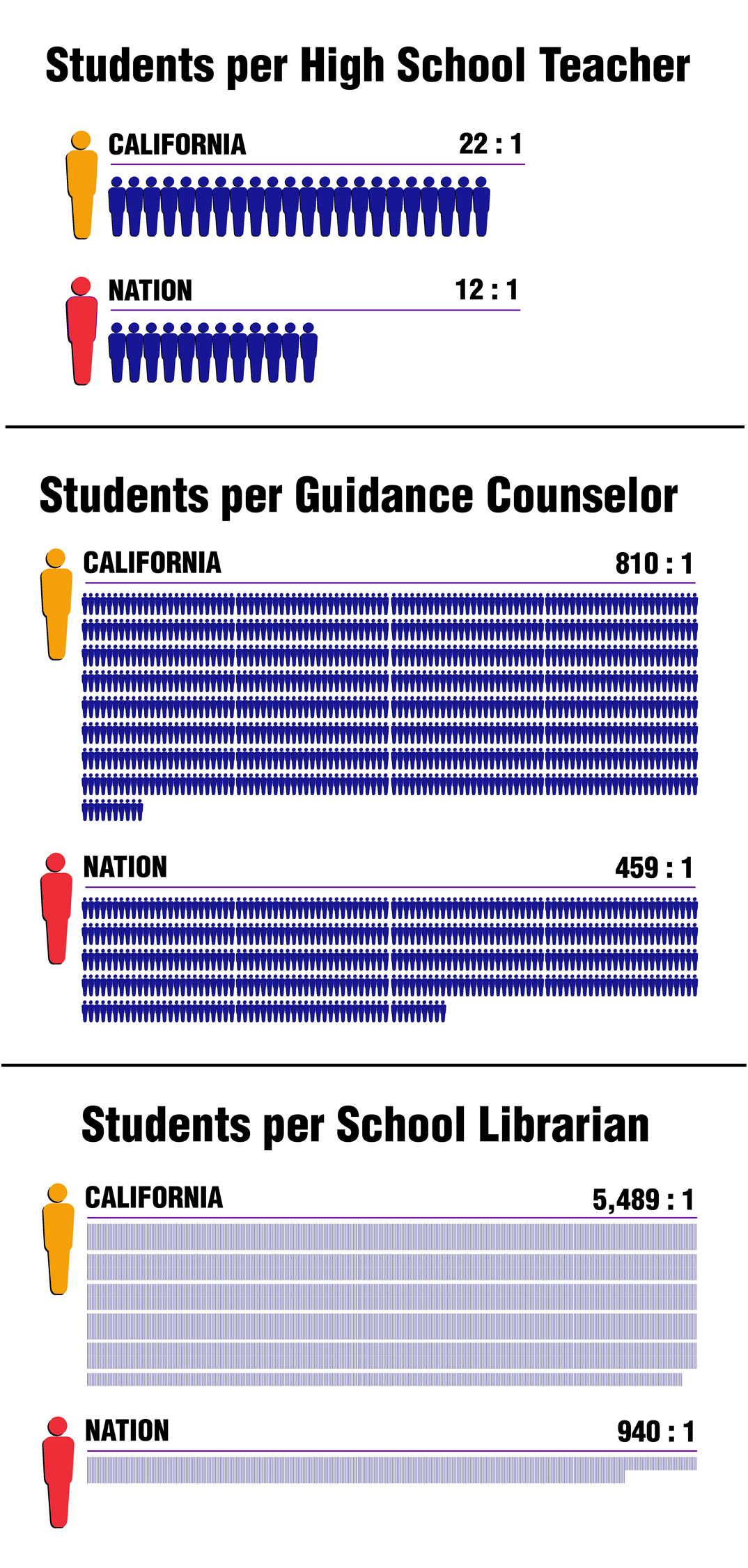
Research emphatically puts to lie Deasy's assertion that "libraries would be irrelevant soon as books will move to electronic format." In a state where the ratio of students to librarians is nearly 5,500 to 1 [5], Deasy's outright dismissal of the importance of libraries and books, combined with policies that exacerbate the problem, strongly convict him in his role in neoliberal dismantling of public education. Of course that's Deasy's capacity, he wasn't brought in by the Broad/Gates/Walton Triumvirate to fix LAUSD, he was brought in to destroy it. Collectively we need to reject Deasy's false narrative and demand he spend our funds on libraries and classrooms, not he and his fellow administrators' lavish lifestyles! Collectively we need to fight the privatization of public education!
_____
NOTES
[1] Krashen, Stephen. 2011. Kindelizaton: Are Books Obsolete?. Books and Articles by Stephen D. Krashen. Accessed September 20, 2011. http://www.sdkrashen.com/articles/kindelization.pdf
[2-4] Ibid.
[5] This wonderful infographic from the UCLA IDEA article mentioned above illustrates what the plutocrat class has done to California's education system.
 Robert D. Skeels is a social liberation writer, attorney, public education advocate, immigrant rights activist, and law professor. He lives, works, writes, and organizes in Los Angeles with his wife and cats. Robert holds a BA in Classical Civilization from the University of California at Los Angeles (UCLA), a JD from Peoples College of Law (PCL), and passed the California Bar Exam on his first attempt. A US Navy Veteran, he is a proud member of Veterans for Peace. A student of Liberation Theology and Paulo Freire's work, Robert volunteers for community and 12 step groups. Robert's articles and essays appear in publications including Jacobin, Truthout, CounterPunch, Dissident Voice, Schools Matter, Daily Censored, Regeneración, K12NN, LA Progressive, and The Los Angeles Daily News. In 2013 Robert ran for the LAUSD School Board against a billionaire funded corporate reform candidate, finishing second in a field of five, with over 5,200 votes.
Friday, May 27, 2011
School Librarians Are Being Interrogated by LAUSD Lawyers
In urban schools that do not have active middle class parent groups who insist on libraries on librarians, school libraries are being shut down by bean counters and technofools whose virtual brains tell them that poor children in their segregated and computerized testing camps don't deserve a library or a librarian to guide them in research skills and in choosing good literature, either fiction or non-fiction. And thus, the caste system adds a new level of inequality and indignity on top of crippling poverty.
This scary story is from AlterNet:
Last night, the Canadian radio broadcast, "As It Happens," featured a remarkable story about what's going on in Los Angeles public schools, as officials grapple with a budget crisis. Librarians -- more specifically, teacher-librarians, are being escorted to the basement of an administration building, where they are made to sit on lawn chairs while being interrogated by school district lawyers who are seeking to prove that the librarians don't actually qualify as teachers. From the "As It Happens" Web site:Teacher-Librarians in Los Angeles are under threat.The Los Angeles Unified School District wants to lay off eighty-five middle- and high-school teacher librarians to reduce costs. As a result, school librarians across L.A. are being interrogated by lawyers working for the School District to see if their qualifications are up to scratch.Laura Graff, a teacher librarian at LA's Sun Valley High School, has been on the receiving end of one of these questionings. We reached her in Los Angeles, California.That description hardly does justice to the process that Graff recounts, which she characterized as very adversarial. Graff said that her job requires both a teaching certificate and a library science degree, and suggested that administrators themselves have their eyes on the teacher-librarian jobs, saying they want to replace libraries with some sort of high-tech schemes.
Hmmm...The librarians in the public school systems that nurtured me taught me pretty much how to do the job I do now. They taught me how to research, how to cross-reference sources, and guided me to books that encouraged me to dream. We really wouldn't want that for the children of L.A., now, would we?Well worth a listen; archived on the show's Web site in Part 2 of the program.
By Adele M. Stan | Sourced from AlterNet
Posted at May 26, 2011, 4:15 pm
Saturday, January 22, 2011
Help Ballou Senior High School Library Build a Book Collection
WaPo ran this story today:
By Bill Turque
Friday, January 21, 2011; 3:52 PM
The literature section of Melissa Jackson's library at Ballou Senior High School had 63 books one morning last week, not enough to fill five small shelves. In the area marked "pure science," there were 77 volumes.
This is not because the students at the Southeast Washington school had scoured the stacks and checked almost everything out. Ballou's entire collection consists of 1,185 books, about one per kid. "What you see is what we have," said Jackson. "Keep in mind, this is a high school. We should be flooded with books."
This might be an odd way to begin a success story, but success it is. The central figures are Jackson, a genial but deeply persistent educator, and principal Rahman Branch, who is determined to bring academic rigor to a school that has seen multiple waves of federally mandated restructuring because of poor performance.
The generally accepted standard for school libraries is 11 books for each of the Ballou's 1,104 students. Yet until recently, it had no functioning library, much less a librarian. Students say the room was a dimly lit dead zone with moldy carpeting and sadly outdated books (the encylopedia collection was from 1974). More of a place to hide out, they said, than to read or research.
It was consistent with the generally dismal condition of the 50-year-old Ward 8 building, a tired, red-brick structure touched only at the margins by the $1 billion wave of modernization and reconstruction that transformed many schools under former Mayor Adrian M. Fenty. The city's second largest high school is not scheduled for a full makeover until 2014. ("Can you help me kick and scream about that travesty?" asked Branch).
The library turnaround began in the spring of 2009 when Branch recruited Jackson, 40, a 1986 Ballou graduate who'd won raves for her work as a librarian at nearby Martin Luther King Elementary. Branch also hired a "resource development" director, Ruth Jones, to marshal private contributions to the school. Donations have included a $600,000 anonymous gift, most of which was earmarked for college scholarships. But some went to new library furniture. The school system's building modernization office upgraded the lighting and other systems.
The result is a small, but radiant sanctuary. Branch and Jackson wanted to give the room a college campus ambience, so in addition to the standard furniture they added a "chill zone" with overstuffed couches and chairs, where students can read, work on a laptop or even stretch out and close their eyes for a few minutes.
The room has become a locus of school community life, drawing a lunchtime contingent of students who prefer it the often-chaotic cafeteria and gym. To lure them in and get them reading, Jackson has amped up the magazine collection, adding "ESPN" and "O," as well as more traditional offerings such as "Newsweek" and "National Geographic." She keeps the room open until 6:30 p.m. each day, and it is the now the location for a book club, chess club, poetry club and monthly classic black cinema club, which has screened films ranging from "Birth of a Nation" to "Shaft." Students with toddlers in the school's day care center get a weekly story time period.
"This library used to be a hot mess," said senior Tiesha Hines. "No books, no computers, no tables."
Sophomore Tiffany Adams said most students were scarcely aware that there was a library at Ballou until this year. Now, she said, "we come here and get our work done."
The mission is a personal one for Jackson, who is saddened at how Ballou has declined since her student days She grew up in Southeast, the daughter of a "pieman" who delivered fresh pies for Mrs. Smith's. Her mother managed a dress shop. There were books in the house - her favorite as a child was the Judy Blume's "Are You There God? It's Me, Margaret."
Her father insisted that the family watch "60 Minutes" every week. "It was his way of getting us to know there was a wider world out there," she said. After Ballou and the University of the District of Columbia (and a masters degree at the University of Maryland) she spent 17 years as an early childhood teacher at Meyer Elementary.
But Jackson always nursed a desire to be a librarian. When Branch called, she knew what she needed to do.
"Ballou is where I should be," she said.
Jackson is a compulsive hugger who mills constantly among teachers and their classes, consulting on research projects. One morning last week it was a Power Point presentation exploring "The Chemistry of Making Ice Cream Without an Ice Cream Maker." She helped another girl spellcheck her scholarship application, including "procrastinate."
"You OK?" she asks. It's her default greeting for students coming through her door. It's more than small talk at Ballou, where 85 percent of the students come from families that meet income guidelines for federally subsidized lunches. Issues at home or on the streets often play out in the classroom.
"I haven't seen you for two days," she said to one ninth grader who walked in with an enormous red binder. He replied that his mother had kept him home because he'd been beaten up on the way to school.
Jackson's biggest challenge is the extraordinary shortage of books. Small, outdated collections plague virtually all D.C. public high school libraries, which are chronically underfunded. Only three of the city's 16 regular and specialized high schools have library media centers that meet the the 11-to-1 ratio, according Pat Brown, director of library media services for D.C. schools, a position that was also empty for three years prior to her arrival in 2009.
Jackson did her own research when she took the Ballou job. Banneker, a selective, application-only high school with one-third of Ballou's enrollment, has three times the number of library books. Spingarn High School, with half the number of students as Ballou, has double the book collection, according to Jackson.
In a looseleaf binder she keeps a running list of book requests from teachers. The needs are vast - everything from Shakespeare to Octavia Butler to Richard Wright. She estimates that it would take about $250,000 to bring the Ballou library up to the 11-to-1 standard. She's constantly fundraising, but not always successfully. A recent event at a Barnes and Noble "did not go as well as I projected," she said in a recent appeal. Next on the calendar is a Jan. 29 "Bowl-a-thon" at Lucky Strike lanes on 7thSt NW. The goal is $10,000.
Branch said she's become an enormous asset. "She's a gem, more than that."
Wednesday, November 24, 2010
November's Rotten Apple in Education Goes to James McSwain, Principal of Lamar High School
But hands down, this month goes to Larmar High School principal, James McSwain, who has dumped, burned, who knows, most all the books and "repurposed" the school library into a coffee shop run by students. I guess you might say McSwain is really serious about preparing his high schoolers to compete for those 21st Century American jobs.
The Library's website also makes a pitch for the right-wing online database, Questia, where students are supposed to find safe reading, i. e., heavily censored. As an old high school librarian myself, I did my litmus test and it came up positive for ultra-conservative selection in fiction. No Catcher in the Rye by Salinger (not even Franny and Zooey), and nothing, nada, by Robert Cormier. This is supposed to be a high school collection that is professionally chosen. No adolescent library worth its salt would be without these authors, whose book jackets that have been memorialized in tee-shirts and book bags.
The school library is the heart, hub, and soul of a school, serving as a place to do the messy work of learning to do research, to read, to think, to view, to listen, to produce media, to teach information literacy, technological literacy, media literacy. A place to make up a missed test, do an independent study, ask a librarian for a book recommendation. The school library serves to host important school functions like PTO meetings and National Honor Society receptions and faculty meetings, an intellectual center for curriculum work and planning, where teachers can take a break and read English Journal, a place where kids can wander and check out a paperback. A resource for coming of age questions, a place to collaborate and find out about careers and college, to plan science projects, to hang art work, to have a quiet place amongst the hubbub of school. And a place for parents to contribute and know they are doing important work for the school in checking out books and shelving them, and offering a smile to students who don't get enough of them. The existence of a library has been shown to have a significant impact on student test scores, for christsakes.
You have gone too far, Mr. McSwain. You are the Rotten Apple of the Month. And that is putting it kindly.
From Hair Balls:
Just adding a coffee shop to a neighborhood library so people can feel like they're in Starbucks and ultra hip was apparently too passe a trend for Principal James McSwain of Lamar High School.
Finishing up a week ago, McSwain has thrown out nearly all the books and filled the space they were unnecessarily taking up with couches and coffee and food and told his students that they can access the exciting world of reading through e-books! And if they don't have a laptop of their own and Internet access to do so, they can use one of the laptop computers in the library coffeeshop!
He's even expanded thelibrarycoffeeshop hours to 6:30 a.m. to 6:30 p.m. which works great if you're one of those kids with your own transportation and not one who is too young, too poor or with rotten parents who won't let you drive to school yourself rather than riding the bus.
And he's bought 35 new laptops! For a Houston ISD flagship school with more than 3,000 students in it.
A veteran educator who visited the school a few weeks ago said most of the books were already gone by then. "There were a few down one side. They assured me they're getting rid of those as soon as they could. The plan is to turn the whole space into a coffee shop run by students."
Students will be able to access places online such as Questia, an online resource facility where you can get articles about anything that you want, she told Hair Balls. There's books online, too, but as she put it, the selections are limited. Her reaction:
"I was appalled. I was stunned by the whole thing I can't imagine what he was thinking. I'm assured this is old school thinking and we should just appreciate that they're not old school thinkers."
The change, she said, was "designed to impress the new superintendent [Terry Grier] with the forward thinking nature of that particular principal at that particular school. "
She said she was told one teacher who had kids after school working on their volunteer hours was asked to send them to the library to "get rid of the books." She said he asked what they meant and "They said they didn't care; just get them out of here."
"He couldn't bring himself to throw away books. He said it didn't seem like a good thing for the kids to do. They got somebody [else]. My impression was that most of the books were thrown away. Some of them may have been donated."
Hair Balls tried to reach McSwain; he would only speak to us through HISD Sarah Greer Osborne. This is what she told us:
"The school library has been updated. It's got a lot of new electronic equipment. Most of it's e-books and new laptops and they're putting their money, instead of into paper, they're putting it into electronic resources.Yes, there are still books there but most of it is now e-books where the kids can check out the book and as long as they have Internet access they can read the book. The library is now open from 6:30 to 6:30, a.m. to p.m., and he says the kids are eating it up; they have never seen so many kids in the library before. They only did this a week ago and he says the number of e-books being checked out is through the roof.The veteran teacher wasn't as excited. "It's just stupid. It just boggles the mind. I'm sure there's more to the story and I'm sure that they can make it sound better than I'm making it sound to you but in the end it's a terrible story. There's no way in my mind that you can gloss this story and make it seem like a good idea.
He says the kids love it. They did put coffee and food in there so the kids when they're staying after school and before the kids can have a little coffee, read a book it's just like Starbucks. Except they're providing the books as well. The kids are eating it up that's what they want. They want the e-books."
"There's no way to get hold of a book on the campus to read for pleasure or to use to write a paper. If you don't have access to a computer of your own then you have to compete for one of the computers that are in the coffee shop. And you have to find a way to get it done during the time the coffee shop is open."
The teacher said the whole thing breaks her heart; but she can walk away from it. At least she's not the Lamar High librarian, whose library has been "repurposed" (a favorite educator buzzword these days), presiding over a coffee shop with all those swell couches.
Thursday, October 21, 2010
For Chicago Parents, 1 School Library Won with 159 to Go
When Whittier Elementary School saw their plans for a school library threatened by Daley's wrecking ball, they took action with a sit-in to protect the property from destruction. These parents have won, and their victory must inspire other communities to act to restore the crucial learning resources that the corporate goon squads have targeted as cost-saving measures in communities that corporate America has written off.
Story from Democracy Now, the only national media source willing to publicize this victory over the Oligarchy:
Tuesday, June 22, 2010
They still don't get it
Stephen Krashen
Submitted for publication
Reading the description of the Reading for Understanding Research Initiative, it is clear that the US Department of Education has (finally) recognized the limits of research on decoding skills and is prepared to move on (see age 5).
But they still don't get it.
They now claim that decoding is necessary but is not sufficient for reading comprehension (and, I assume, that methods that focus exclusively on decoding are not the way to go), and will invest $100 million on research that will contribute to developing ways to "accelerate growth in oral language and word knowledge in ways that are likely to close reading comprehension gaps" (page 11).
Unmentioned is the slightest hint that "decoding skills," word knowledge, oral language development, reading comprehension itself, and a host of other competencies (e.g. spelling, grammar, writing ability, knowledge of the world) might be the result of actual "Reading for Understanding," the result of children reading a wide range of interesting and comprehensible texts.
Unmentioned is any realization that our "literacy crisis" could have one fundamental cause: Children of poverty, the group with the low reading scores we are concerned about, suffer from a profound lack of access to reading material.
That $100 million could be used to help solve the problem. It could go toward supporting libraries and librarians in high-poverty areas, and would represent more than five times the current annual federal government investment in school libraries in high-poverty areas.
But my first suggestion is to use about $100 of the $100 million to buy government education advisors copies of books by Frank Smith, Kenneth Goodman, and Jeff McQuillan. I'll be happy to donate a copy of the Power of Reading. (Important writings by Keith Curry Lance and Doug Achterman are available for free on the internet.)
Sunday, June 13, 2010
Alert: Books Educate Children!
Can a $50 stack of paperback books do as much for a child's academic fortunes as a $3,000 stint in summer school?
An experimental program in seven states may help answer that question this summer as districts from Nevadato South Carolina give thousands of low-income students an armful of free books.
Research has shown that simply giving children books may be as effective as summer school — and a lot cheaper. The big question is whether the effect can be replicated on a larger scale and help reduce the USA's nagging achievement gap between low-income and middle-class students.. . .
Wednesday, February 03, 2010
School Librarian Calls Out Obama on Budget Cuts for Poor Kids
Dear Mr. President:
Today I learned through the American Library Association and the American Association of School Librarians that your FY 2011 education budget does not include any additional specific funding for school libraries, additional school librarians, or statues mandating certified school librarians for every state. Equally disappointing is the news that the Improving Literacy for School Libraries grant program has been all but put out of reach for school libraries with the FY 2011 budget proposal that will absorb this grant program into a variety of other Department of Education programs.
In October of 2009, you issued an official proclamation celebrating and affirming the importance of information literacy with the declaration of National Information Literacy Awareness Month. In this proclamation, you stated,
Our Nation’s educators and institutions of learning must be aware of — and adjust to — these new realities. In addition to the basic skills of reading, writing, and arithmetic, it is equally important that our students are given the tools required to take advantage of the information available to them. The ability to seek, find, and decipher information can be applied to countless life decisions, whether financial, medical, educational, or technical.
In your proclamation, you privilege information literacy as being equally important to the traditional literacies and mathematics, yet you are providing no additional funding to provide all schools the primary teachers of information literacy, school librarians. Why are you providing funding for additional resources and teachers to support reading, writing, and mathematics, yet you ignore funding for the experts who are most ready, willing, and able to teach information literacy to our nation’s students in grades K-12: school librarians. Are you aware that not all states legally mandate a fully certified school librarian? Did you know that many school libraries do not have a full time certified school librarian? Do you think students can become informationally fluent in the absence of rich, current, and diverse collections in their school libraries or appropriate access to digital content? How can we as a nation provide students the instruction needed to help students cultivate “the ability to seek, find, and decipher information” without fully funded libraries staffed by highly qualified, certified school librarians?
In this same proclamation, you assert:
Though we may know how to find the information we need, we must also know how to evaluate it. Over the past decade, we have seen a crisis of authenticity emerge. We now live in a world where anyone can publish an opinion or perspective, whether true or not, and have that opinion amplified within the information marketplace. At the same time, Americans have unprecedented access to the diverse and independent sources of information, as well as institutions such as libraries and universities, that can help separate truth from fiction and signal from noise.
Information evaluation. Authority. Social scholarship. Digital citizenship. Content creation. Self-filtering. Mr. President, I teach these concepts and skills regularly in my school library. School librarians are your go-to team for teaching these valuable life skills, skills that today’s students need to grow into citizens who can fully participate in today’s society? Do you think we wait until they are age eighteen or older to suddenly explore these concepts of information fluency, the very ones you declared to be of national importance? Is this charge left only to our public and academic librarians? While our public libraries certainly do an outstanding job in teaching these skills, our most disadvantaged learners often do not have physical or virtual access to a public library, nor can a public library provide ongoing instruction in these skills on a regular basis as part of a child’s daily learning environment like the school library. Ultimately, I feel the instruction of these skills has the most value when taught in the context of the school curriculum and when driven by student’s own inquiry. If you say you support information literacy as the cornerstone of a democratic society and informed citizenry, then you must not marginalize school libraries and librarians, and consequently, the students we serve. The very fact that the words “library, libraries, and librarians” are missing from the Department of Education budget speaks volumes about how you perceive our role in educating today’s youth and that you do not have an authentic commitment to helping today’s young people acquire this form of literacy capital so vitally needed for today’s world.
I find it demeaning and insulting that within a span of less than six months, your actions and your budget betray the very values you purported to support through your presidential proclamation. Change we can believe in?
I think not, Mr. President.
Sincerely,
Buffy Hamilton, School Librarian
Tuesday, February 02, 2010
Obama Budget Eliminates School Library Funds for Poor Schools
AASL President, Cassandra Barrett, is shocked that schools with large large numbers of students living in poverty are having their federal school library funds eliminated in the Oligarchs' new education budget. What she does not realize is that the new corporate charter schools for the poor have been planned with no school libraries or librarians, which neatly eliminates the need for federal library funds. When the goal is segregation, containment, and psychological neutering of the poor by highly unqualified "teachers," who needs libraries?
By Debra Lau Whelan -- School Library Journal,02/01/2010
President Obama has delivered a slap in the face to school librarians. In his FY2011 budget proposal to Congress on Monday, he completely eliminated the Improving Literacy for School Libraries grant program, designed to boost academic achievement by providing students with access to up-to-date school library materials.
“I’m shocked,” says Cassandra Barnett, president of the American Association of School Librarians (AASL) and a media specialist at Fayetteville High School in Arkansas. “On one level, I’m angry, and on another level, I’m highly disappointed. This is a real morale killer.”
President Obama unveils the fiscal year 2011 budget, which wipes out federal funding specifically earmarked for school libraries.
Although Obama’s proposal includes a $400 billion investment in education, there’s no mention of federal funds specifically geared toward school libraries—and that means schools with at least 20 percent of students coming from families who live below the poverty line will no longer have access to those badly needed monies for everything from library books and extended hours to technology and professional development.
“[Obama] is proposing to take away the last access to literacy for these kids in high-poverty areas,” says Barnett, whose own school qualifies for the grant program. If Congress approves the proposal, Barnett’s says her library budget will suffer and her district won’t rehire a library supervisor as planned.
Lisa Layera Brunkan, one of the three moms who co-founded the Fund Our Future Washington grassroots organization that lobbied for and secured $4 million in emergency funding for school libraries in their state, says Obama’s proposal would punish “our poorest, our most remote, and our most challenged students.”
“Put simply, cutting this program will hurt the children of the school districts that are scraping by with the least resources,” she adds. “The types of programs that are funded by Improving Literacy Through School Libraries are exactly what the business world and universities are saying matter and what parents want for their children."

Tuesday, November 27, 2007
Houston's Miracle School Libraries, Not
Part of the collateral damage from the test-scores-at-any-price school deformation movement can be seen in the neglect of school library programs, where children have historically developed the love for books and reading. From the Houston Chronicle:
Seventy percent of the Houston Independent School District's libraries have collections that are so small or so old, the state considers them below standard.
And HISD isn't the only local district struggling to meet state guidelines. Others, including fast-growing Cypress-Fairbanks, also are missing the mark, sometimes because they can't stock their shelves fast enough to keep up with the influx of students.
While HISD has made significant improvements in the past decade, its library collections still are an average of 14 years old, with 17 items per student, according to a report compiling data for 232 of the district's almost 300 campuses.
Thirty-four more schools have no libraries and at least 18 others, including Holland and Ryan middle schools, didn't provide data, according to the report.
And the district employs only 163 certified librarians, leaving other facilities in the hands of teachers, clerks, or, in several cases, unstaffed, officials said. . . .