Posted by Valerie Strauss:
By Caroline Grannan
“Woodside is a great school." -- Emily Jones
The movie “Waiting for Superman” tells the stories of five students around the country who are desperate to escape their “failing” public schools and get into the shining charters that are portrayed as their only chance of success – or at least that’s the tale the movie tells.
One of those stories takes place in my neck of the woods, here in the San Francisco Bay Area. The one white middle-class student among the five kids in the movie is Emily Jones, who lives on the suburban San Francisco Peninsula.
The story that Waiting for Superman tells is that Emily is desperate to escape her district public high school, Woodside High, because she’s a bright student who “doesn’t test well,” and due to Woodside’s antiquated and harmful tracking policies, she’ll be tracked into lower-level classes that will doom her to mediocrity.
She grasps at (as the movie shows it) her only hope – Summit Prep Charter, which does the opposite of tracking, requiring all its students to take six AP courses during high school.
Well, that story is false. Here’s the proof. On this video clip, John Fensterwald of the Silicon Valley Education Foundation interviews Emily.
The part in the movie illustrating how the horror of tracking sent her fleeing to Summit Prep features a graphic showing students on a conveyor belt, with the select few being elevated to higher-level classes and the rest being dropped onto a march to oblivion.
Yet in the video interview, Emily chats freely with John for five minutes and mentions a number of reasons for wanting to go to Summit instead of Woodside – but never mentions or even alludes to tracking. Just after minute five, Fensterwald brings up tracking. Emily comments on tracking only after Fensterwald prompts her.
And in fact, here’s what Emily says about Woodside High: “Woodside is a great school. I really liked it and I really wanted to go there before I saw Summit.”
That’s not what Waiting for Superman portrays. If the movie misled viewers with a false story about Emily, the line “fool me twice, shame on me” applies – we can’t believe anything it shows us.
Meanwhile, parents at Woodside High have created a huge banner and posted it across the front of the school:
“Woodside High School teachers – Man, You’re Super! Thank you for teaching ALL the students in our community!”
Wednesday, October 27, 2010

Bloomberg and Klein Now See No Need to Identify Minorities in NYC Schools

To make the real scores less embarrassing to Bloomberg's high-salaried covey of white, thin-lipped Brits running the City's ed charade, Klein has been instructed to email his pal, Arne Duncan, to tell him that the federally-mandated policy of identifying minorities could now be "problematic and confusing:"
. . . NY1 reports that NYC Schools Chancellor Joel Klein sent an email to U.S. Education Secretary Arne Duncan saying that NYC school officials don't really want to classify students by race, per federal law, "[It] may well be problematic and confusing for many of our community members, particularly Hispanics, and could create a difficult public debate about the collection of this information."Perhaps Duncan, too, will decide that the solution to the minority-white achievement gap is to declare universal color-blindness. Oh, I almost forgot--Dunc has something a more "scientific"way to hide the disparity--it's called value-added growth models.
Tuesday, October 26, 2010
Will Duncan Take His Own Departmental Statement on Bullying Seriously?
Back in February, Arne Duncan applauded the decision to fire every teacher at the only high school in the poorest city in Rhode Island. Despite the fact that saner heads have since determined that the firing was unethical and unfair, Duncan said that officials were "showing courage and doing the right thing for kids."
When the corporate reformers hatched a plan to release flawed evaluation data in Los Angeles on thousands of teachers, Arne Duncan applauded, despite warnings from the National Academy of Sciences on the use of such data to make any kind of high stakes decisions. Instead of condemning the immoral and irresponsible action that led to a teacher's suicide, Duncan crowed, "What is there to hide?"
These are just two examples of Arne Duncan's dismissive attitude and public disparagement of teachers (who are terrified), the profession of teaching, and public schools. Now read from Duncan's own department part of an official letter issued for use by schools nationwide on the subject of bullying. Will Russalyn Ali call Arne Duncan out as the biggest bully in American schools today?
When the corporate reformers hatched a plan to release flawed evaluation data in Los Angeles on thousands of teachers, Arne Duncan applauded, despite warnings from the National Academy of Sciences on the use of such data to make any kind of high stakes decisions. Instead of condemning the immoral and irresponsible action that led to a teacher's suicide, Duncan crowed, "What is there to hide?"
These are just two examples of Arne Duncan's dismissive attitude and public disparagement of teachers (who are terrified), the profession of teaching, and public schools. Now read from Duncan's own department part of an official letter issued for use by schools nationwide on the subject of bullying. Will Russalyn Ali call Arne Duncan out as the biggest bully in American schools today?
“Harassing conduct may take many forms, including verbal acts and name-calling; graphic and written statements, which may include use of cellphones or the Internet; or other conduct that may be physically threatening, harmful, or humiliating,” the letter says. “Harassment does not have to include intent to harm, be directed at a specific target, or involve repeated incidents. Harassment creates a hostile environment when the conduct is sufficiently severe, pervasive, or persistent so as to interfere with or limit a student’s [or teacher's?] ability to participate in or benefit from the services, activities, or opportunities offered by a school.”
Funny Enough to Make You Cry
Posted by Valerie Strauss today at WaPo:
Here is an amusing but scary video that shows two toy figures in a conversation that tells you everything you need to know about what is driving school reform today: a nonsensical obsession with assessment and data that has brought a rigidity to classes that makes real teaching and learning impossible.
Monday, October 25, 2010
Please Add Your Name to the EPI Statement on the Use of Value-Added Models
From EPI:
We invite you to add your name to the below statement, initiated by ten prominent education scholars, that urges policymakers to not pursue heavy reliance on test scores for evaluating, rewarding and removing teachers. Links to relevant research on this issue are listed below. Please sign up and tell your friends and colleagues to do so as well. Thank you for your interest.Lawrence Mishel | President, Economic Policy Institute
The heavy use of VAM in a teacher evaluation system will misidentify large numbers of both effective and ineffective teachers. Leading authorities (such as the Board on Testing and Assessment of the National Research Council of the National Academy of Sciences, the National Academy of Education, and researchers from RAND and the Educational Testing Service and a recent Economic Policy Institute paper by a group of prominent scholars, Problems With the Use of Student Test Scores to Evaluate Teachers) concur that VAM is too inaccurate to be used as the primary way to evaluate teachers. Most uses of test scores in teacher evaluation, in practice, actually fall far short of the flawed VAM measures because of a lack of appropriate data and the adoption of weaker statistical methods.
Adopting an invalid teacher evaluation system and tying it to rewards and sanctions is likely to lead to inaccurate personnel decisions and to demoralize teachers, causing talented teachers to avoid high-needs students and schools, or to leave the profession entirely, and discouraging potentially effective teachers from entering it. Educational outcomes will suffer as a consequence.
Besides concerns about the accuracy of statistical methodologies, other practical and policy considerations weigh against heavy reliance on student test scores to evaluate teachers. Research shows that an excessive focus on basic math and reading scores can lead to narrowing and over-simplifying the curriculum to only the subjects and formats that are tested, reducing the attention to science, history, the arts, civics, and foreign language, as well as to writing, research, and more complex problem solving tasks.
Although standardized test scores of students are one piece of information for school leaders to use to make judgments about teacher effectiveness, such scores should be only a part of an overall comprehensive evaluation.
Legislatures should not mandate and districts should not pursue a test-based approach to teacher evaluation that is unproven and likely to harm not only teachers but the children they instruct.
Eva L. BakerPaul E. BartonLinda Darling-HammondEdward HaertelHelen F. LaddRobert L. LinnDiane RavitchRichard RothsteinRichard J. ShavelsonLorrie A. Shepard
Resources
Problems with the Use of Student Test Scores to Evaluate Teachers | Economic Policy InstituteLink here to add your name.
Letter Report to the U.S. Department of Education on the Race to the Top Fund | National Academy of Sciences
Using Student Progress to Evaluate Teachers: A Primer on Value-Added Models | Educational Testing Service
Getting Value Out of Value-Added: Report of a Workshop | National Research Council
Evaluating Value-Added Models for Teacher Accountability | RAND Corporation
The Stability of Value-Added Measures of Teacher Quality and Implications for Teacher Compensation Policy | National Center for Analysis of Longitudinal Data in Education Research
Error Rates in Measuring Teacher and School Performance Based on Student Test Score Gains | U.S. Department of Education
For a full list of resources, click here.
Hope Rising to Challenge Despair in Wake County
Wake County School Board's Gang of 5 has been working overtime since last year's local election to undo one of the most successful socioeconomic integration plans in the nation. John Tedesco has been the diminuitive driver of the anti-diversity Koch-funded forces who, until last week, seemed about to succeed in putting in place a policy assuring the return to segregated schooling. Now it seems as if the coalition of resegregationists has cracked, and the entire house is cards is about to come tumbling down.
Meanwhile, there are new levels of interest nationwide in socioeconomic integration (except in the U. S. Department of Education) as a way to boost achievement without turning schools into the brainwashing penal pedagogy camps of the KIPPs and their knock-offs. A new study by the Century Foundation, "Housing Policy is School Policy," reminds us once again that education reform is something that does not happen JUST INSIDE the schoolhouse. Until we begin to take seriously this fact, we will continue to treat educational symptoms without addressing the underlying disease, thus allowing the advocates of America, Inc. to continue to savage the public schools.
Valerie Strauss has a discussion going at WaPo, and here is Richard Kahlenberg's piece that addresses some of the concerns that have been expressed regarding socioeconomic integration.
Meanwhile, there are new levels of interest nationwide in socioeconomic integration (except in the U. S. Department of Education) as a way to boost achievement without turning schools into the brainwashing penal pedagogy camps of the KIPPs and their knock-offs. A new study by the Century Foundation, "Housing Policy is School Policy," reminds us once again that education reform is something that does not happen JUST INSIDE the schoolhouse. Until we begin to take seriously this fact, we will continue to treat educational symptoms without addressing the underlying disease, thus allowing the advocates of America, Inc. to continue to savage the public schools.
Valerie Strauss has a discussion going at WaPo, and here is Richard Kahlenberg's piece that addresses some of the concerns that have been expressed regarding socioeconomic integration.
Jeanne Allen's Campaign Donations
Jeanne Allen, president of the Center for Education Reform, is running for Delegate in Maryland's 16th district. She has raised about $60,000 so far. Updated campaign financing information was posted a few days ago, and there are a few interesting donations (I wrote about her earlier donations here).
TFA's Wendy Kopp donated $100 to Allen's campaign. Eileen Bakke, VP of the Imagine Schools, chipped in $1,000. Margaret Spellings gave $250, and Harlem Village Academy CEO Deborah Kenny donated $50. John and Laura Fisher both contributed $2,000 as did Lowell Milken. Friends of Charter Schools USA added $500.
TFA's Wendy Kopp donated $100 to Allen's campaign. Eileen Bakke, VP of the Imagine Schools, chipped in $1,000. Margaret Spellings gave $250, and Harlem Village Academy CEO Deborah Kenny donated $50. John and Laura Fisher both contributed $2,000 as did Lowell Milken. Friends of Charter Schools USA added $500.
Sunday, October 24, 2010
Everything Bold Deformers Never Wanted to Know About Education
A hundred years ago the first "scientific" generation of bold reformers set out to right America's education ship. White, male, Protestant and business class all, they were armed with the new behaviorist psychology, the new principles of scientific management, and the new pseudo-science of eugenics. They created the perfect sorting machine based on intelligence testing and other standardized measures, where poor children at age 5 or 6 were slotted into industrial training schools or vocational prep if they were lucky. The high scorers went on to high school and college.
Today's education deformers, weaponized with the same antique armaments, advocate for no such distinctions in their education crusade. Everyone should go to college. And besides, there aren't any vocations anymore to require vocational training.
Old habits are hard to break, however, and the evidence for it can be found in the fact that we still use the same primitive sorting devices we used then to do a similar sort of sorting, except now we pretend that poverty is not an excuse for scoring poorly. Back then we just assumed the poor deserved to be poor because of defective germ plasm, i. e., genes. Those who could not be sterilized could be isolated in ghettos, which they were. Today's poor scores by the poor, however, are blamed on bad teaching rather than bad blood, and it doesn't seem to matter that every standardized testing system, whether the SAT or the state tests such as the MCAS, shows almost direct correlation between family income and test scores.
Still everyone must go to college, rich or poor, or so says today's myth. Never mind that the well-heeled send their high-SAT scoring Winthrops and Caitlins to BU and Tufts, while Miguel or Chapelle must borrow heavily to hook up online to one of the predatory for-profit diploma mills that eventually will leave them with debts they can never repay with the worthless degrees they have earned.
But, of course, the bold deformers know none of this history that shows the same exploitative social reproduction happening today that occurred so often during the past hundred years of "reform." But educational history is not the only area of total ignorance on parade by today's billionaire boys' club, all glassy-eyed with positivity and as jittery with entrepreneurial zeal as a bunch of hamsters on new wheels.
Gary Stager picks up the story, with a few good books that could go a long way if today's deformers were not so adamant in remaining totally stupid in every area pertaining to education. From HuffPo:
Today's education deformers, weaponized with the same antique armaments, advocate for no such distinctions in their education crusade. Everyone should go to college. And besides, there aren't any vocations anymore to require vocational training.
Old habits are hard to break, however, and the evidence for it can be found in the fact that we still use the same primitive sorting devices we used then to do a similar sort of sorting, except now we pretend that poverty is not an excuse for scoring poorly. Back then we just assumed the poor deserved to be poor because of defective germ plasm, i. e., genes. Those who could not be sterilized could be isolated in ghettos, which they were. Today's poor scores by the poor, however, are blamed on bad teaching rather than bad blood, and it doesn't seem to matter that every standardized testing system, whether the SAT or the state tests such as the MCAS, shows almost direct correlation between family income and test scores.
Still everyone must go to college, rich or poor, or so says today's myth. Never mind that the well-heeled send their high-SAT scoring Winthrops and Caitlins to BU and Tufts, while Miguel or Chapelle must borrow heavily to hook up online to one of the predatory for-profit diploma mills that eventually will leave them with debts they can never repay with the worthless degrees they have earned.
But, of course, the bold deformers know none of this history that shows the same exploitative social reproduction happening today that occurred so often during the past hundred years of "reform." But educational history is not the only area of total ignorance on parade by today's billionaire boys' club, all glassy-eyed with positivity and as jittery with entrepreneurial zeal as a bunch of hamsters on new wheels.
Gary Stager picks up the story, with a few good books that could go a long way if today's deformers were not so adamant in remaining totally stupid in every area pertaining to education. From HuffPo:
Shouldn't people bold enough to call themselves "school reformers" be familiar with some of the literature on the subject?
Most of the school leaders who signed last weekend's completely discredited "manifesto," are unqualified to lead major urban school districts. Michelle Rhee and Joel Klein are not qualified to be a substitute teacher in their respective school districts. U.S. Secretary of Education Arne Duncan could not coach basketball in the Chicago Public Schools with his lack of credentials. Therefore, it comes as no surprise that they advocate schemes like Teach for America sending unprepared teachers into the toughest classrooms armed with a missionary zeal and programmed to believe they are there to rescue children from the incompetent teachers with whom they need to work. In public education today, unqualified is the new qualified.
The celebration of inexperience and lack of preparation is particularly disconcerting when it comes to education policy. When you allow billionaires, ideologues, pop singers and movie viewers to define reform, you get Reform™.
Reform™ narrowly defines school improvement as children chanting, endless standardized testing preparation, teacher bashing and charter-based obedience schools who treat other people's children in ways that the rich folks behind Reform™ would never tolerate for children they love.
If that were not bad enough, Reform™ advances a myth that there is only one way to create productive contexts for learning. It ignores the alternative models, expertise and school improvement literature all around us. Public education is too important to society to allow the ignorant to define the terms of debate. Great educators stand on the shoulders of giants and confront educational challenges with knowledge, passion and intensity when afforded the freedom to do so. There are a great many of us who know how to amplify the enormous potential for children, even if we are ignored by Oprah or NBC News.
Reading is important for children and adults alike. Therefore, I challenged myself to assemble an essential (admittedly subjective) reading list on school reform. The following books are appropriate for parents, teachers, administrators, politicians and plain old citizens committed to the ideal of sustaining a joyful, excellent and democratic public education for every child.
In A Schoolmaster of the Great City: A Progressive Education Pioneer's Vision for Urban Schools, school teacher and principal Angelo Patri identifies and solves every problem confronting public education. This feat is all the more remarkable when you learn that the book was published in 1917!
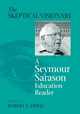
Recently deceased Yale psychologist Dr. Seymour Sarason published forty books on a wide range of education issues well into his eighties. A good place to start is The Skeptical Visionary: A Seymour Sarason Reader. You have to admire a guy who published a book with the title, The Predictable Failure of Educational Reform: Can We Change Course Before It's Too Late, twenty years ago! Books written in the 1990s, And What do YOU Mean by Learning, Political Leadership and Educational Failure and Charter Schools: Another Flawed Educational Reform? remain quite timely and instructive.
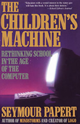
No serious citizen or educator concerned with the future of education can afford to ignore the role of technology in learning. Jean Piaet's protegé, Seymour Papert, began writing about the potential of computers to amplify human potential in the mid-1960s. His view is a great deal more humane and productive than using computers to quiz students in preparation for standardized tests. All of Papert's books and papers are worth reading, but I suggest you start with The Children's Machine: Rethinking School in the Age of the Computer.
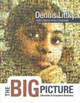
Want to see what sustainable scaleable school reform looks like where children are treated as competent? The Big Picture: Education Is Everyone's Business by Dennis Littky with Samantha Grabelle describes urban high schools with small classes, consistent student teacher relationships and an educational program based on apprenticeship. Students don't go to "school" on Tuesdays and Thursdays. They engage in internship experiences in the community in any field that interests them. The other days of the week, the curriculum is based on whatever the students need to learn to enhance their internships. This is not vocational. It prepares students for university or any other choice they make. The Big Picture model has spread across the United States with impressive results.
The biography of Big Picture Schools co-founder Dennis Littky, Doc: The Story Of Dennis Littky And His Fight For A Better School, by Susan Kammeraad-Campbell may be the first school reform thriller. The book chronicles how Littky transformed a failing school and was wrongfully fired the second political winds changed. Anyone interested in "reforming" public education would be well advised to read this exciting page-turner.
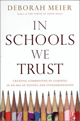
MacArthur Genius Deborah Meier has forgotten more about effective teaching and urban school reform than today's entire generation of "reformers" ever knew. Meier is often considered the mother of the small school movement and her work as the founder of the Central Park East Schools and Mission Hill in Boston remain influential inspiration for parents and educators committed to the preparation of learners with the habits of mind required for a healthy democracy. Her book, In Schools We Trust: Creating Communities of Learning in an Era of Testing and Standardization, is a masterpiece sharing the wisdom developed over more than a half century of teaching and school leadership. You should also read Meier's weekly online discussion with Diane Ravitch, the Bridging Differences blog.
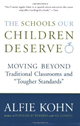
The Schools our Children Deserve: Moving Beyond Traditional Classrooms and "Tougher Standards" is but one of the many terrific books by Alfie Kohn in which he challenges conventional wisdom on sacrosanct topics like homework, grades, standardized testing and rewards with clarity and evidence. His books are fearless and make you think. His articles are collected at Alfiekohn.com. Alfie's small book, The Case Against Standardized Testing: Raising the Scores, Ruining the Schools should be on the kitchen table of every parent and teacher. If you're tired of reading, you may watch two terrific Kohn lectures on the DVD, No Grades + No Homework = Better Learning.
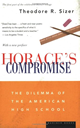
Dr. Theodore Sizer was a school principal, Dean of the Harvard Graduate School of Education and unofficial leader of the high school reform movement over the past twenty-five years. His intellect, calm demeanor and practicality led to the creation of the Coalition of Essential Schools and a template by which any secondary school could improve from within. The first book in his "Horace trilogy," Horace's Compromise, tells the story of American high schools, warts and all, through the eyes of a fictional English teacher, Horace Smith. This book and the two that follow share Horace's epiphanies about the shortcoming of American high schools, their strengths and how he and his colleagues can make their school better. The organization Sizer founded, The Coalition of Essential Schools, continues to inspire such local reform efforts one school at a time.
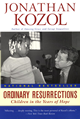
National Book Award-winning author, educator and civil rights activist has been giving voice to the poorest children in our nation and the injustice they face since the 1960s. All of Kozol's books are equal-parts profound, infuriating and inspirational, but the tender and beautifully written, Ordinary Resurrections: Children in the Years of Hope, reminds us why we should care about public education.
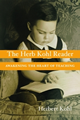
Herbert Kohl has shared his insights as a teacher and teacher educator in dozens of brilliant books. His recent anthology, The Herb Kohl Reader: Awakening the Heart of Teaching, should whet your appetite for reading many more of his books.
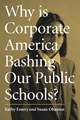
There is no more fierce or tireless critic of the higher tougher meaner standards and accountability movement than Susan Ohanian. The book she co-authored with Kathy Emery, Why is Corporate America Bashing Our Public Schools? engages in the old-fashioned "follow the money" journalism we keep waiting for from news organizations. This book will help you understand how we got to reform being defined and advanced by billionaire bullies.
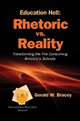
Right before he died last year, respected scholar, Gerald Bracey published, Education Hell: Rhetoric vs. Reality - Transforming the Fire Consuming America's Schools. This book disembowels many of the premises and data used to justify the high-stakes accountability rhetoric and school reform strategies currently being advanced. It's a must read!
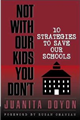
Not With Our Kids You Don't! Ten Strategies to Save Our Schools by Juanita Doyon is a short must-read book for parents tired of their schools being turned into little more than Dickensian test-prep sweatshops. The book was written by a fed-up mom, turned activist from Washington who has upended her state's political establishment in defense of the sort of high quality education Americans came to expect before No Child Left Behind.

Christie Halts State-Approved Construction Projects in Poorest Neighborhoods
His Lardness continues to act in the interests of corporations and their foundations to shut down public education in poor neighborhoods in favor of cheap segregated charter test camps without libraries or the other resources that are standard for public schools in the leafy suburbs. As a result of litigation that goes back 20 years, New Jersey over the past decade had finally begun to address the criminal neglect of poor schools that was documented for the public by Jonathan Kozol in 1992 in Savage Inequalities. Now that effort to establish some equity is in jeopardy.
As the video report by NJN shows, one of those schools scheduled for replacement was a hundred year old relic in Newark, where special ed children meet in broom closets and classes move from room to room looking for dry spots when it rains. No doubt Christie, BookerT, and the salivating hedge funders have other plans for Newark that do not involve public school construction or renovation. After all, there is a $100 million in PR cash from Facebook's slimy little twink, Zuckerberg, who is desperate to buy back a reputation for himself and his exploitative web hangout for those who don't seem to mind the mining of their personal information to the highest bidder. If you haven't seen The Social Network yet, see it. Views and critics alike give it an A.
Story with video:
As the video report by NJN shows, one of those schools scheduled for replacement was a hundred year old relic in Newark, where special ed children meet in broom closets and classes move from room to room looking for dry spots when it rains. No doubt Christie, Booker
Story with video:
By Marie DeNoia Aronsohn
State lawmakers are questioning why the Christie administration has put most of the 52 state reviewed, authorized and fully funded school construction projects on the 2008 Capital Plan on hold. All work at a construction site in Newark for the Oliver Street School has stopped. The same stoppage has happened at schools in Camden, Phillipsburg, and throughout the state. The new head of the Schools Development Authority (SDA) Marc Larkins stated all of the projects listed in the 2008 capital plan –with the exception of a handful of jobs already underway – will be stalled until his department can review them yet again.
Saturday, October 23, 2010
Subscribe to:
Posts (Atom)