Prometheus 6 provides a good antidote to John Tierney's desperate scrambling in the Times to salvage his Party's school privatization crusade. Since the research study was whispered out last Friday showing private schools no better than public ones, and some religious schools much worse, Tierney has been marched out to announce a new rationale for vouchering America and crushing the public schools. No longer is school privatization about getting children out of failing schools and into better ones--it is now about saving American taxpayers money by giving a reduced amount of public dollars to private church schools to provide the same quality of education that was a national disgrace, according to the cons, when it was done in a public school. Never mind that many of these discount church schools don't require teachers but, rather, script readers, and they offer none of the social and psychological and media and counseling and transportation services that are essential in most communities, especially in schools with large numbers of the kinds of children with lots of melanin that Tierney would like to stuff into religious indoctrination camps.
I have just one question for Tierney: Would he send his own child to one of these 3 thousand dollar a year church schools? I think I know the answer, and I suspect it would be the same one if I were to ask him if he would send his child to one of the poverty-riddled public schools? I think his child and all other children deserve better.
Tuesday, July 18, 2006

School Accountability and ED Culpability
There is no deeper conservative hypocrisy than the one that demands accountability in all things public and none in all things corporate. Think Halliburton.
In education, there is the tutoring fiasco within NCLB, which requires schools with the least amount of available funds to set aside for the tutoring industry 15-20 percent of federal dollars intended to fund programs for the poorest children. Any "scientifically-based" research to even suggest that the tutoring (more test prep) is working? Any accountability, Maggie and Grover? Zero. Nada:
In education, there is the tutoring fiasco within NCLB, which requires schools with the least amount of available funds to set aside for the tutoring industry 15-20 percent of federal dollars intended to fund programs for the poorest children. Any "scientifically-based" research to even suggest that the tutoring (more test prep) is working? Any accountability, Maggie and Grover? Zero. Nada:
The rest, here.
Florida public schools could spend some $85 million on private tutoring for 347,778 low-income students next year, but whether these outside firms help children is anyone's guess.
Lee County has set aside roughly $650,000 for the service for next year; an estimated $570,000 was spent during the last school year . . .
Monday, July 17, 2006
Bad News for "The Rich, the Redneck, and the Religious Right"
This is too good to pass up--from BlackAmericaWeb.com:
Any other administration would have made a big deal of it: A fresh, “meticulous” study by the U.S. Education Department has found that, in reading and math, public school students are performing as well or better than private school students.
Normally, that kind of news would leave the president’s people drooling and breathing heavily. They’d lunge for the phones and faxes. They’d order one of those tiresome banners with a boastful theme to hang behind the inevitable presidential speech before a carefully selected audience of well-wishers. A good report card on public education that is, for a president, like fixed potholes for a mayor; it’s bringing home the bacon -- a “your tax dollars at work” achievement.
But, in this case, all is quiet at 1600 Pennsylvania Avenue. The White House all but deep-sixed the findings by the National Center for Education Statistics, which compared reading and math progress among fourth and eighth graders from about 7,000 public schools and more than 500 private ones. Nothing, either, from Education Secretary Margaret Spellings -- who, Lord knows, is in dire need of something to brag about.
Rather than get a hullabaloo, the release of the report was banished to Friday afternoon, which, as every administration knows, is the graveyard hour because folks are focusing on summer and weekend activities. That’s why firings, resignations “to spend more time with the family,” indictments and economic downturns are usually announced then.
The Bushies are hoping you and I have been too busy at the barbeque grill to learn of this. For them, the findings amount to another rip in the coattails that presidents like to keep sturdy so that members of Congress from their party can ride them smoothly to reelection. Nothing hurts a presidential legacy like tattered coattails.
The GOP’s base -- the rich, the redneck and the religious right -- will not be happy with the report. They prefer vouchers (public dollars for personal privilege) or at least charter schools (public sector dollars in private sector hands), and both need public schools to fail in order to justify their existence. It would raise enough dander for them to hear that public schools are doing well. But, beating private schools? Shut your mouth.
Meanwhile, U.S. public schools deserve a strong round of applause over this news. For five years now, they’ve struggled to stay afloat in a sea of hostility, encouraged by an administration that only talks about caring for average folks while consistently enacting policy and supporting laws that punish the poor and middle class. Its so-called No Child Left Behind law was a set-up, imposing strict new standards while low-balling funding for public schools, again to make the case for vouchers.
The survival and even success of public schools in the face of those obstacles is remarkable, but don’t expect them to get any props from the Bush administration. As we know all too well from the Iraq War experience, this administration is practiced at ignoring reality and truth when it suits them, which is tragically often.
They and their friends would rather invoke their own version of reality -- a scam that has already begun. Although the officials who managed the report say it’s clean as a whistle, the head of the Council for American Private Education has asserted that private schools are superior to public schools -- precisely the opposite conclusion of the study.
Yes. And weapons of mass destruction are buried in Baghdad.
The Coming of the Anti-ED
Nick Burbules raised some very good questions at The Wall about leadership that might lead us to better teacher recruitment, retention, support, and qualifications. It is unfortunate that this White House and this ED have initiated policies that have taken us in the other direction. They
- have demonized, distrusted, and demoralized the teaching corps and the university programs that prepare teachers.
- have driven out many of our best veteran teachers who will not give up meaningful learning for mandatory ministrations and unending hours of meaningless test preparation.
- have created a confusing labyrinth for states and colleges that must modify and enact programs based on unrealistic timetables and shifting regulations. (It is the equivalent of the pilot going out to do repairs on an airplane that is in flight and nearing the airport.)
- have embraced alternative certification programs, including credentials obtained through an online testing company entity created with ED grant money (ABCTE), even though there is zero evidence that these alternatives offer the necessary knowledge, skills, and dispositions to help candidates succeed in teaching.
- advocate alternative school management options such as charters, which in many cases effectively neutralize collective bargaining rights of educators, while threatening the foundations of tenure laws.
- support and prefer the use of scripted teaching through direct instruction curriculums in reading and math literacy programs, particularly in high poverty areas. Direct instruction effectively de-professionalizes teachers by making them script readers rather than adaptive children’s advocates. With the preference for direct instruction comes the emphasis on a draconian and robotic form of behavior modification, which, when combined with endless recitation, creates what Jonathan Kozol describes as “cognitive decapitation.”
- support paid consultants in the conservative think tanks, who spew their reports arguing that teachers are lazy and stupid and make more money than they deserve.
- operate an around-the-clock public relations effort to castigate public schools and public school teachers for failing to reach performance targets intentionally set to be unattainable.
- ignore poverty and racism as factors in the performance of urban schools, while advocating the sending of poor children to even worse private church schools.
- finally, have enacted a strategy that is thoughtless and requires no thought, that is without feeling and solicits none, that is authoritarian and demands nothing less from all who participate in it.
Sunday, July 16, 2006
The Lie That Ate the Department of Education
Friday afternoon is when the Bush White House chooses most often to make announcements they want no one to notice. Thus, Friday has become the most important news day of the week for getting a smidgin of the political truth that is held in abeyance during the time most people are paying attention. As folks streamed to the beach this past Friday, some real political truth was whispered out in the form of a stringently-peer-reviewed research report that reads like a stats text but whose meaning and implications provide a kick in the gut of the education privatizers, particularly of those who see church school indoctrination as the present-day solution for what former generations of American philanthropes called the “Negro problem.”
Some have noted a lack of fanfare in ED’s response to the New York Times story. Fanfare? How about panfare! Jerry Bracey has suggested that, compared to other reports such as recent NAEP reports, there seems to have been performed an intentional technicizing of this report in order to make it less comprehensible to those outside the psychometric bubble. From Bracey:
Real school choice, yes. Bring it on. I think public school choice is a grand idea. As Larry Cuban has said, our experience with Coalition Schools and Core Knowledge Schools in the same public school system shows that both can produce solid academic gains as measured by tests— and that there is no “one best system” that fits all needs. More importantly, the continuum of progressive-to-traditional choices gives students and parents real curricular choices rather than choices as to which non-public entity gets paid the public dollars provided by taxpayers.
This Administration’s disparaging attitude toward public schools is no secret, and their well-funded policy decisions reflect hundreds of millions of dollars to support privatization ventures. One need look no further than ED’s website, itself, to find ample evidence of where their loyalties lie—and have lain since this crew of hacks and crooks came to Washington. In 2002, Paige celebrated the 5-4 SCOTUS decision in the Zelman v. Simmons-Harris that allowed for publicly-funded church school vouchers in Cleveland. ED issued a press release when the decision came down that, in fact, states that Zelman was “perhaps the most important education decision since Brown v. Board of Education.”
In 2000, 96% of the Cleveland vouchers went to religiously-affiliated schools, and 60% of the participants were at or below the poverty line. With church schools seen as the current day solution to bad urban schools by many privatization advocates, one may wonder if this new report showing that the church schools occupy the bottom rung of the test score Hell would at all affect Paige’s sensitivity to “civil rights” issues and his enthusiasm for sending poor black children into worse schools than they are now attending.
ED issued another press release that same day on June 27, 2002 entitled “Federal Government History of Support To Private and Religious Groups: Expanded Educational Opportunities For Americans.” This “history” offers references to the cases that ED lawyers can cite in support of weakening the boundary between Church and State. We can see, too, in this press release that the implicit argument is floated that Pell Grants that are used to fund attendance to private colleges can be seen as an equivalent justification for school vouchers in K-12. Isn’t a school voucher just another kind of grant?
The more important point to be made here is that a Pell Grant and a school voucher are very different. When a Pell Grant is given to a college applicant to attend a St. Johns University, the amount of that grant is not subtracted from the budget of Queen’s College, or any other nearby public university. When a parent, however, is handed a school voucher to move from a public school to a private one, that 4 or 5 thousand dollars is subtracted from the school’s or the school system’s budget. Remember ADA?
Also, the Pell Grant is contingent upon St. Johns meeting necessary accreditation standards and providing some warranty as to the quality of the educational experience provided to students upon graduation. Neither is required before K-12 public money is handed over to parents to enroll their children in what may be a battered storefront remains of a Mr. Gatti’s where children are taught by semi-literate proselytizers teaching from Jerry Falwell’s “History as I Wish it Had Been Series.”
So take heart at these most recent evidence-based findings that indicate the jig is up for the privatizers inside and outside of ED. But be sure to read the newspapers carefully on Friday afternoon for brief glimpses of the truth that remains mostly unavailable during the weekly news cycles. Here is a list, by the way, from The Carpetbagger Report of some interesting announcements, all occurring on Friday:
Some have noted a lack of fanfare in ED’s response to the New York Times story. Fanfare? How about panfare! Jerry Bracey has suggested that, compared to other reports such as recent NAEP reports, there seems to have been performed an intentional technicizing of this report in order to make it less comprehensible to those outside the psychometric bubble. From Bracey:
"The results of the variance decomposition enhance the understanding of the likely sources of heterogeneity in student achievement and, consequently, of the context in which the HLM analyses take place. A comparison of the variance between schools for models b and c indicates that schools (in general) differ widely in measured characteristics of studentsthat are associated with reading achievement. Specifically, when an adjustment is made for those characteristics, the heterogeneity among school means is reduced by almost two thirds." p. 13.Why is Sec. Spellings and her minions so silent on these important findings that they can only wish media outlets like the NY Times had ignored the same way that did Ben Feller and the other trained seals did at the AP and WaPo and any number of other media outlets, print and non-print? Simple. If the American people learn that ED’s privatization scheme is based on providing educational alternatives that are no better or worse than the public schools they wish to shut down, then their plan, with all its wasteful, punishing, and denigrating detail, will crumble like a house of cards. The cons' mantra of “more school choice” will be exposed for what it is, an ideologically-driven and undemocratic ruse to cut up and sell the only remaining American institution that offers even the possibility of keeping alive Dewey’s dream of an educated, inclusive democratic republic.
Translation: Schools with lots of poor, minority and English language learning students don't do well and when you adjust for that the private school advantage goes poof.
Of course, it's important to keep in mind that the public schools DO have those kids and you can't make them go poof. You have to figure ways to get through to them.
Real school choice, yes. Bring it on. I think public school choice is a grand idea. As Larry Cuban has said, our experience with Coalition Schools and Core Knowledge Schools in the same public school system shows that both can produce solid academic gains as measured by tests— and that there is no “one best system” that fits all needs. More importantly, the continuum of progressive-to-traditional choices gives students and parents real curricular choices rather than choices as to which non-public entity gets paid the public dollars provided by taxpayers.
This Administration’s disparaging attitude toward public schools is no secret, and their well-funded policy decisions reflect hundreds of millions of dollars to support privatization ventures. One need look no further than ED’s website, itself, to find ample evidence of where their loyalties lie—and have lain since this crew of hacks and crooks came to Washington. In 2002, Paige celebrated the 5-4 SCOTUS decision in the Zelman v. Simmons-Harris that allowed for publicly-funded church school vouchers in Cleveland. ED issued a press release when the decision came down that, in fact, states that Zelman was “perhaps the most important education decision since Brown v. Board of Education.”
In 2000, 96% of the Cleveland vouchers went to religiously-affiliated schools, and 60% of the participants were at or below the poverty line. With church schools seen as the current day solution to bad urban schools by many privatization advocates, one may wonder if this new report showing that the church schools occupy the bottom rung of the test score Hell would at all affect Paige’s sensitivity to “civil rights” issues and his enthusiasm for sending poor black children into worse schools than they are now attending.
ED issued another press release that same day on June 27, 2002 entitled “Federal Government History of Support To Private and Religious Groups: Expanded Educational Opportunities For Americans.” This “history” offers references to the cases that ED lawyers can cite in support of weakening the boundary between Church and State. We can see, too, in this press release that the implicit argument is floated that Pell Grants that are used to fund attendance to private colleges can be seen as an equivalent justification for school vouchers in K-12. Isn’t a school voucher just another kind of grant?
School choice for college students is one reason that this country's higher education system is the envy of the world. Pell Grants are an example of the federal government enabling school choice for millions of Americans. Students can use their Pell Grants or student loans to attend public, private, or religious schools. The college student gets to choose. And the G.I. Bill has long been a source of strength, rewarding veterans with federally supported higher education—at the schools of their choice.First, we must assume that the current demise of American higher education has advanced at a furious clip in the past 4 years, since the recent floating (and subsequent sinking) of the Miller Commission Draft finds nothing but bad ju ju emanating from the University. What happened to “being the envy of the world?”
Federal education laws already recognize that public funds can be used for private or religious institutions that serve the public interest in K through 12 education.
The more important point to be made here is that a Pell Grant and a school voucher are very different. When a Pell Grant is given to a college applicant to attend a St. Johns University, the amount of that grant is not subtracted from the budget of Queen’s College, or any other nearby public university. When a parent, however, is handed a school voucher to move from a public school to a private one, that 4 or 5 thousand dollars is subtracted from the school’s or the school system’s budget. Remember ADA?
Also, the Pell Grant is contingent upon St. Johns meeting necessary accreditation standards and providing some warranty as to the quality of the educational experience provided to students upon graduation. Neither is required before K-12 public money is handed over to parents to enroll their children in what may be a battered storefront remains of a Mr. Gatti’s where children are taught by semi-literate proselytizers teaching from Jerry Falwell’s “History as I Wish it Had Been Series.”
So take heart at these most recent evidence-based findings that indicate the jig is up for the privatizers inside and outside of ED. But be sure to read the newspapers carefully on Friday afternoon for brief glimpses of the truth that remains mostly unavailable during the weekly news cycles. Here is a list, by the way, from The Carpetbagger Report of some interesting announcements, all occurring on Friday:
* In 2004, Bush released documents relating to his National Guard service (or lack thereof) five times. In each instance, he waited until late on a Friday afternoon.
* When the Justice Department launched a criminal investigation into the Valerie Plame scandal, the announcement came late on a Friday night.
* When Bush circumvented the Senate to appoint Bill Pryor and Charles Pickering to the federal bench, he waited for late-Friday afternoons.
* Bush agreed to testify before the 9/11 Commission, so long as Dick Cheney would be there by his side. He announced his intentions on a late-Friday afternoon.
* When Bush's Commerce Department announced that household incomes had declined for three years in a row and 1.7 million people had fallen into poverty, they released the data on a late-Friday afternoon. (It was the first time any administration had released the annual data on a Friday.)
* Many suspected that the Bush administration would eliminate requirements on the nation's dirtiest coal-fired power plants and refineries to make anti-pollution improvements as they upgrade facilities, but when the announcement finally came, it was released on a late-Friday afternoon.
* When the administration said it wanted to remove Clean Water Act protections from up to one-fifth of the nation's streams, ponds, lakes, mudflats, and wetlands, it said so late on a Friday afternoon.
* Bush fired Treasury Secretary Paul O'Neill, economic adviser Lawrence Lindsey, and Army Secretary (and former Enron executive) Thomas White on late-Friday afternoons.
* When John Ashcroft's Justice Department had to tell administration officials to preserve papers related to Enron, they waited to issue the directive until late on a Friday afternoon.
* The White House announced its opposition to an investigation into Karl Rove's work with companies in which he held stock on a late-Friday afternoon.
* The Pentagon waited until shortly after the network news broadcasts had ended on a Friday afternoon to announce the results of its investigation into the mishandling of the Quran at Guantanamo Bay.
* Rumsfeld announced his intention to hide unseen Abu Ghraib photos on a Friday afternoon.
The Late-Friday-Media Trick has been around since before Bush took office, but no one has ever abused this practice like these guys.
No Child Left Behind Undamaged
This comes from the reddest of the red states, South Carolina. Even there, the ideological stranglehold of the new fascistic and punishing eugenics has not left the state's educators totally blind to the irrepairable damage being done by the "same treatment" of children being intentionally confused with "equal treatment" of children:
With the No Child Left Behind law facing renewal next year, Congress is looking at ways to improve the landmark education act.One area being examined is the performance of non-native speakers and students with disabilities, groups that often are cited to explain why schools do not meet No Child Left Behind requirements.
Each subgroup of students must meet achievement standards for a school to reach federal goals.
The House education committee Wednesday solicited recommendations from special education and bilingual education experts about complaints about the 4-year-old federal law.
In Spartanburg County, educators have their own concerns about No Child Left Behind and suggestions to fix it.
"It's a one-size-fits-all law," said Maureen Kriese, special education director for Spartanburg District 5. "You're dealing with a range of children that don't fit that mold."
In 2005, for every school in District 5 that did not make Adequate Yearly Progress, a federal benchmark of student achievement on statewide assessments, students with disabilities were a factor.
"The most detrimental problem is the unbearable stress placed on the child," said Ashley Atkinson, director of accountability and assessment for District 5.
"Imagine a student with disabilities normally reading on a second grade level, being forced to take a test on a seventh grade level. They are most often distraught to the point of physical illness," he said.
Atkinson cited a recent example of a child with Down syndrome who did not speak English being required to take the Palmetto Achievement Challenge Test.
"It's ludicrous to have to force a child to endure that," he said.
Starting this fall, students with disabilities no longer will be allowed to take portions of the Palmetto Achievement Challenge Test below their grade level.
"These students have learning disabilities that may be so severe that it is unrealistic, unreasonable and in some instances, on the verge of inhuman to expect them to reach these standards," said Trish Beason, testing coordinator for Spartanburg District 1.
Beason predicted the new requirement would increase the number of schools that fail to meet the Adequate Yearly Progress requirements.
"States embraced the idea of higher standards and expectations," said Jim Rex, Democratic candidate for state superintendent of education. "It's been good for South Carolina. The question now is what kind of adjustments need to be made to make this thing workable."
Rex said reforms are needed for testing students with disabilities.
"It's causing an awful lot of frustration and alienation," he said. "We shouldn't ignore those groups, but we shouldn't necessarily be testing them in the way we're testing other types of students."
Karen Floyd, his Republican opponent, agreed adjustments are needed: "The state of South Carolina could create a better methodology to gauge progress for special education and English-as-second-language students."
She suggested that students learning English should be tested in the age-appropriate level in their language of origin.
Students from other countries learning English are required to be tested and counted in assessments if they have been in the United States for more than a year.
District 3 Superintendent Jim Ray contends that both the No Child Left Behind law and the Palmetto Achievement Challenge Test need overhauling.
The state test is "useless as an instructional tool," he said.
"Using it to create state report cards for No Child Left Behind is adding insult to injury."
"No one argues with the premise that we can't leave any child behind, but you can't measure children on a single test," Ray said.
Lights Flickering at Edison Corporate Welfare Schools
The Baltimore Sun reports that the Whittle Solution is in trouble once more (so what's new), this time in Baltimore where his three corporate welfare schools are underperforming the public schools that they were intended to replace.
Not only are Whittle's chain gang schools underperforming the state and city averages, but Baltimore and the State have contributed in the meantime $5,600,000 in Edison retained profits from the failing venture. How long will taxpayers put up with with welfare artists like Whittle and Brennan and the politicians they own, who would wrest control of taxpayers' schools, turn teaching into a scripted non-thinking exercise, convert learning into an endless dead-end job of test preparation, and charge taxpayers a premium for failure to show results even close to the public schools? How long? Not long, I think:
A clip from the Sun piece:
Not only are Whittle's chain gang schools underperforming the state and city averages, but Baltimore and the State have contributed in the meantime $5,600,000 in Edison retained profits from the failing venture. How long will taxpayers put up with with welfare artists like Whittle and Brennan and the politicians they own, who would wrest control of taxpayers' schools, turn teaching into a scripted non-thinking exercise, convert learning into an endless dead-end job of test preparation, and charge taxpayers a premium for failure to show results even close to the public schools? How long? Not long, I think:
A clip from the Sun piece:
At Montebello, fewer than half the fifth-graders passed their math test, compared with 71 percent last year, and only 54 percent passed reading. But third- and fourth-graders did far better, and Montebello is not considered in danger of being labeled a school that needs improvement.
Below city averageBut scores at Furman L. Templeton and Gilmor fell below the citywide averages in nearly all grades in both math and reading. The two schools also ranked in the bottom 25 of the city's 114 elementary schools, according to an analysis by The Sun of the Maryland State Assessments.
In some cases, the drop in scores was quite marked: 62.7 percent of third-graders at Gilmor passed the math test in 2005, but only 41 percent passed this year. And the school's sixth-grade math scores dropped from 53.2 percent passing to 30 percent passing. State officials say Gilmor's scores are poor enough that it might not meet federal standards and will continue to be classified as a school that needs improvement.
At Furman L. Templeton, scores dropped in third, fourth and sixth grades in both reading and math.
In each grade, for both reading and math, the scores of the three schools averaged together were about 20 percentage points below the statewide averages.
Saturday, July 15, 2006
Public Schools Perform Near Private Ones in Study
Leave it to the Bush administration to bury a report that seriously undermines the credibility of its attack on public schools.
The report, according to ED, is of "modest utility." Unlike every other piece of propaganda that flows out of Spellings' office, this one came without a news conference and without any commentary by Maggie. But here's the kicker: ED itself commissioned the report.
According to the Times story, "The report cautions, for example, against concluding that children do better because of the type of school as opposed to unknown factors." Using precisely this logic, might it not also be possible -- and logical -- to caution against concluding that children do worse (on standardized tests, for example) not because of the type of school but to other "unknown factors" like inadequate healthcare and nutrition, over-crowded classrooms, and teachers who are overwhelmed by the task of single-handedly closing the achievement gap?
The Times story also notes that the report qualifies its findings by saying that "the scores on which its findings are based reflect only a snapshot of student performance at a point in time and say nothing about individual student progress in different settings." Of course, standardized tests under NCLB reflect only a snapshot of student performance at a point in time and say nothing about individual student progress in different settings. How convenient that the argument that is used to condemn NCLB can also be used to support it.
My favorite part of this story: "Joseph McTighe, executive director of the Council for American Private Education, an umbrella organization that represents 80 percent of private elementary and secondary schools, said the statistical analysis had little to do with parents’ choices on educating their children."
Here's his quote of the day:
"In the real world, private school kids outperform public school kids," Mr. McTighe said. "That’s the real world, and the way things actually are."
How comforting that radical ideologues can cling to their feeble notions despite evidence that shows them for what they are.
---
NY Times
July 15, 2006
Public Schools Perform Near Private Ones in Study
By DIANA JEAN SCHEMO
WASHINGTON, July 14 — The Education Department reported on Friday that children in public schools generally performed as well or better in reading and mathematics than comparable children in private schools. The exception was in eighth-grade reading, where the private school counterparts fared better.
The report, which compared fourth- and eighth-grade reading and math scores in 2003 from nearly 7,000 public schools and more than 530 private schools, also found that conservative Christian schools lagged significantly behind public schools on eighth-grade math.
The study, carrying the imprimatur of the National Center for Education Statistics, part of the Education Department, was contracted to the Educational Testing Service and delivered to the department last year.
It went through a lengthy peer review and includes an extended section of caveats about its limitations and calling such a comparison of public and private schools “of modest utility.”
Its release, on a summer Friday, was made with without a news conference or comment from Education Secretary Margaret Spellings.
Reg Weaver, president of the National Education Association, the union for millions of teachers, said the findings showed that public schools were “doing an outstanding job” and that if the results had been favorable to private schools, “there would have been press conferences and glowing statements about private schools.”
“The administration has been giving public schools a beating since the beginning” to advance his political agenda, Mr. Weaver said, of promoting charter schools and taxpayer-financed vouchers for private schools as alternatives to failing traditional public schools.
A spokesman for the Education Department, Chad Colby, offered no praise for public schools and said he did not expect the findings to influence policy. Mr. Colby emphasized the caveat, “An overall comparison of the two types of schools is of modest utility.”
“We’re not just for public schools or private schools,’’ he said. “We’re for good schools.”
The report mirrors and expands on similar findings this year by Christopher and Sarah Theule Lubienski, a husband-and-wife team at the University of Illinois who examined just math scores. The new study looked at reading scores, too.
The study, along with one of charter schools, was commissioned by the former head of the national Center for Education Statistics, Robert Lerner, an appointee of President Bush, at a time preliminary data suggested that charter schools, which are given public money but are run by private groups, fared no better at educating children than traditional public schools.
Proponents of charter schools had said the data did not take into account the predominance of children in their schools who had already had problems in neighborhood schools.
The two new studies put test scores in context by studying the children’s backgrounds and taking into account factors like race, ethnicity, income and parents’ educational backgrounds to make the comparisons more meaningful. The extended study of charter schools has not been released.
Findings favorable to private schools would likely have given a lift to administration efforts to offer children in ailing public schools the option of attending private schools.
An Education Department official who insisted on anonymity because of the climate surrounding the report, said researchers were "extra cautious" in reviewing it and were aware of its “political sensitivity.”
The official said the warning against drawing unsupported conclusions was expanded somewhat as the report went through in the review.
The report cautions, for example, against concluding that children do better because of the type of school as opposed to unknown factors. It also warns of great variations of performance among private schools, making a blanket comparison of public and private schools “of modest utility.” And the scores on which its findings are based reflect only a snapshot of student performance at a point in time and say nothing about individual student progress in different settings.
Arnold Goldstein of the National Center for Education Statistics said that the review was meticulous, but that it was not unusual for the center.
Mr. Goldstein said there was no political pressure to alter the findings.
Students in private schools typically score higher than those in public schools, a finding confirmed in the study. The report then dug deeper to compare students of like racial, economic and social backgrounds. When it did that, the private school advantage disappeared in all areas except eighth-grade reading.
The report separated private schools by type and found that among private school students, those in Lutheran schools performed best, while those in conservative Christian schools did worst.
In eighth-grade reading, children in conservative Christian schools scored no better than comparable children in public schools.
In eighth-grade math, children in Lutheran schools scored significantly better than children in public schools, but those in conservative Christian schools fared worse.
Joseph McTighe, executive director of the Council for American Private Education, an umbrella organization that represents 80 percent of private elementary and secondary schools, said the statistical analysis had little to do with parents’ choices on educating their children.
"In the real world, private school kids outperform public school kids," Mr. McTighe said. "That’s the real world, and the way things actually are."
Two weeks ago, the American Federation of Teachers, on its Web log, predicted that the report would be released on a Friday, suggesting that the Bush administration saw it as "bad news to be buried at the bottom of the news cycle."
The deputy director for administration and policy at the Institute of Education Sciences, Sue Betka, said the report was not released so it would go unnoticed. Ms. Betka said her office typically gave senior officials two weeks’ notice before releasing reports. "The report was ready two weeks ago Friday,’’ she said, “and so today was the first day, according to longstanding practice, that it could come out."
The report, according to ED, is of "modest utility." Unlike every other piece of propaganda that flows out of Spellings' office, this one came without a news conference and without any commentary by Maggie. But here's the kicker: ED itself commissioned the report.
According to the Times story, "The report cautions, for example, against concluding that children do better because of the type of school as opposed to unknown factors." Using precisely this logic, might it not also be possible -- and logical -- to caution against concluding that children do worse (on standardized tests, for example) not because of the type of school but to other "unknown factors" like inadequate healthcare and nutrition, over-crowded classrooms, and teachers who are overwhelmed by the task of single-handedly closing the achievement gap?
The Times story also notes that the report qualifies its findings by saying that "the scores on which its findings are based reflect only a snapshot of student performance at a point in time and say nothing about individual student progress in different settings." Of course, standardized tests under NCLB reflect only a snapshot of student performance at a point in time and say nothing about individual student progress in different settings. How convenient that the argument that is used to condemn NCLB can also be used to support it.
My favorite part of this story: "Joseph McTighe, executive director of the Council for American Private Education, an umbrella organization that represents 80 percent of private elementary and secondary schools, said the statistical analysis had little to do with parents’ choices on educating their children."
Here's his quote of the day:
"In the real world, private school kids outperform public school kids," Mr. McTighe said. "That’s the real world, and the way things actually are."
How comforting that radical ideologues can cling to their feeble notions despite evidence that shows them for what they are.
---
NY Times
July 15, 2006
Public Schools Perform Near Private Ones in Study
By DIANA JEAN SCHEMO
WASHINGTON, July 14 — The Education Department reported on Friday that children in public schools generally performed as well or better in reading and mathematics than comparable children in private schools. The exception was in eighth-grade reading, where the private school counterparts fared better.
The report, which compared fourth- and eighth-grade reading and math scores in 2003 from nearly 7,000 public schools and more than 530 private schools, also found that conservative Christian schools lagged significantly behind public schools on eighth-grade math.
The study, carrying the imprimatur of the National Center for Education Statistics, part of the Education Department, was contracted to the Educational Testing Service and delivered to the department last year.
It went through a lengthy peer review and includes an extended section of caveats about its limitations and calling such a comparison of public and private schools “of modest utility.”
Its release, on a summer Friday, was made with without a news conference or comment from Education Secretary Margaret Spellings.
Reg Weaver, president of the National Education Association, the union for millions of teachers, said the findings showed that public schools were “doing an outstanding job” and that if the results had been favorable to private schools, “there would have been press conferences and glowing statements about private schools.”
“The administration has been giving public schools a beating since the beginning” to advance his political agenda, Mr. Weaver said, of promoting charter schools and taxpayer-financed vouchers for private schools as alternatives to failing traditional public schools.
A spokesman for the Education Department, Chad Colby, offered no praise for public schools and said he did not expect the findings to influence policy. Mr. Colby emphasized the caveat, “An overall comparison of the two types of schools is of modest utility.”
“We’re not just for public schools or private schools,’’ he said. “We’re for good schools.”
The report mirrors and expands on similar findings this year by Christopher and Sarah Theule Lubienski, a husband-and-wife team at the University of Illinois who examined just math scores. The new study looked at reading scores, too.
The study, along with one of charter schools, was commissioned by the former head of the national Center for Education Statistics, Robert Lerner, an appointee of President Bush, at a time preliminary data suggested that charter schools, which are given public money but are run by private groups, fared no better at educating children than traditional public schools.
Proponents of charter schools had said the data did not take into account the predominance of children in their schools who had already had problems in neighborhood schools.
The two new studies put test scores in context by studying the children’s backgrounds and taking into account factors like race, ethnicity, income and parents’ educational backgrounds to make the comparisons more meaningful. The extended study of charter schools has not been released.
Findings favorable to private schools would likely have given a lift to administration efforts to offer children in ailing public schools the option of attending private schools.
An Education Department official who insisted on anonymity because of the climate surrounding the report, said researchers were "extra cautious" in reviewing it and were aware of its “political sensitivity.”
The official said the warning against drawing unsupported conclusions was expanded somewhat as the report went through in the review.
The report cautions, for example, against concluding that children do better because of the type of school as opposed to unknown factors. It also warns of great variations of performance among private schools, making a blanket comparison of public and private schools “of modest utility.” And the scores on which its findings are based reflect only a snapshot of student performance at a point in time and say nothing about individual student progress in different settings.
Arnold Goldstein of the National Center for Education Statistics said that the review was meticulous, but that it was not unusual for the center.
Mr. Goldstein said there was no political pressure to alter the findings.
Students in private schools typically score higher than those in public schools, a finding confirmed in the study. The report then dug deeper to compare students of like racial, economic and social backgrounds. When it did that, the private school advantage disappeared in all areas except eighth-grade reading.
The report separated private schools by type and found that among private school students, those in Lutheran schools performed best, while those in conservative Christian schools did worst.
In eighth-grade reading, children in conservative Christian schools scored no better than comparable children in public schools.
In eighth-grade math, children in Lutheran schools scored significantly better than children in public schools, but those in conservative Christian schools fared worse.
Joseph McTighe, executive director of the Council for American Private Education, an umbrella organization that represents 80 percent of private elementary and secondary schools, said the statistical analysis had little to do with parents’ choices on educating their children.
"In the real world, private school kids outperform public school kids," Mr. McTighe said. "That’s the real world, and the way things actually are."
Two weeks ago, the American Federation of Teachers, on its Web log, predicted that the report would be released on a Friday, suggesting that the Bush administration saw it as "bad news to be buried at the bottom of the news cycle."
The deputy director for administration and policy at the Institute of Education Sciences, Sue Betka, said the report was not released so it would go unnoticed. Ms. Betka said her office typically gave senior officials two weeks’ notice before releasing reports. "The report was ready two weeks ago Friday,’’ she said, “and so today was the first day, according to longstanding practice, that it could come out."
Dropping a Bomb on NCLB
While the world focuses its attention on the escalating tension and violence in the Mideast that could lead to World War III, a huge explosion rippled through the Department of Education Friday when a report revealed children in public schools generally perform as well or better in reading and mathematics as children in private schools.
As expected, officials at ED are playing down the significance of the report although the news did make it to the front page of the New York Times today today alongside coverage of the other bombs that are dropping. As the Bushies and their followers await the coming of The Rapture, it seems like the children who will be left behind are in Christian schools:
The report, which compared fourth- and eighth-grade reading and math scores in 2003 from nearly 7,000 public schools and more than 530 private schools, also found that conservative Christian schools lagged significantly behind public schools on eighth-grade math.
At the heart of the report is hard core scientific evidence that what really determines how well children perform has nothing to do with holding teachers accountable, increasing testing or mandating scripted curriculum. What determines how students perform, whether in public schools or private schools generally depends on their racial and socioeconomic background. The DoE research has blown a hole right through this administration's big fat lie accusing NCLB critics of practicing the "soft bigotry of low expectations."
The truth has been exposed. If we sincerely want to leave no child behind, the best way to do that is to first acknowledge the harsh reality that academic performance on standardized tests is directly linked to race and economic status.
The report then dug deeper to compare students of like racial, economic and social backgrounds. When it did that, the private school advantage disappeared in all areas except eighth-grade reading.
So far Spellings has been silent on the report, but look for retaliation and some smoke next week about using growth models and not focusing too much on one study. Anything to keep this war and this attack on public schools going.
As expected, officials at ED are playing down the significance of the report although the news did make it to the front page of the New York Times today today alongside coverage of the other bombs that are dropping. As the Bushies and their followers await the coming of The Rapture, it seems like the children who will be left behind are in Christian schools:
The report, which compared fourth- and eighth-grade reading and math scores in 2003 from nearly 7,000 public schools and more than 530 private schools, also found that conservative Christian schools lagged significantly behind public schools on eighth-grade math.
At the heart of the report is hard core scientific evidence that what really determines how well children perform has nothing to do with holding teachers accountable, increasing testing or mandating scripted curriculum. What determines how students perform, whether in public schools or private schools generally depends on their racial and socioeconomic background. The DoE research has blown a hole right through this administration's big fat lie accusing NCLB critics of practicing the "soft bigotry of low expectations."
The truth has been exposed. If we sincerely want to leave no child behind, the best way to do that is to first acknowledge the harsh reality that academic performance on standardized tests is directly linked to race and economic status.
The report then dug deeper to compare students of like racial, economic and social backgrounds. When it did that, the private school advantage disappeared in all areas except eighth-grade reading.
So far Spellings has been silent on the report, but look for retaliation and some smoke next week about using growth models and not focusing too much on one study. Anything to keep this war and this attack on public schools going.
Friday, July 14, 2006
Miller Analogies and Spellings' Commission Mission
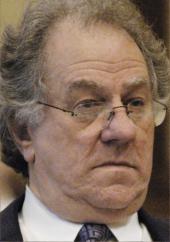
Margaret Spellings certainly understands the dry drunk leadership style of the man she works for, and Charles Miller as Chair for the Commission to Meddle in Higher Ed certainly was a good pick to fit in the Bush lineup of plain-talking conservative jackasses. Miller has quickly emerged as the John Bolton of academia, repeatedly parading a mean and surly persona ready at a moment’s notice to drop one of his inappropriate and smelly nitwiticisms in order to deflect the undisguised disdain and rage against an institution that he nor his churlish boss could ever appreciate or understand.
Try this one from the Austin American-Statesman: "If you wrap it [the Commission Report] up in academic language, which is what the academy wants, you get long sentences and footnotes, and it gets put on the shelf . . . strong language gets attention." Indeed. I am so glad that at least there will be something left to read after Miller’s strong language histrionics are put down the toilet and flushed into the Potomac.
Now it is becoming increasingly clear that one of the goals of the Miller Mission is fill in the gap for "data" on every student who ever enters a college or university and to track them right into adulthood and the workplace and into retirement (if such a concept survives the onslaught of corporate socialism). In other words, Miller intends to do the conservative bidding to have the university pick up where NCLB leaves off. Miller would have us believe that personal privacy is as loathsome and archaic as the notion of a “medieval trade union,” whatever that might be. Is he thinking of "guild?"
Miller and the other present-day efficiency zealots seek nothing less than an ironclad social and economic control through the use of technology, all to be achieved in the name of “accountability.” These dangerous dystopic dunces make previous generations of eugenicists seem like romantic daydreamers. From Gainesville.com:
Despite, privacy issues, commission says tracking would improve colleges' accountability. A plan to track college students throughout their academic careers, and perhaps well into their time in the workforce, has some fearing that private student records will be exposed in a Big Brother-style program. The Commission on the Future of Higher Education, appointed last fall by the U.S. Secretary of Education, is considering a system that would require colleges to submit individual student data to the federal government. Students' academic, enrollment and financial aid information all could be subject to federal scrutiny under the plan.The rest here.
Subscribe to:
Posts (Atom)